
Last updated November 24, 2026
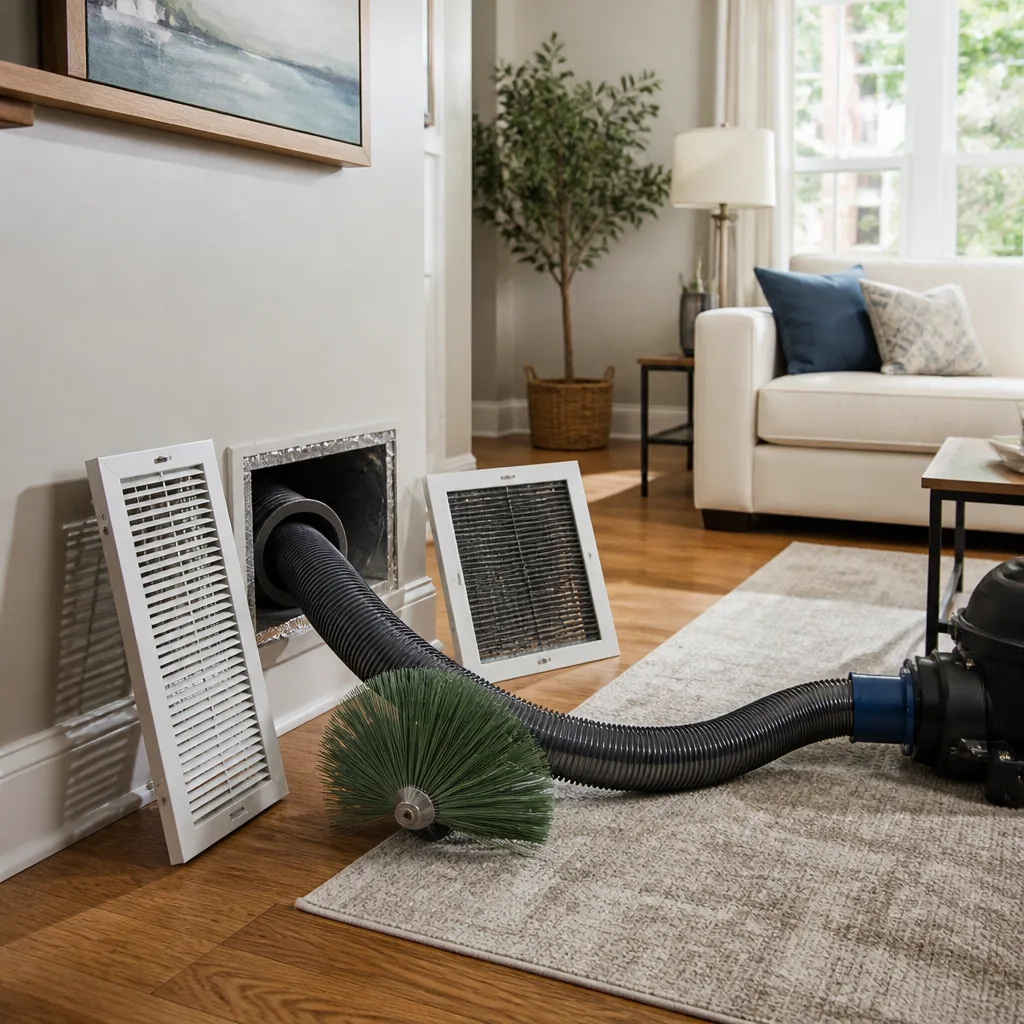 Whole-home duct cleaning
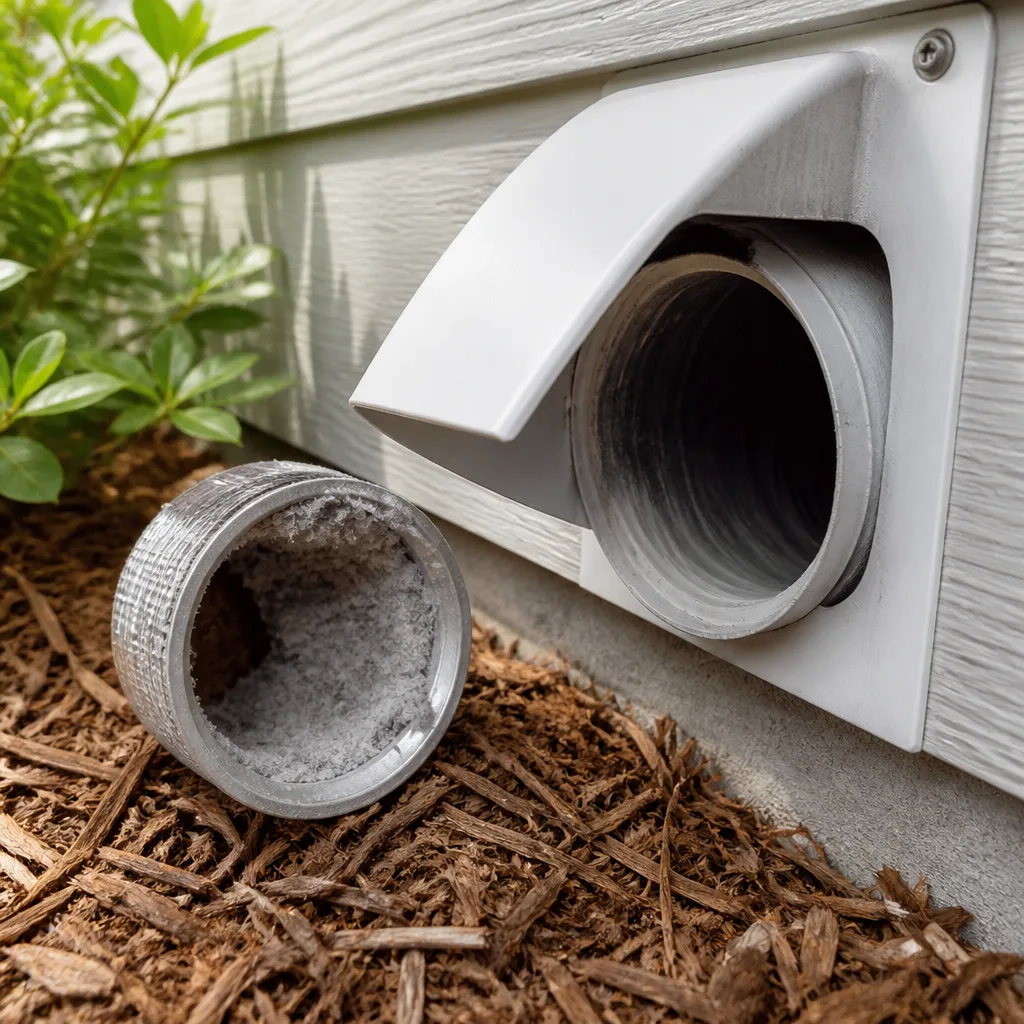 Dryer vent cleaning
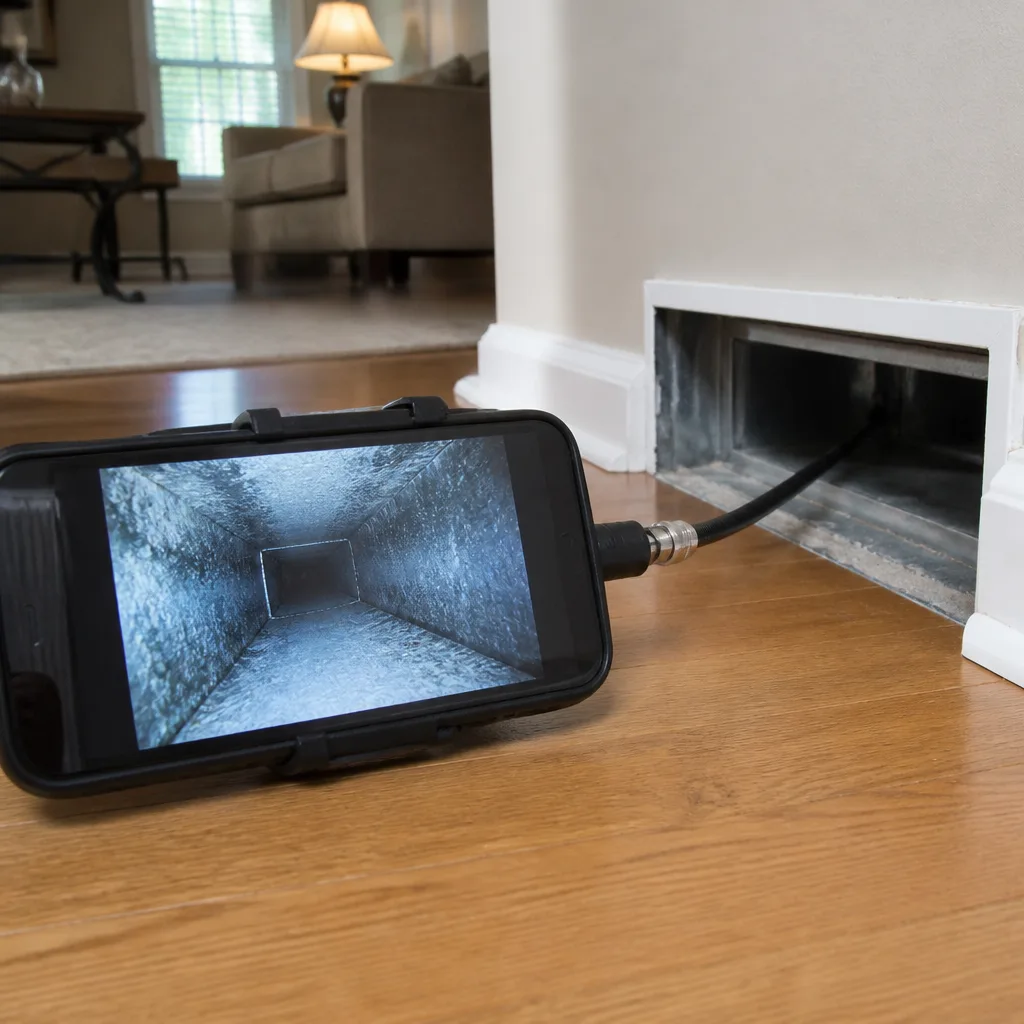 Camera inspection
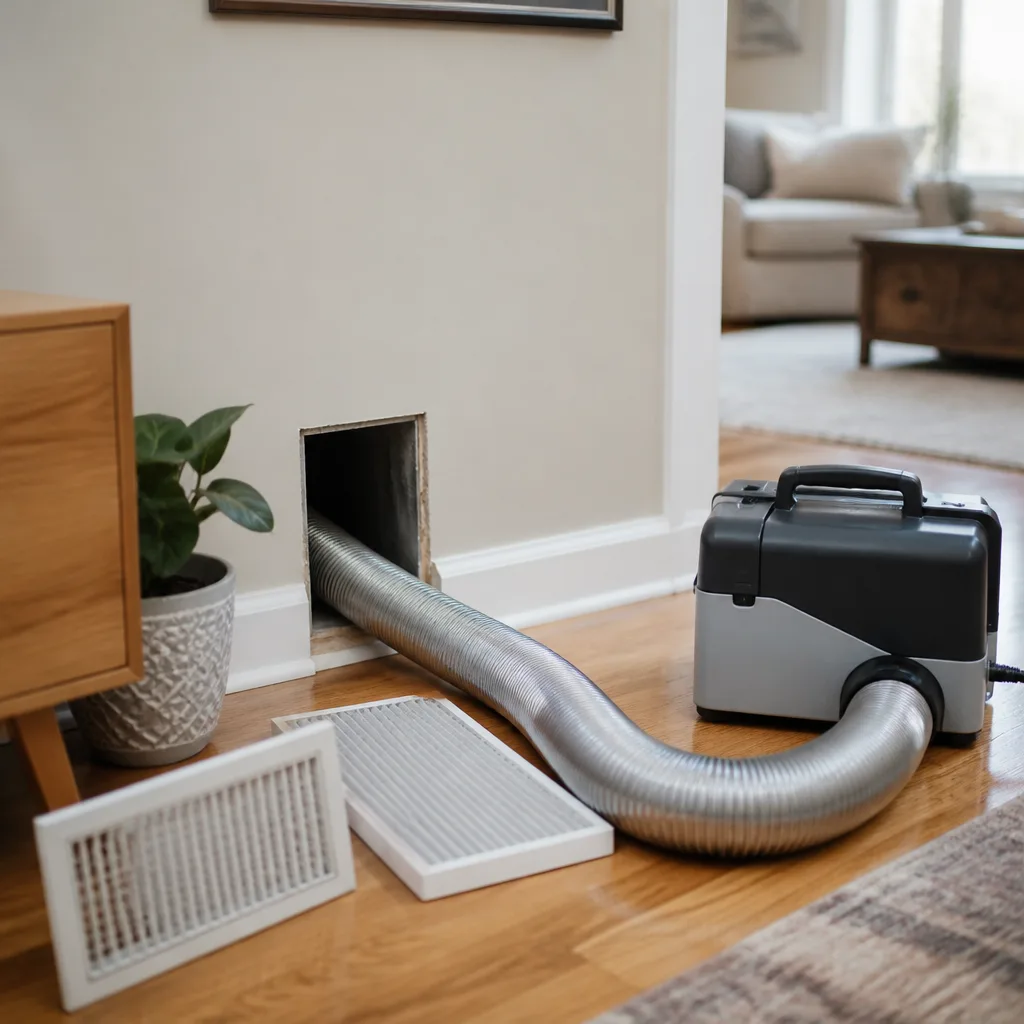 Sanitizing & deodorizing
Whole-system duct and dryer vent check with before-and-after photos - you see exactly what came out of your vents
That "$99 whole-house special" is a bait ad - the real number appears once they are in your hallway, or the "clean" is a shop-vac at the register. We photograph the inside of your ducts before and after instead.
How to Hire an Air Duct Cleaning Contractor in North Raleigh: A Step-by-Step Guide
Here’s the part most homeowners never hear: North Carolina doesn’t license air duct cleaners. There is no state credential for the trade itself, so any person with a van and a shop-vac can legally print “duct cleaning” on a business card and knock on your door in North Raleigh. That changes the hiring decision entirely. You are not comparing prices between equally vetted professionals. You are the vetting. This guide walks through the exact questions to ask, the answers that should reassure you, the answers that should end the conversation, and how to confirm a contractor’s insurance actually covers HVAC damage. By the end, you’ll know how to hire an air duct cleaning contractor in North Raleigh like someone who understands the equipment, not like someone hoping for the best.
Quick Answer
Hiring an air duct cleaning contractor in North Raleigh means verifying three things before price ever enters the conversation: the equipment they use (source removal with negative pressure and real filtration, not a shop-vac), proof of HVAC-specific insurance, and a documented walk-through with before-and-after photos. A legitimate contractor will inspect your system first, quote the whole job in writing, and welcome equipment questions. A contractor who quotes sight-unseen over the phone, refuses to name their equipment, or pushes antimicrobial treatments before confirming contamination has told you everything you need to know.
Styles & brands we work with
- Whole-home duct cleaning
- Dryer vent cleaning
- Camera inspection
- Sanitizing & deodorizing
Table of Contents
- Why There’s No License Barrier in North Carolina
- The Equipment Questions That Separate Pros From Pretenders
- What NADCA Membership Actually Tells You
- What a Legitimate Walk-Through and Quote Look Like
- How to Verify Insurance for HVAC-Related Damage
- Red Flags Unique to Duct Cleaning
- North Raleigh Home and Climate Context
- The Step-by-Step Hiring Process
Why There’s No License Barrier in North Carolina
In most regulated trades, the state does the first round of filtering for you. A licensed electrician or plumber has already proven baseline competence to a board before they can advertise. Duct cleaning in North Carolina doesn’t work that way. There is no state trade license for the service, which means the market includes everything from careful indoor air quality specialists to one-person operations with a rented vacuum and a ladder.
This isn’t a reason to panic. It’s a reason to shift your mindset. Instead of asking “are you licensed,” which many contractors will dodge by pointing to a general business license that says nothing about competence, ask better questions. Specific equipment questions are the fastest filter because they’re hard to fake convincingly. A contractor who knows their craft will talk comfortably about their vacuum, their filtration, and their agitation tools. A contractor who doesn’t will change the subject toward price.
For North Raleigh homeowners specifically, this matters because the area’s mix of established 1980s and 1990s subdivisions alongside newer construction means duct systems vary widely in age and configuration. A contractor who does this work regularly in North Raleigh will recognize the difference between a flex-duct system in a newer home and a rigid metal trunk-and-branch layout in an older one without being told. If you have to explain your own system to the person quoting the job, that’s information.
The bottom line for this section: assume nothing is verified until you verify it. The hiring guide below is written to make that as quick as possible.
The Equipment Questions That Separate Pros From Pretenders
Equipment is where the conversation gets real. The duct cleaning industry uses purpose-built machinery, and contractors who invest in it are proud to name it. Here’s what to ask, and what a good answer sounds like.
Ask: What kind of vacuum do you use, and what’s its rated airflow?
You’re listening for either a truck-mounted negative pressure unit or a portable high-powered unit designed for source removal. Both are legitimate. What you’re filtering out is the contractor whose “vacuum” is a shop-vac with an adapter. A proper answer names the machine and talks about negative pressure: the idea is to put your duct system under vacuum so dislodged debris travels toward the collection unit, not out into the room. If the answer is vague, ask directly: “Is your vacuum rated for duct cleaning specifically?” At Air Duct Cleaning North Raleigh, we run Rotobrush and Nikro duct cleaning systems, which are built for this work, and we’re comfortable putting the machine names in writing because they matter.
Ask: How do you filter the air during cleaning?
Negative pressure helps, but dislodged debris still becomes airborne inside the home during the job. A serious contractor uses a HEPA filtration unit on-site to capture what gets loose. We deploy Abatement Technologies air filtration during every service for exactly this reason. If a contractor can’t describe their filtration setup, they almost certainly don’t have one, and you should expect dust to settle on every surface in the house before they leave. That’s a sign the process is redistribution, not cleaning.
Ask: How do you agitate the ducts before vacuuming?
Compacted debris doesn’t release just because the vacuum is running. It needs agitation first. The two common approaches are brush agitation (a rotating or forward-and-reverse brush head, common on the Rotobrush platform) and air-whip agitation (compressed air that scours the duct walls). Both work when used correctly, and the right choice depends on your duct material and configuration. What you’re listening for is whether the contractor can explain why they’d use one or the other. Evasive answers or “we just vacuum” indicate surface-level service, not source removal.
Ask: Do you use HEPA filtration on the vacuum exhaust?
Not every setup includes it, but contractors who mention it clearly understand contaminant containment. Ask anyway. It reveals whether they’ve thought about it.
- Good signs: Names a real machine, discusses negative pressure, mentions filtration during service, can compare brush versus air-whip agitation, explains why they’d use one or the other.
- Red flags: Describes a household vacuum, can’t name equipment, “we don’t need agitation,” offers only one approach with no explanation.
If a company’s equipment story matches everything above, keep going. Our Air Duct Cleaning North Raleigh service page lays out the equipment and process on our own jobs if you want a reference point. But don’t take it from us. Ask every contractor.
What NADCA Membership Actually Tells You
NADCA, the National Air Duct Cleaners Association, publishes a recognized standard for how duct cleaning should be performed (its ACR standard, which describes source-removal principles, negative pressure, and verification). Membership requires a company to meet certain requirements, including adherence to the association’s code of ethics and to its recognized cleaning standards, and typically involves at least one staff member holding a NADCA certification that requires passing an exam and continuing education. That’s a meaningful signal, but it’s not a guarantee, and it isn’t the only thing to check.
A contractor can be NADCA-certified and still run a mediocre crew. So treat membership as a filter, not a finish line. Ask directly: “Are you a NADCA member? Who on your crew holds a current certification?” A contractor who can answer yes without hesitation and name the association standard without googling it is likely to have a process built around best practices.
Also watch for the “certified” claim used loosely. Every industry has marketing bodies that issue certificates for a fee with minimal requirements. When a contractor says “certified,” ask: “Certified by whom, and what does the certification require?” A real NADCA or equivalent certification has an exam, a standard of practice, and continuing requirements. A generic certificate in a binder does not. If the answer can’t be put in one sentence, it’s probably marketing.
For homeowners around North Raleigh, this step is worth ten minutes. The contractors worth hiring will happily walk you through their credentials because it’s a competitive advantage for them.
What a Legitimate Walk-Through and Quote Look Like
A legitimate contractor will ask to see your system before quoting, and the walk-through itself tells you a lot. Here’s the sequence a careful contractor follows.
- They want to see your HVAC equipment and duct layout. Not just the vents in the ceiling. They’ll ask to look at the air handler, the supply plenum, and any accessible trunk lines, and they’ll note how many branch runs serve the home. This takes 15 to 30 minutes in most North Raleigh homes.
- They inspect accessible ducts with a camera or a flashlight. Some will show you what they see. All should be willing to describe it in plain terms.
- They ask about the problem you’re trying to solve. Recent move? Allergy symptoms? A musty smell? Renovation dust? The reason changes what the job should include.
- They quote the whole system in writing. One flat price per system, agreed before work starts. No per-vent pricing, no add-ons that appear after the truck arrives.
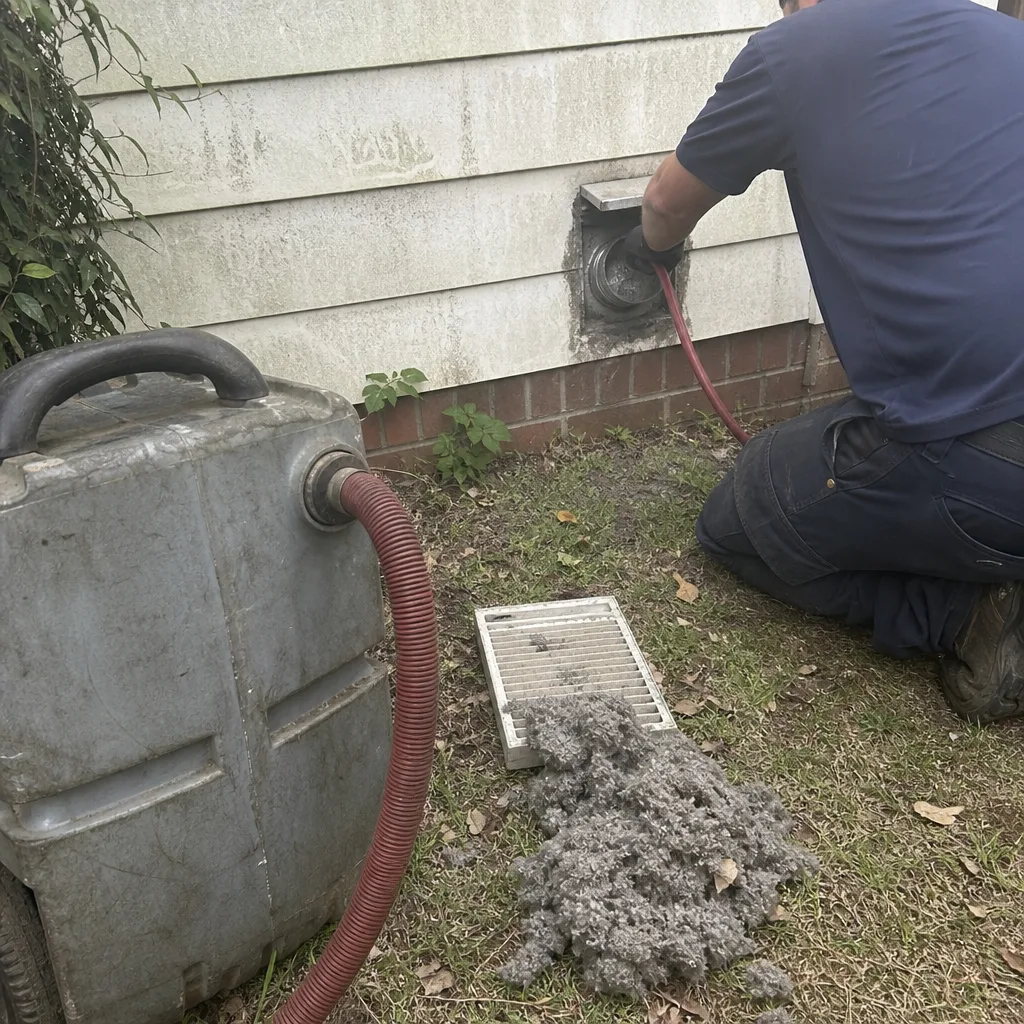
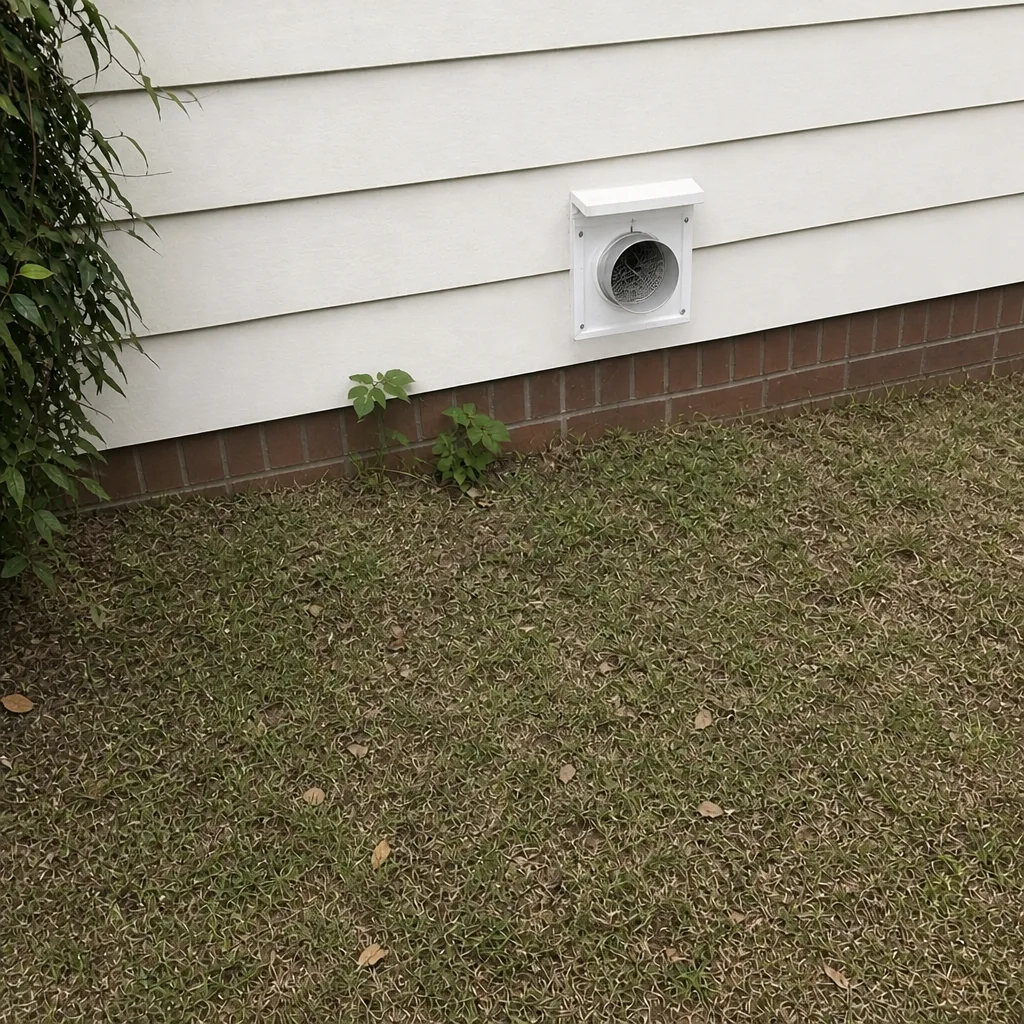
- They explain before-and-after documentation. A serious contractor will show you photos of your own ducts before cleaning starts and again after. If they don’t offer, ask.
- They discuss what cleaning is not. Cleaning addresses accumulated debris and contaminant loading. It isn’t a fix for mold, moisture, or a failing HVAC system, and a contractor who says otherwise is selling you the wrong thing.
What you should not accept is a firm quote sight-unseen over the phone or a “flat rate” so low you wonder how anyone pays for equipment. If a company won’t walk your home before pricing it, they’re pricing a guess and you’ll likely find a different number once the technician is on site. Our team runs this same walk-through on every air duct cleaning estimate in North Raleigh. It’s the only way to quote honestly.
How to Verify Insurance for HVAC-Related Damage
This is the step most homeowners skip, and it’s the one that matters when something goes wrong. Duct cleaning equipment can damage ductwork, dislodge a weak connection, or in a worst case disturb a component of your system that then fails. General liability insurance may or may not cover those scenarios. You want to confirm the contractor carries coverage that specifically addresses HVAC-related work and property damage.
Here’s how to check without being awkward about it:
- Ask for a current certificate of insurance. Any legitimate contractor can email one. If they hesitate, move on.
- Confirm the policy is active, not expired. Looks obvious. People miss it constantly.
- Ask what the policy covers. “What happens if my ductwork is damaged during cleaning?” is a fair question. You’re listening for a contractor who can explain their coverage in plain language, not one who changes the subject.
- Ask whether the crew working in your home is covered. If the contractor has helpers, confirm they’re on the policy, not just the owner.
One more point: insurance isn’t a promise that nothing will go wrong. It’s evidence that the contractor treats their work as a business with accountability. A contractor with proper coverage has invested in being around long enough to need it, which is a different signal than a business card and a phone number.
Red Flags Unique to Duct Cleaning
The duct cleaning trade has its own warning patterns, distinct from the rest of home services. These are the ones we see most often when homeowners call us after a bad experience with someone else.
Unusually low flat-rate pricing
Duct cleaning requires expensive equipment and a trained crew. A price that avoids the walk-through, avoids naming the equipment, and avoids a written quote is usually a teaser number that expands once the technician is in the home. Ask what the flat price includes. If the answer changes based on what they find, it wasn’t a flat price.
Refusing to provide before-and-after documentation
Cleaning happens out of sight. The only way to know it happened is to see photos of your own ducts, before and after. A contractor who won’t show you is asking you to take their word for invisible work. That’s not a reasonable expectation.
Upselling antimicrobial treatments before contamination is confirmed
Antimicrobial treatments are legitimate in specific situations (confirmed microbial growth, for example). But a contractor who mentions sanitizing before they’ve inspected your ducts is selling, not diagnosing. A careful contractor recommends treatment based on what they find, and explains why.
Refusal to name equipment
If a contractor won’t say what vacuum they use or how they filter the air, there’s usually a reason. Take that as your answer.
Quote over the phone with no inspection
A firm price with no look at the system is a guess dressed as a bid. You’ll find out how much the real price is when the technician arrives.
North Raleigh Home and Climate Context
North Raleigh is a mix of established subdivisions and newer planned neighborhoods, and the age of the housing stock directly affects what duct cleaning should include. In older North Raleigh homes, duct systems often include rigid metal trunk lines with branch runs to individual rooms, and flexible connectors that are more likely than modern flex duct to develop leaks over time. In newer homes, flexible duct is common, and its larger surface area can accumulate debris more gradually but over a wider footprint.
Climate plays a role too. Raleigh’s summers drive long cooling seasons with the system running for months, pulling humid air through ductwork and settling fine dust and condensation-related residue along duct surfaces. Winters swing between mild and cold snaps, and that cycling keeps the system working hard. Add the pollen that drops heavily across the Piedmont in spring, and most North Raleigh homes see duct accumulation happen faster than homeowners expect.
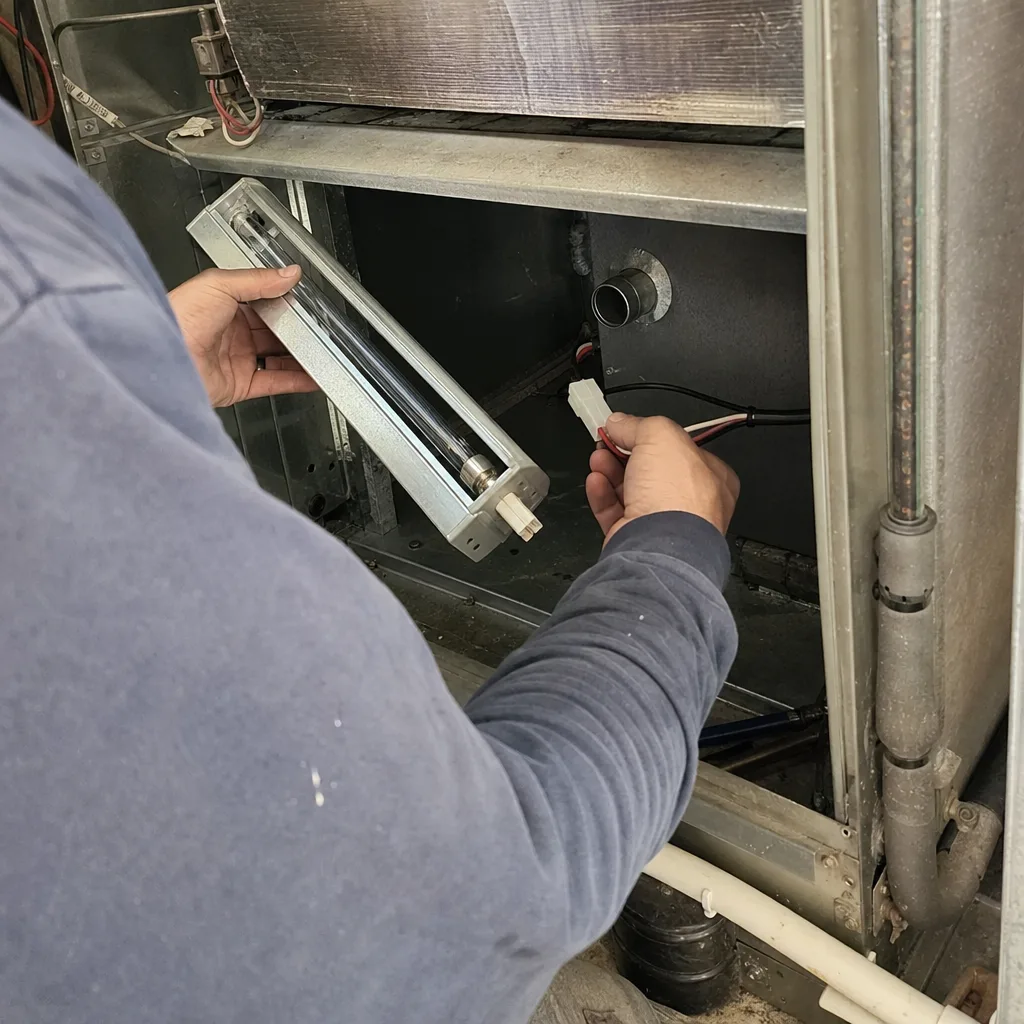
What this means for hiring: ask the contractor how they’d approach your specific system, and listen for someone who describes it accurately. A contractor who works regularly in North Raleigh will recognize the differences between a 1985 home and a 2015 home without being told, and will adjust the process accordingly. If cleaning reveals damaged or disconnected ductwork, we offer Duct Repair and Sealing as part of the same service call, so you’re not handed off to a second contractor. Our HVAC cleaning service handles the components around the ducts themselves, which is often part of the same visit. If you have a dryer vent routed through a wall or roof, that’s also worth checking while we’re there. Our dryer vent cleaning service addresses a leading cause of house fires that HVAC-only companies routinely skip.
The Step-by-Step Hiring Process
Here’s the whole hiring process compressed into a sequence you can follow in order. This is the same sequence you can apply to any contractor in the Triangle, not just us.
- Shortlist two or three contractors. Ask for names from neighbors, search locally, and look for companies with a review footprint you can read. Ignore ads that promise “lowest price.”
- Call and ask the equipment questions first. Negative pressure or shop-vac? What filtration during service? Brush or air-whip agitation? Can they name their machines? You’re looking for specific answers, not reassurance.
- Confirm NADCA membership and ask who on the crew holds certification. Ask what the certification required.
- Request a certificate of insurance. Confirm the policy is active and covers HVAC-related property damage.
- Schedule a walk-through. Do not accept a phone quote. Watch what they inspect, and ask what they see.
- Review the written estimate. It should quote one flat price per system, describe what’s included, and state the final price is set by the estimate.
- Ask about before-and-after photos. Confirm when they’ll show them to you.
- Ask what happens if cleaning reveals damage. You’re listening for whether they can handle repair and sealing in-house or whether you’ll need a second contractor.
- Book the job, and be home for the walk-through before cleaning starts. Protects you both.
Ten minutes of prep on this checklist saves hours of second-guessing after the invoice. We answer equipment questions on every call, and our technicians have up to 10 years of experience handling the systems common in North Raleigh homes.
Common Mistakes to Avoid
- Comparing price before comparing process. Two quotes only mean something if both contractors are describing comparable work. A $99 quote and a $500 quote for “duct cleaning” may not describe the same service at all.
- Accepting a phone quote without a walk-through. The price is a guess when the contractor hasn’t seen your system. Expect it to change once someone is in the home.
- Skipping the insurance check. Homeowners in North Raleigh often ask about credentials and skip the certificate of insurance, which is the step that actually protects them if something goes wrong.
- Treating “certified” as a complete answer. Ask certified by whom and what the certification required. Vague answers mean nothing was verified.
- Not asking for before-and-after photos. Cleaning is invisible. If you don’t ask, you may not see any documentation of what was done.
- Assuming a big van means a big game. Truck size says nothing about the vacuum’s rated power or what filtration is deployed. Ask about equipment, not vehicle.
- Accepting antimicrobial upselling without diagnosis. Sanitizing is a legitimate service in specific situations. It shouldn’t be a package add-on offered before the ducts have been inspected.
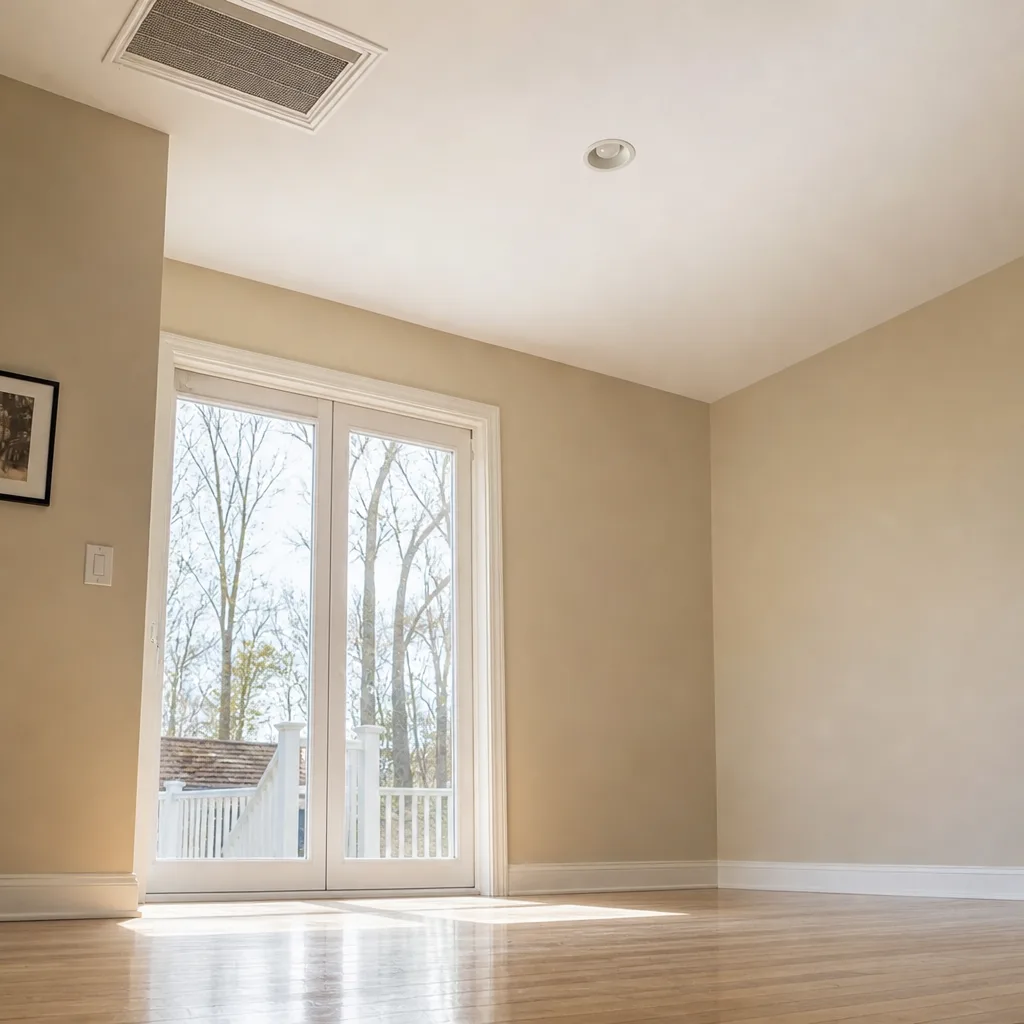
See the difference
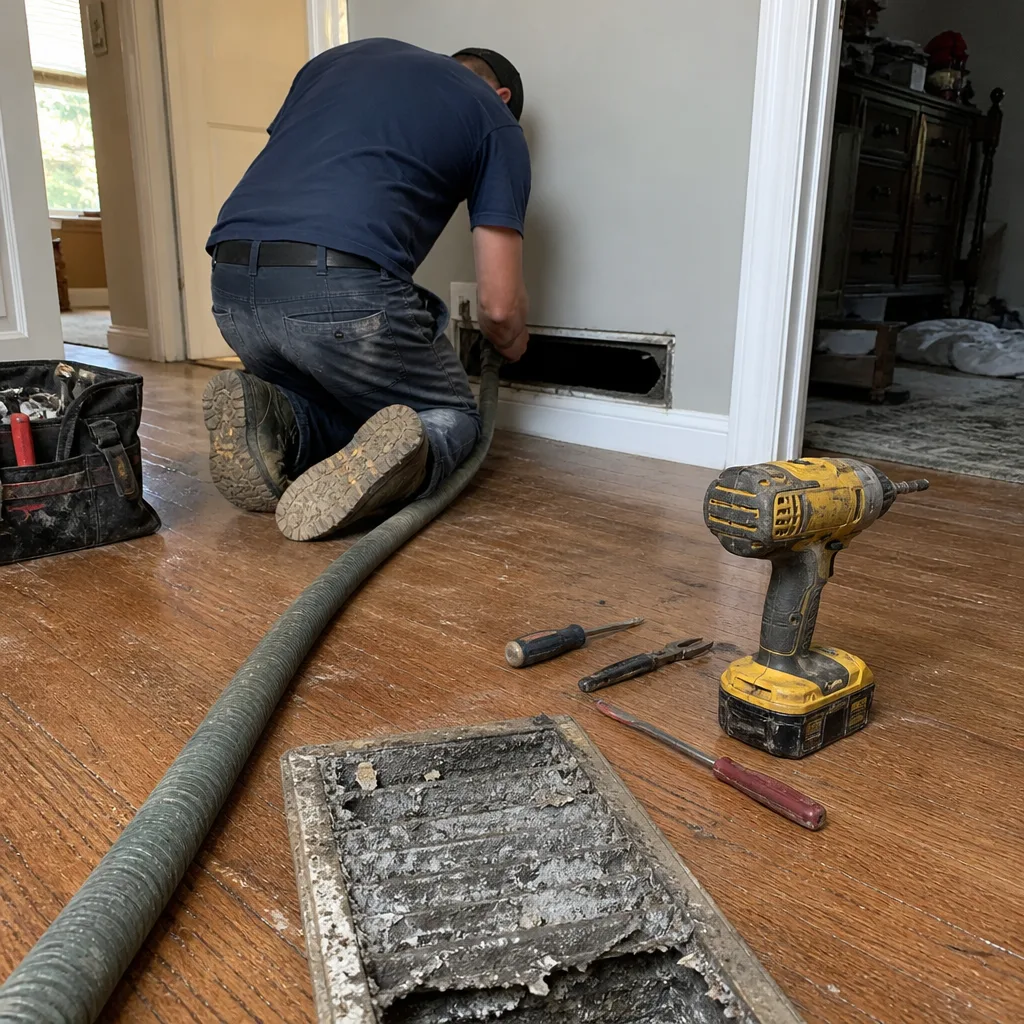 Before
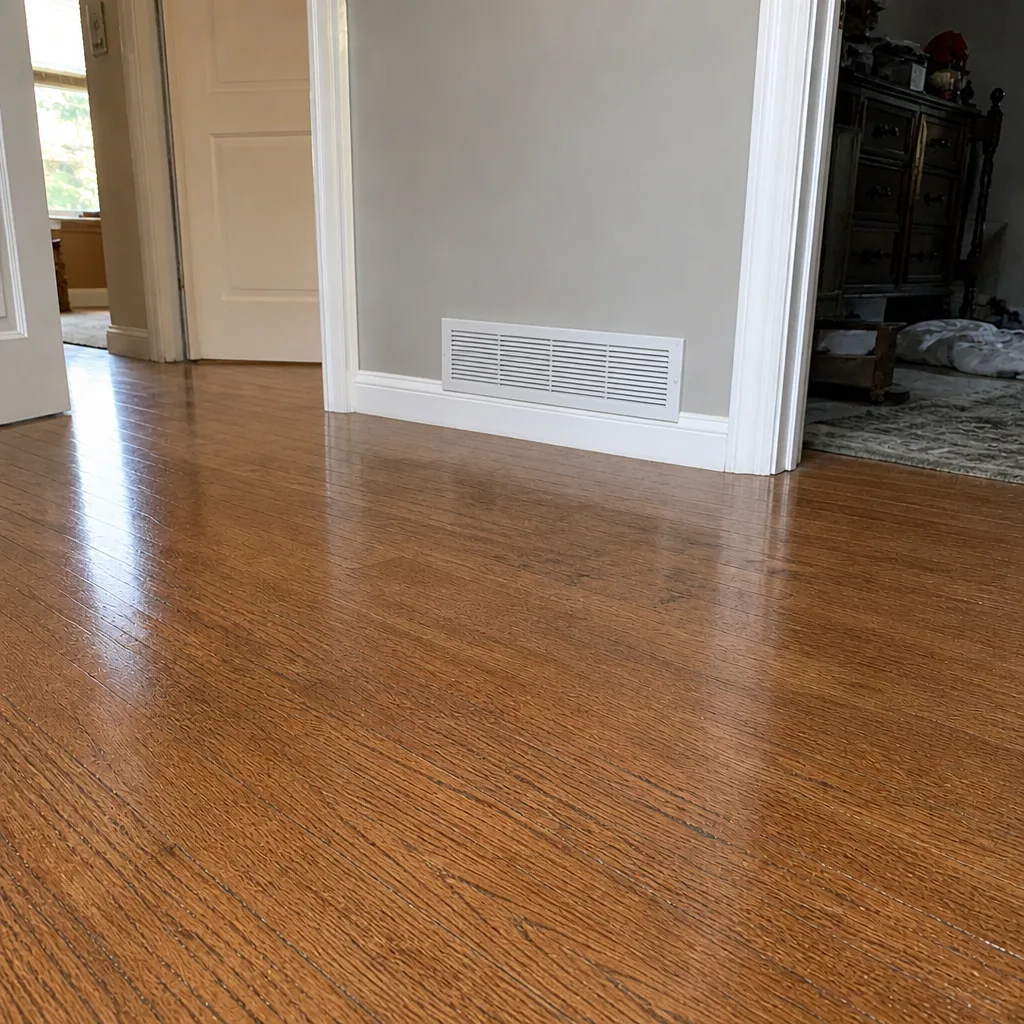 After
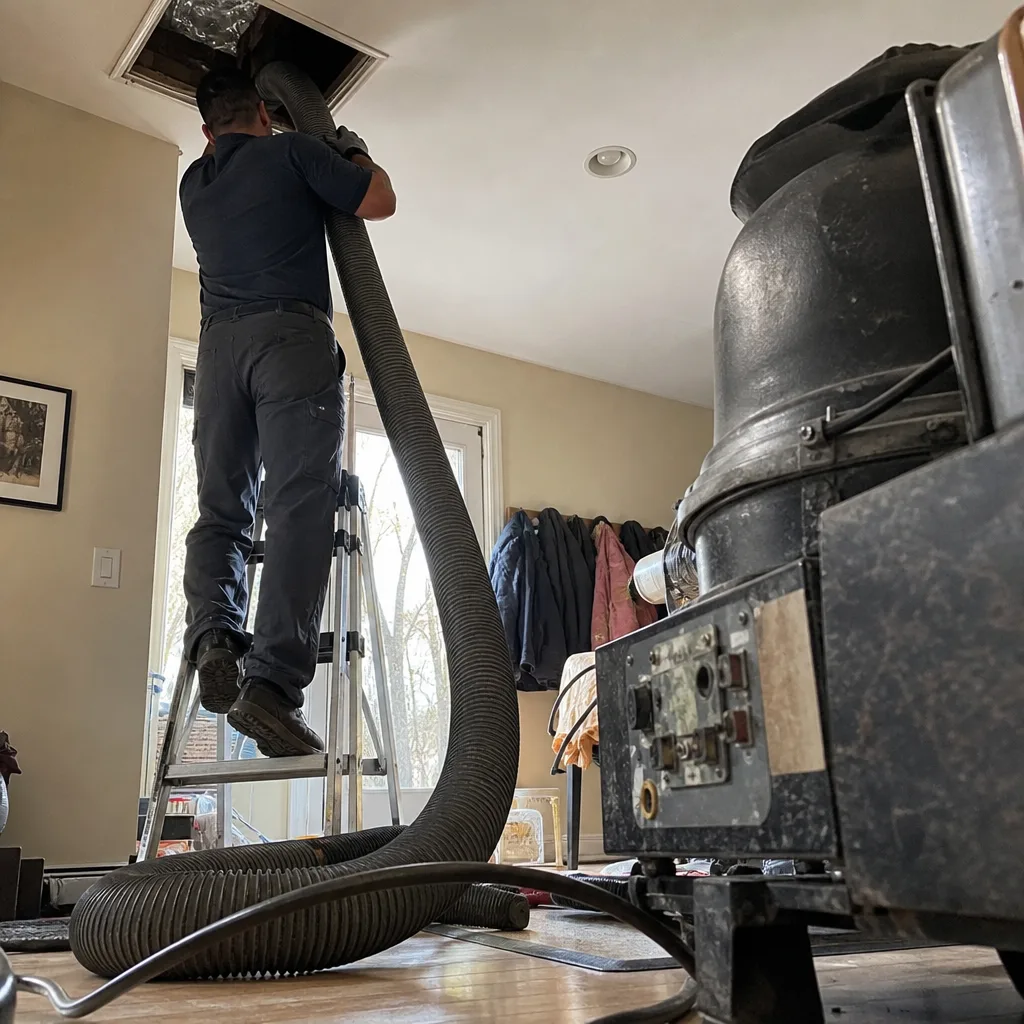 Before
 After
 Before
 After
When to Call a Professional
You should call a professional for a walk-through when you’ve recently moved into a home with an unknown duct history, when your system hasn’t been cleaned in several years, when you notice dust accumulating rapidly after cleaning surfaces, when family members with allergies or asthma live in the home, when a musty smell lingers when the HVAC runs, or when you’re planning a renovation that will send dust into the ductwork during the project. You should also call if your dryer seems slow to dry or the exterior vent isn’t exhausting much air; that’s a safety issue and unrelated to duct cleaning itself, which is why it’s worth a separate check. Air Duct Cleaning North Raleigh offers free estimates in North Raleigh. Call (877) 820-8110 and we’ll walk the system, answer the equipment questions, and quote the whole job in writing. We use Rotobrush and Nikro equipment with Abatement Technologies air filtration on every job, and we’ll talk you through all of it.
Frequently Asked Questions
Air duct cleaning in North Raleigh is typically quoted as one flat price per system based on the size and configuration of the home, not per vent. Exact pricing depends on the number of branch runs, the age and material of the ductwork, and whether the visit includes dryer vent, HVAC components, or repair and sealing. Call (877) 820-8110 for a free in-person estimate. The written quote sets the final price.
Cheap quotes usually describe a different service than the one you thought you were buying: less equipment, less coverage, no filtration during cleaning, and often an aggressive upsell once the technician is on-site. A flat price with proper equipment and a documented walk-through costs more up front because the work is real work. Ask what the quote includes step by step, and compare process, not just the number. Call (877) 820-8110 if you’d like a free estimate you can place side by side with anything else you’ve been offered.
You know by seeing photos of your own ducts before and after cleaning, and by having walked the system yourself with the contractor before work started. Cleaning happens out of sight, so documentation is the entire verification process. If a contractor won’t show photos, you have no reason to trust the work was performed. Call (877) 820-8110 and we’ll walk you through what before-and-after documentation on your own system looks like before you book.
Most homes don’t need annual cleaning. Homes with pets, family members with allergies or asthma, recent renovation dust, or a long gap since the last cleaning benefit most. Homes with newer sealed systems and no indoor air quality complaints may go years between cleanings. The right interval depends on what’s actually in the ducts, not a calendar. A free walk-through gives you a factual answer. Call (877) 820-8110 to schedule one.
You should be home for the walk-through before cleaning starts, and available to review before-and-after photos and any findings at the end. The cleaning itself can proceed without you watching every step, but the check-in points matter. Our team asks for about fifteen minutes before and after. Call (877) 820-8110 with any scheduling questions.
A careful contractor will document the damage with photos and explain whether it’s a simple sealing job or something larger. Duct repair and sealing can usually be handled by the same company that performed the cleaning, which saves you the trouble of finding a second contractor and having the system re-inspected. If a company tells you they can only clean, ask who they recommend for repair, and confirm that contractor independently. Call (877) 820-8110 for a free estimate that includes inspection findings and clear next steps.
The Bottom Line
Hiring an air duct cleaning contractor in North Raleigh is a technical decision before it’s a price decision. Verify the equipment (real negative pressure, on-site filtration, purpose-built agitation), verify the insurance (HVAC-related coverage, active policy), verify the process (walk-through, one flat price in writing, before-and-after photos), and only then compare numbers. The market has no state license barrier, which means the filter is you. A contractor who welcomes those questions is the one worth hiring. A contractor who dodges them has answered for you. Call (877) 820-8110 for a free estimate, and we’ll walk the system with you before anything is quoted. We answer 24/7. Fast dispatch from 7am to 7pm, Sunday through Friday.
Written by the team at Air Duct Cleaning North Raleigh.