
Last updated November 24, 2026
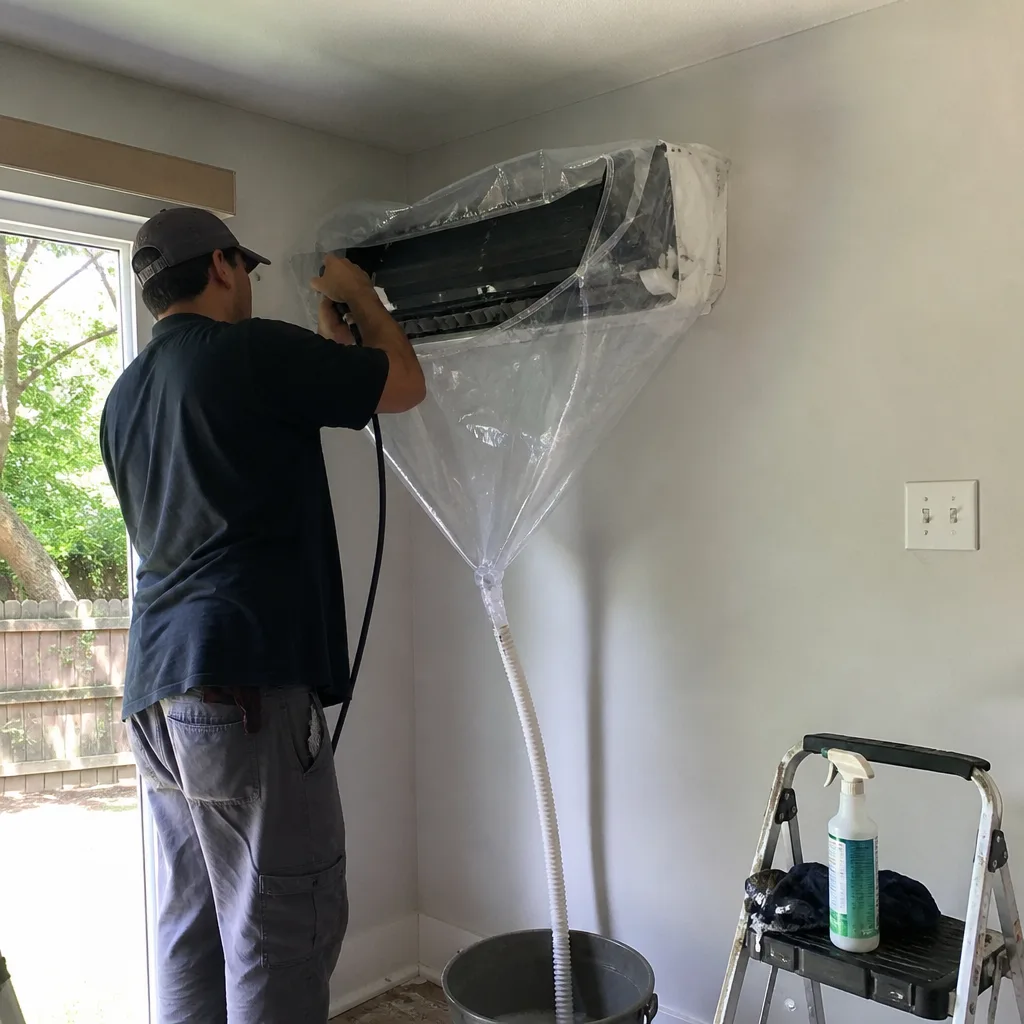
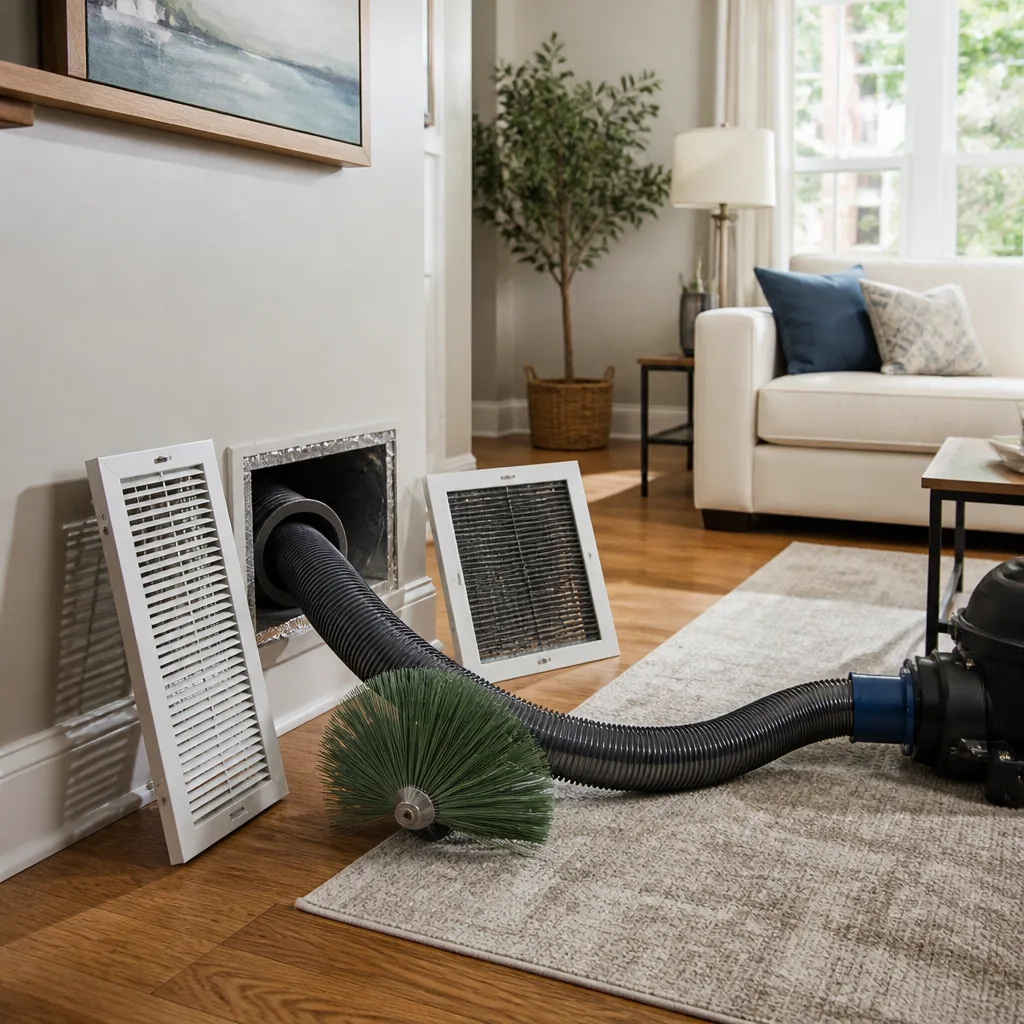 Whole-home duct cleaning
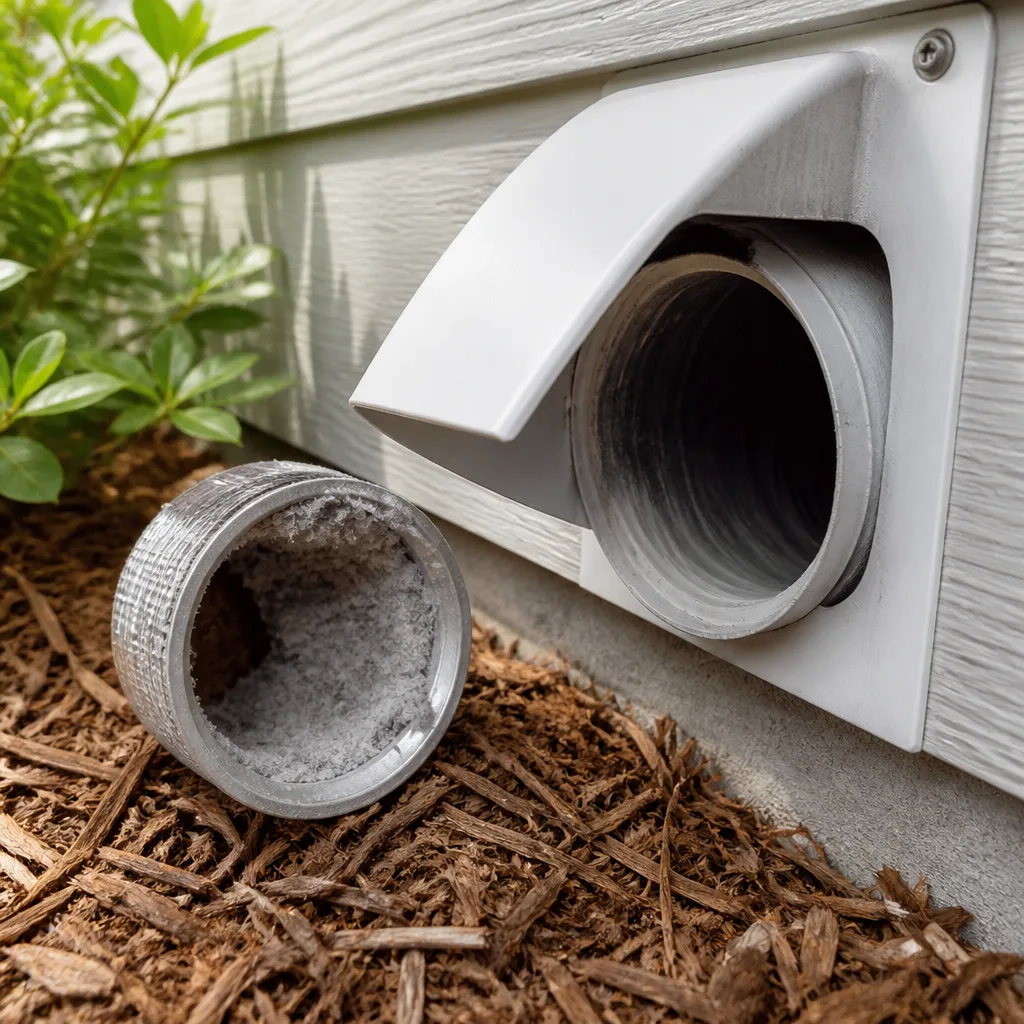 Dryer vent cleaning
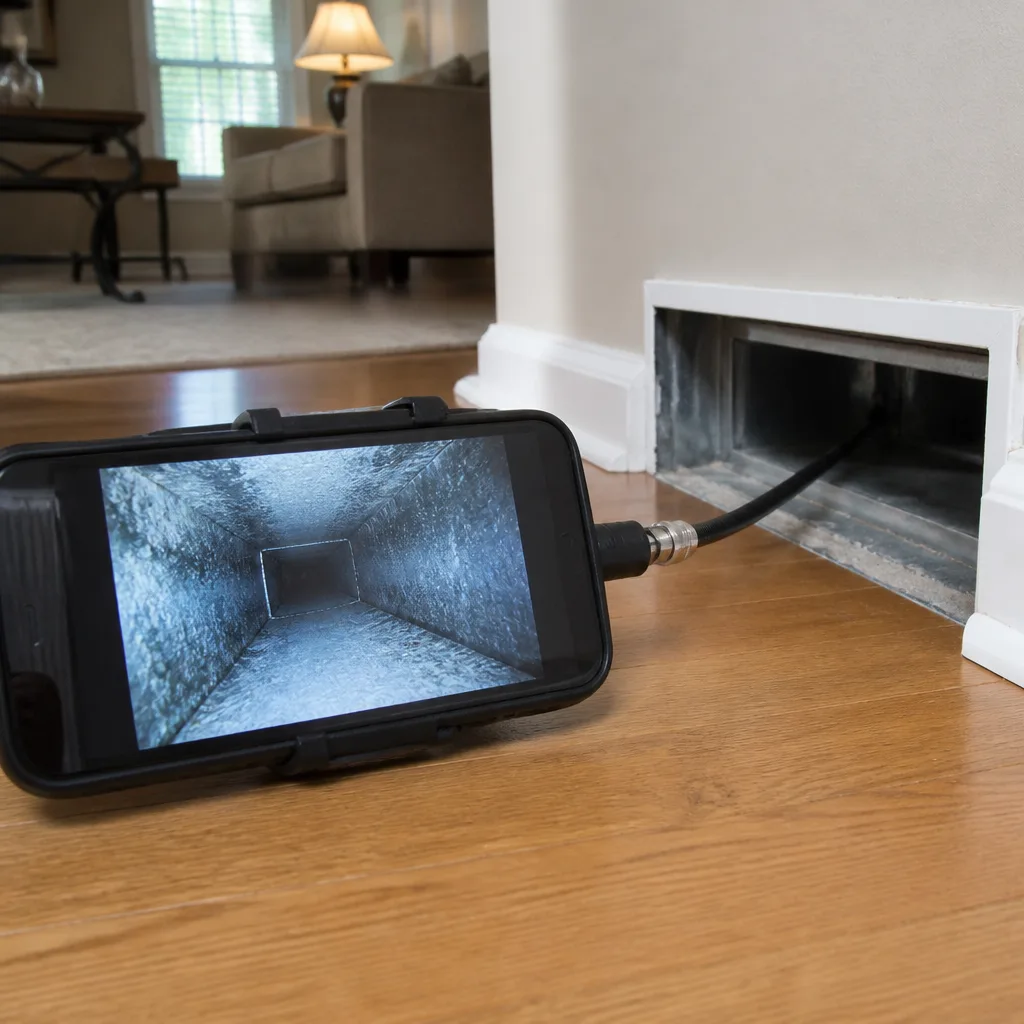 Camera inspection
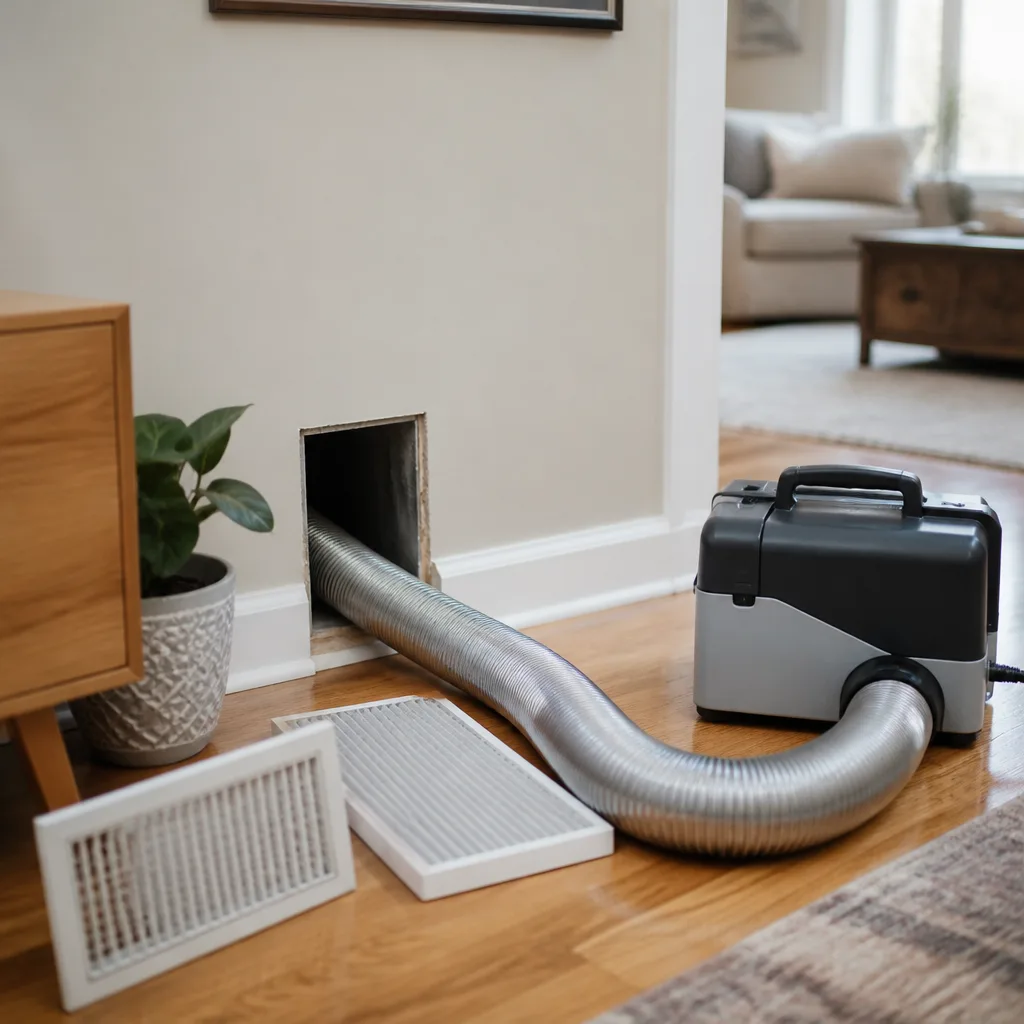 Sanitizing & deodorizing
Whole-system duct and dryer vent check with before-and-after photos - you see exactly what came out of your vents
That "$99 whole-house special" is a bait ad - the real number appears once they are in your hallway, or the "clean" is a shop-vac at the register. We photograph the inside of your ducts before and after instead.
The Complete Guide to Air Duct Cleaning in North Raleigh
Most duct cleaning guides tell you the same thing: ducts get dirty, cleaning helps, call a pro. That advice could have been written anywhere, and it misses the reason ducts in North Raleigh get dirty in the first place. This part of the city grew fast after 2000, and thousands of homes sit on lots where red clay was graded, cut, and built over. Clay-laden construction dust doesn’t vanish when the builder leaves. It settles into flex duct, works loose every time the system cycles, and circulates through the house for years. Add piedmont humidity and the problem behaves differently than it does in drier parts of the country. This guide explains what’s actually happening inside North Raleigh ductwork, what professional cleaning should involve, and how to tell a real job from a cosmetic one.
Quick Answer
Air duct cleaning in North Raleigh means removing built-up dust, construction debris, and microbial growth from the supply and return duct system using negative-pressure equipment and mechanical agitation, not a vacuum nozzle waved at a register. A verifiable job follows NADCA ACR standards, includes before-and-after inspection, and uses purpose-built equipment such as a Rotobrush system paired with HEPA-rated air filtration. Homes built during the post-2000 development boom here often carry clay and drywall dust signatures that need extraction, not just brushing.
Styles & brands we work with
- Whole-home duct cleaning
- Dryer vent cleaning
- Camera inspection
- Sanitizing & deodorizing
Table of Contents
- Why Ducts in North Raleigh Get Dirty Differently
- The Post-2000 Construction Boom and What It Left Behind
- How Piedmont Humidity Binds Contaminants to Duct Liner
- What NADCA ACR Standards Actually Require
- The Equipment That Separates Real Cleaning From Cosmetic Cleaning
- How to Read a Pre- and Post-Cleaning Inspection Report
- What Air Duct Cleaning Costs in North Raleigh
- How Often Ducts Really Need Cleaning Here
Why Ducts in North Raleigh Get Dirty Differently
Duct contamination follows local conditions. What fills a duct in North Raleigh isn’t the same mix that fills one in a dry climate or an older coastal city, and if a company quotes you from a generic script, they’re guessing about your house. Three forces shape the contamination pattern here.
The soil. Much of North Raleigh sits on red clay that holds water and turns to fine, sticky dust when it dries. Grading and excavation during construction spread that clay across lots and driveways. It gets tracked inside, pulled into return air, and deposited in duct runs. Clay particles are small enough to stay airborne but heavy enough to cling once they settle.
The age of the housing. Neighborhoods across the northern corridor filled in fast during the 2000s and 2010s. That means a large share of homes here are in the 10-to-25-year window, which is exactly when original flex duct starts to sag, collect dust at low points, and show early signs of liner wear. Ductwork from that era was also often sized and routed quickly, with more bends and longer flex runs than older homes.
The humid summers. Piedmont humidity keeps indoor air moister than in the West. Dust that would stay loose in a dry house instead binds to duct surfaces. Once bonded, it doesn’t release with airflow alone.
In our experience across this part of the city, the combination produces a specific profile: fine clay and drywall dust in the supply trunks, heavier deposition in the returns near the air handler, and organic growth in the cooler, moister sections of the system. That profile dictates what kind of cleaning you actually need, which we cover in the next sections.
The Post-2000 Construction Boom and What It Left Behind
When a home is built, ductwork is installed before the drywall goes up, before flooring, before trim, and before final cleaning. Every one of those stages throws dust into the air, and open duct ends capture it. Builders cap registers before the system runs, but construction debris still finds its way into the return plenum, boot transitions, and the low spots of flex runs.
Here’s what that leaves in a North Raleigh house built during the boom:
- Drywall dust in the supply runs. Fine, alkaline, and prone to coating surfaces.
- Clay and excavated soil pulled in through returns during the landscaping and driveway phases.
- Sawdust and wood fragments from framing and cabinetry, which collect at flex-duct sags.
- Fiberglass fragments from cut insulation, which settle in boot transitions and returns.
- Drywall screws, tape scraps, and packaging that drop into open runs and stay there.
The misconception we hear most often is that the builder’s final cleaning handled this. It didn’t. Builder cleanup covers visible surfaces. Anything inside the duct system stays there. And because the system keeps circulating, those particles don’t settle permanently – they lift, travel, and redeposit every cycle.
That’s why brush sweeping alone isn’t enough in a post-2000 home. Drywall dust and clay bond to the duct wall, and a brush loosens some of it while pushing the rest downstream. Extraction under negative pressure is what actually removes it from the system. This is also where air duct cleaning done to a real standard differs from a surface pass, and it’s why we ask about the year the house was built before we quote.
How Piedmont Humidity Binds Contaminants to Duct Liner
Dust on a duct wall is not a single fixed thing. In a dry climate, most of it stays loose and moves with airflow. In the North Raleigh piedmont, summer dew points climb and indoor relative humidity typically sits higher than in dryer regions. That changes the physics.
When humid air meets a cool duct surface, condensation can form. Dust that settles onto that moist surface absorbs moisture and compacts. Over time the layer hardens, and standard airflow no longer lifts it. If the system has any organic material present – dust, skin cells, pet dander, debris – the moisture also creates conditions where microbial growth can begin.
This affects three areas specifically:
- Duct board and lined plenums, where fibrous surfaces hold moisture longer than metal.
- Flex duct low points, where cooler air and moisture meet.
- The air handler cabinet, which is why HVAC cleaning belongs in the same visit as duct cleaning.
The practical implication: in North Raleigh, cleaning needs mechanical agitation to break the bond between particulate and the duct wall before extraction, and sanitizing has a real role after cleaning because moisture-driven growth is a genuine local condition, not a sales add-on. Any quote that skips agitation and includes only a vacuum is likely to leave the bonded layer in place.
What NADCA ACR Standards Actually Require
NADCA is the National Air Duct Cleaners Association, and its ACR standard (Assessment, Cleaning, and Restoration) is the recognized industry benchmark for what a duct cleaning job should include. Understanding it is the single best way to evaluate a quote.
Under ACR standards, a legitimate cleaning involves the following. When a company skips any of these, the job is not ACR-compliant.
- Source assessment. Identify where contamination is entering the system, not just where it ends up.
- System inspection before cleaning, with documented findings.
- Containment so dislodged debris doesn’t escape into occupied space.
- Negative pressure maintained on the system throughout cleaning, so debris moves toward the collection point.
- Mechanical agitation (brushes, air whips, or contact cleaning) to detach bonded particulate from every reachable surface.
- Cleaning of the air handler, coils, and plenum, not just the ducts.
- Post-cleaning inspection to verify results, ideally with photos.
What most local competitors actually deliver is a vacuum-only pass with a shop-vac-class machine, no containment, and no post-cleaning documentation. That’s not cleaning the system; it’s removing what’s easiest to reach. In North Raleigh, where bonded clay and drywall dust are the dominant problem, a vacuum-only pass is close to cosmetic.
The Equipment That Separates Real Cleaning From Cosmetic Cleaning
Equipment is the clearest signal of whether a company is doing the work or pretending to. We name our equipment because it matters, and because a homeowner comparing quotes should be able to ask.
Three pieces of gear define a verifiable job here:
- A purpose-built duct cleaning system, such as the Rotobrush, with a rotating brush head and integrated vacuum. It’s built for this work: agitation and extraction in one pass. A repurposed shop vac can’t do either at the scale a residential system requires.
- HEPA-rated negative-pressure equipment, such as the Abatement Technologies filtration systems we use on-site. Negative pressure contains dislodged debris inside the system instead of redistributing it into the home. This is what protects the rooms you’re standing in.
- A second vacuum source on the opposite end of the system, so a supply trunk can be cleaned under controlled airflow rather than static “suction near an open register.”
We also handle HVAC cleaning in the same visit, because the air handler, coils, and drain pan are part of the same system the ducts serve. Cleaning ducts while leaving the air handler full of debris is a waste of both. And because we work with Honeywell and Aprilaire platforms, we can connect the cleaning to the air quality upgrades the system can support – filtration and humidification that a homeowner can actually see on a thermostat. Those upgrades aren’t a sale on top of the cleaning. They’re the second half of what a clean system makes possible.
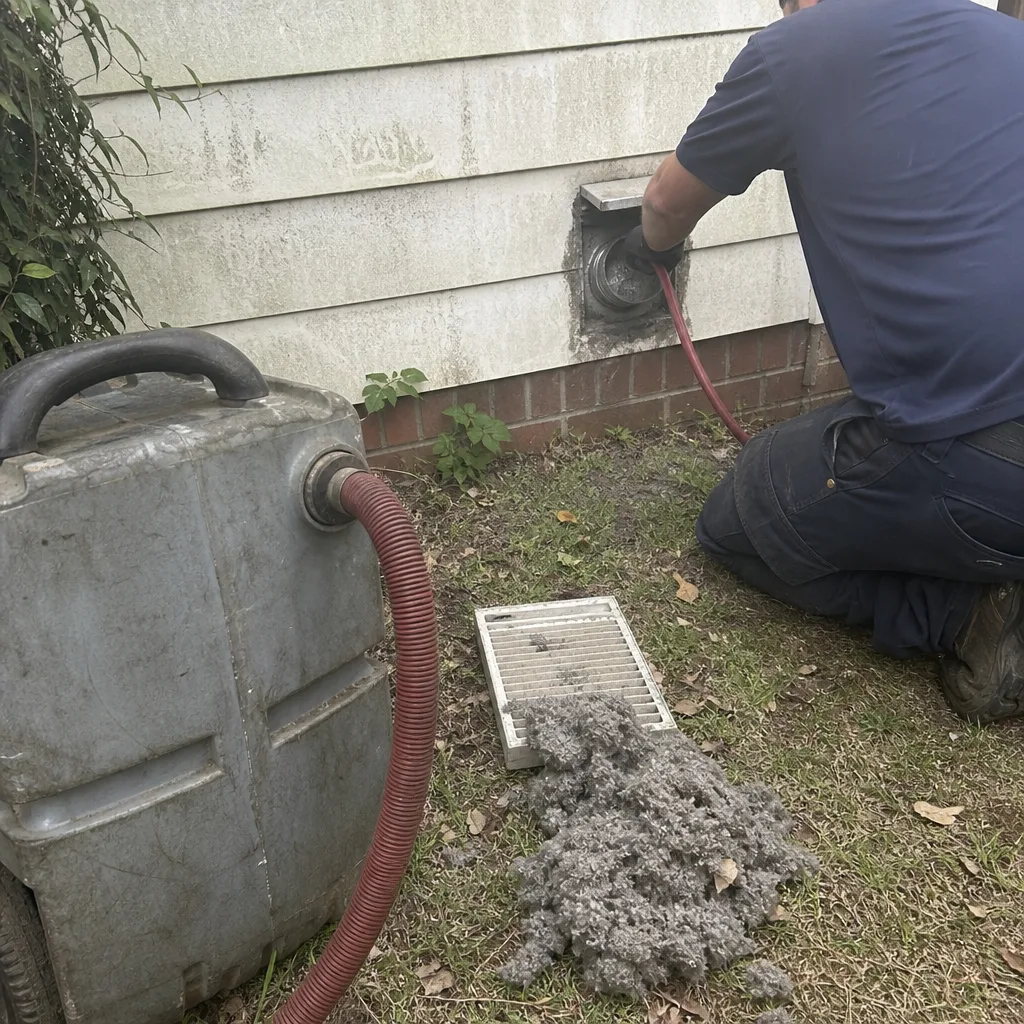
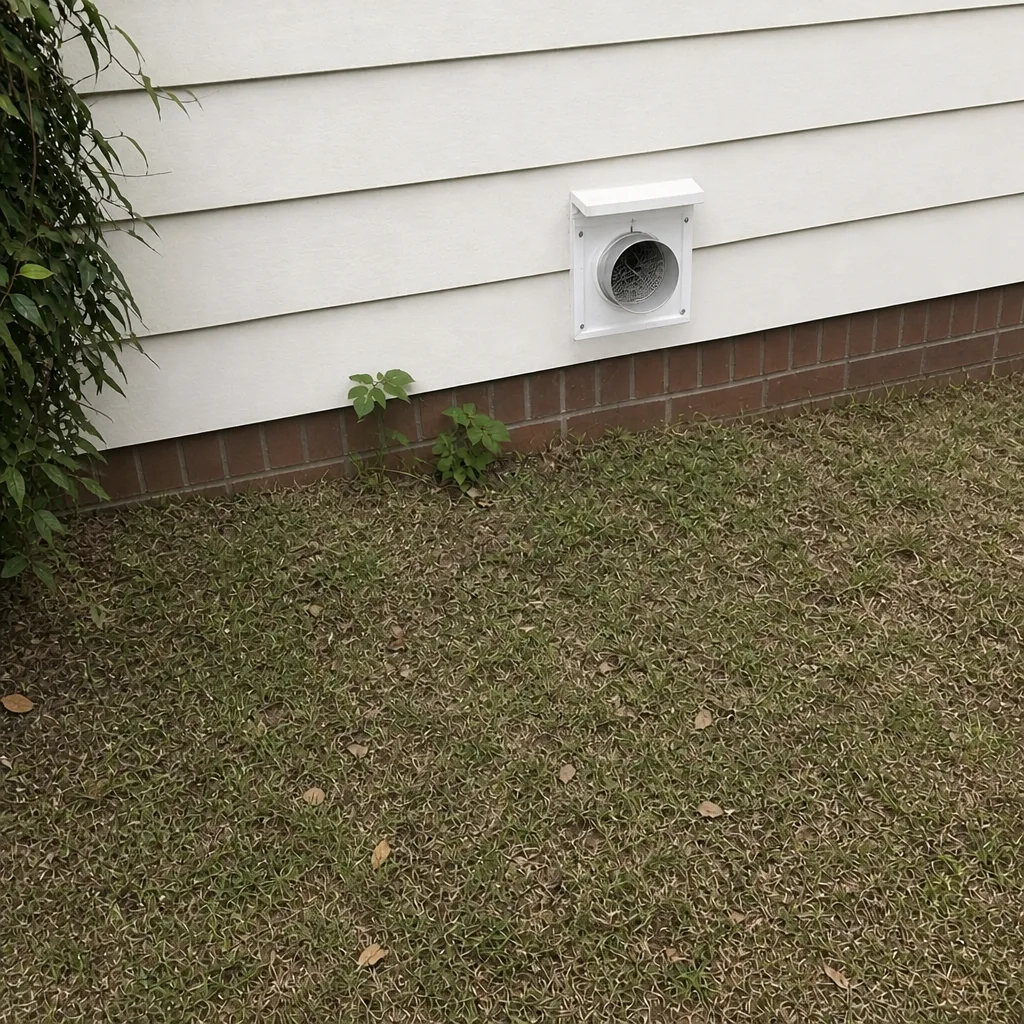
One more piece: dryer vent cleaning. It’s a separate fire-safety concern from duct cleaning and is often skipped because HVAC-focused companies don’t offer it. We do, and it’s the kind of job that’s cheaper to schedule than to overlook. You can read more about how that service works in dryer vent cleaning.
How to Read a Pre- and Post-Cleaning Inspection Report
The work is either documented or it’s a claim. A clean inspection report is what separates a verifiable job from a confident-sounding one – and in North Raleigh, where you’re paying to remove real material from the system, you should get one.
Before cleaning, a proper report includes:
- Photos of every accessible duct section and the air handler, taken under light.
- The condition noted – dust level, debris type, moisture indicators, any visible liner damage.
- Airflow and static pressure readings if the company is thorough, which tell you whether the system is behaving as it should.
- Findings on flex duct sag, disconnected boots, or liner wear – anything that would explain a recurring dust problem.
After cleaning, the report should show:
- Side-by-side or matched before-and-after images of the same sections, so you can see the wall of the duct, not a random register.
- A note on any duct defects found and whether they were repaired or need follow-up. Duct repair and sealing is a first-party service for us; if cleaning reveals a disconnected run, we can fix it rather than leaving you to find a second contractor.
- The type and scope of cleaning performed, including which sections were cleaned and how.
If a company can’t produce before-and-after photos of your own ducts, that’s the answer to “was it done.” You don’t need a promise; you need the images.
What Air Duct Cleaning Costs in North Raleigh
Air duct cleaning in North Raleigh typically costs somewhere in the range of a few hundred to just over a thousand dollars depending on the size of the home, the number of systems, and the condition of the ductwork – but we don’t quote a phone price, because the on-site inspection determines the scope. What matters more than the number is how you’re billed.
The pricing problems homeowners worry about here are real. A low teaser price turns into a much larger invoice once the technician is on-site. Per-vent pricing punishes you for a bigger house. And a job quoted without inspection can’t honestly estimate the work.
What a clean quote looks like:
- One flat price per system, agreed before any work begins.
- No per-vent pricing, which means the price reflects the system, not the register count.
- Before-and-after photos with the work itself.
- A written estimate that sets the final price, not an estimate that moves once work starts.
- A satisfaction guarantee so the outcome is defined up front.
If a quote is significantly lower than a competing quote for what appears to be the same job, the difference is usually equipment, containment, or scope – not a bargain. A shop-vac unit with no negative pressure and no inspection costs less to operate, and produces less. For a range that reflects what your house actually needs, a free estimate is the right place to start. You can see how our team handles air duct cleaning in North Raleigh and what the inspection covers.
How Often Ducts Really Need Cleaning Here
There’s no universal schedule, and any company quoting you a fixed “every X years” rule is guessing. In North Raleigh, the right interval depends on the home. Two conditions push cleaning sooner here than in a generic recommendation:
- Recent construction or renovation nearby. The northern corridor is still developing. Homes built or substantially renovated in the past few years often benefit from a cleaning once construction dust has had time to settle into the system.
- Recurring dust in the rooms. If surface dust returns within days of cleaning, the system is depositing it, not the neighborhood.
Situations that call for investigation regardless of how long it’s been:
- Visible dust at registers or a musty smell when the system starts.
- A recent HVAC replacement, when it makes sense to clean the ducts before they serve a new unit.
- Water damage or a moisture event that affected the system.
- Remodeling work that generated dust in the home.
- Any suspicion that a prior cleaning wasn’t actually completed.
For a typical North Raleigh home in good condition with no recent construction nearby, cleaning roughly every few years, or when inspection shows a problem, is a reasonable starting point. The honest answer is to inspect first and clean when the inspection justifies it.
Common Mistakes to Avoid
- Booking a quote sight-unseen. Duct cleaning pricing depends on the system, and a phone quote is either inflated to protect the company or low to get in the door. Insist on an on-site estimate before you commit.
- Accepting per-vent pricing in a bigger home. A house with more registers is not a dirtier system. Per-vent pricing is a shortcut, and it discourages cleaning runs that need it most.
- Paying without before-and-after photos. The one piece of evidence that cleaning happened is the image of your own duct wall, before and after. If the company doesn’t take it, they didn’t do it.
- Choosing a vacuum-only quote in a post-2000 home. North Raleigh’s construction-era debris is bonded, and a vacuum won’t remove what a brush and extraction combination is designed to.
- Skipping the air handler. Cleaning ducts while leaving debris in the blower and coils means the system re-deposits dust into the ducts on the first cycle. Clean the whole system in one visit.
- Ignoring the dryer vent. It’s easy to forget because it’s not part of the HVAC system, but dryer vent cleaning is a genuinely separate fire-safety issue, and it’s often the most overlooked piece of home maintenance in a North Raleigh house.
- Treating cleaning as the end of the job. If an inspection reveals a disconnected run or a torn flex liner, cleaning without repair accomplishes little. Make sure the company can fix what the cleaning uncovers before you hire.
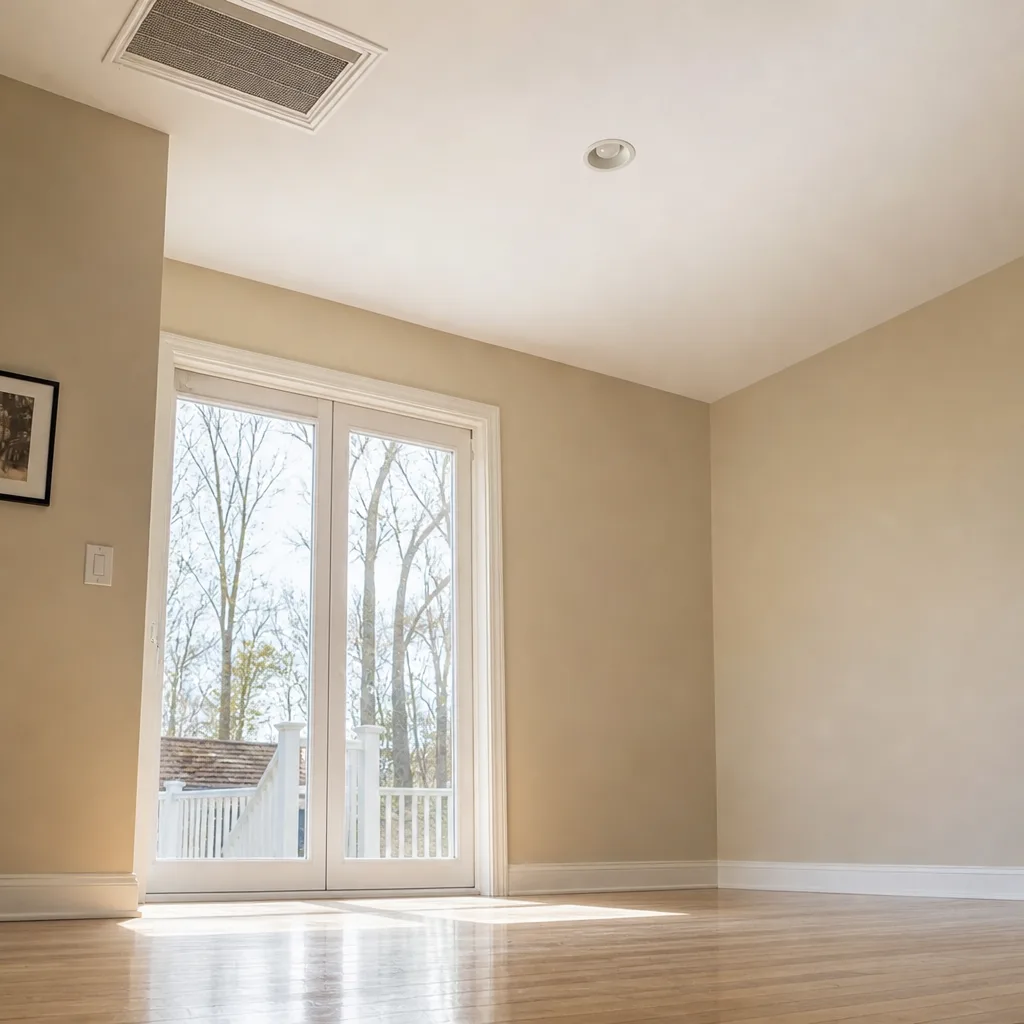
See the difference
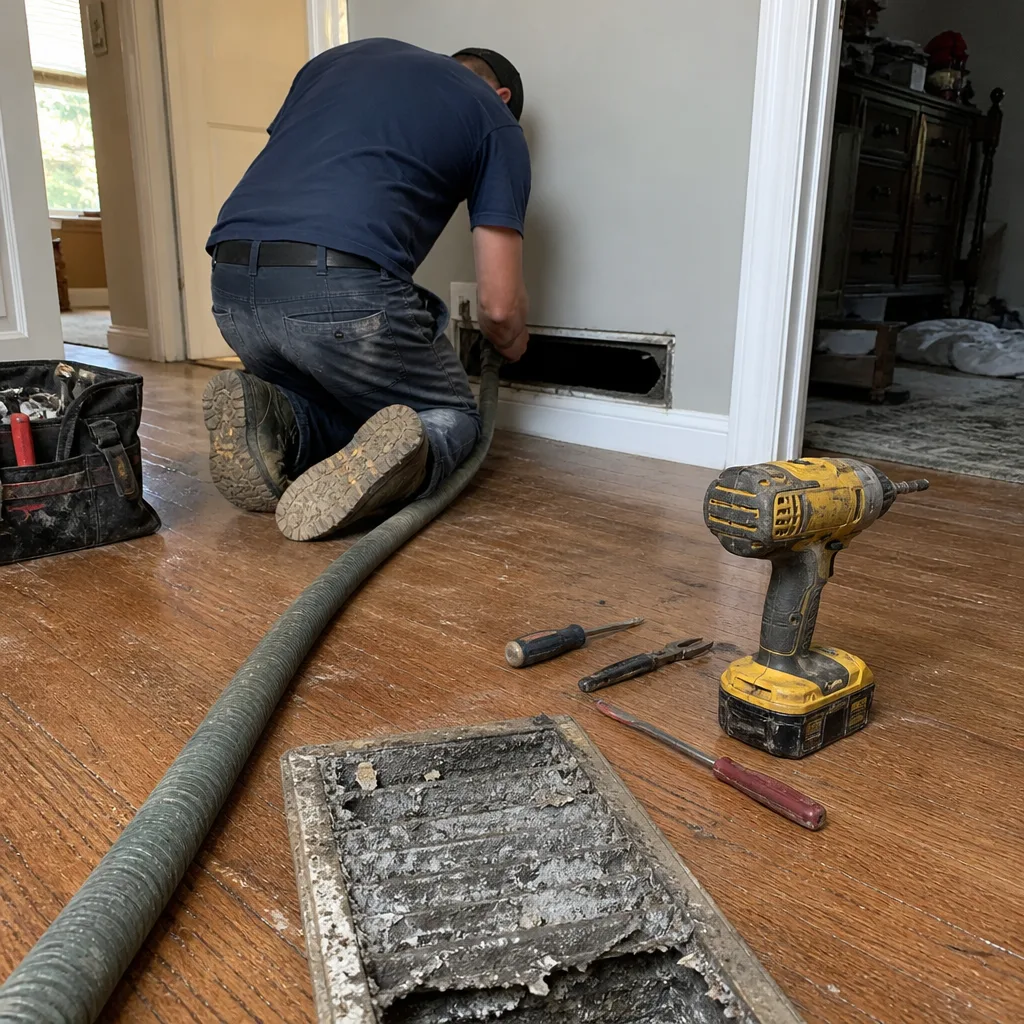 Before
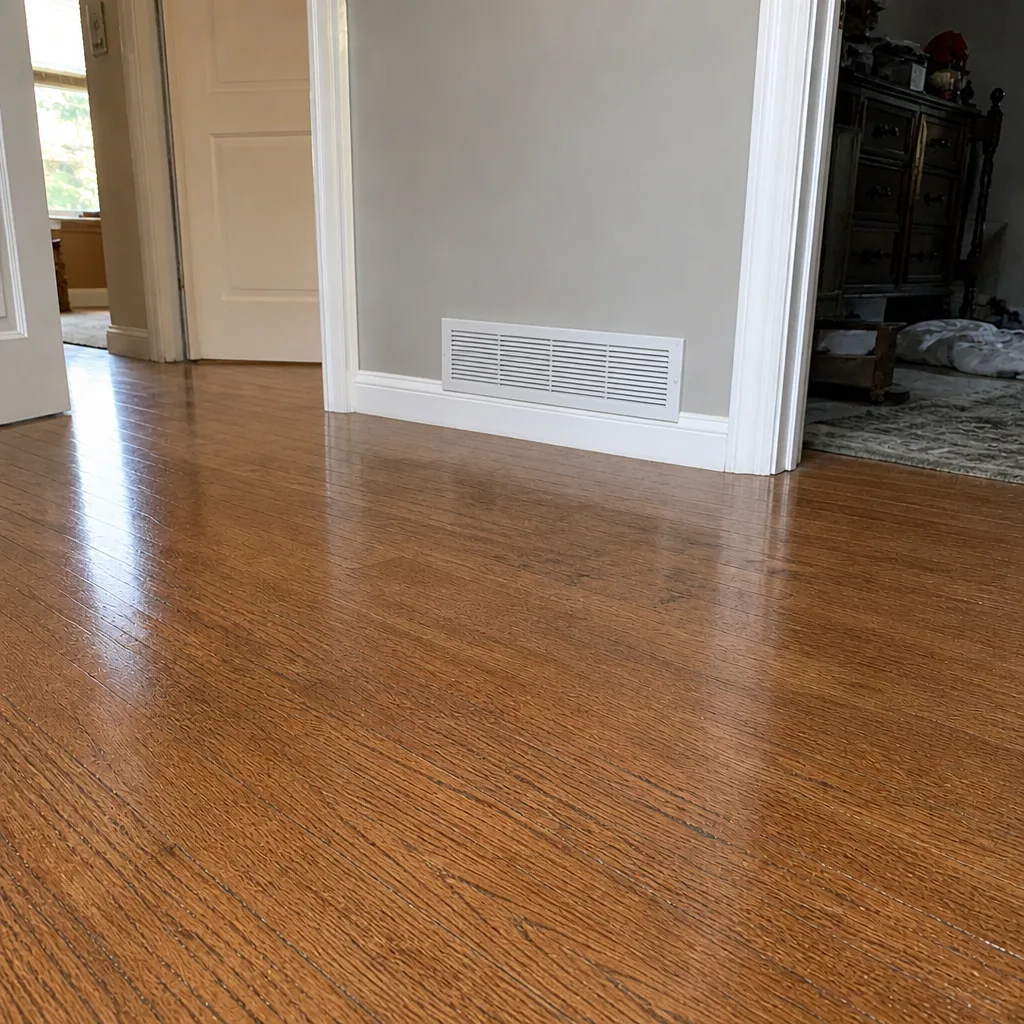 After
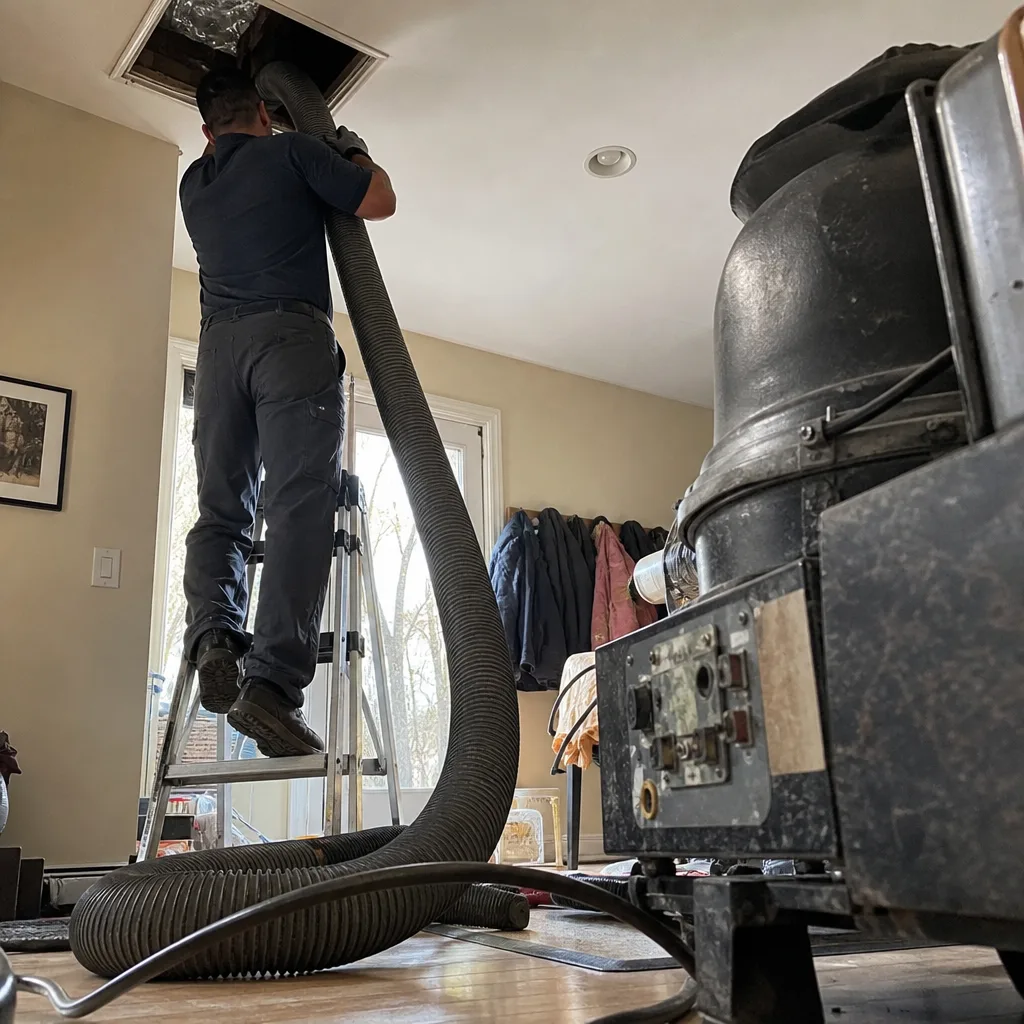 Before
 After
 Before
 After
When to Call a Professional
Some duct issues are obvious and some are silent. Call a professional if any of the following applies: visible dust at registers returns quickly after cleaning; a musty or dusty smell appears when the system comes on; anyone in the home has allergy or asthma symptoms that worsen indoors; the home was built or renovated during North Raleigh’s development boom and the system has never been inspected; the air handler is being replaced; or there’s water damage or visible mold in the system. Duct systems, air handlers, and HVAC wiring are not DIY territory – gas appliances and electrical components especially should only be opened by a trained professional. Air Duct Cleaning North Raleigh offers free estimates in North Raleigh – call (877) 820-8110. We answer 24/7. Fast dispatch from 7am to 7pm, Sunday through Friday.
Frequently Asked Questions
Air duct cleaning in North Raleigh typically runs from a few hundred dollars for a straightforward single-system home to just over a thousand for a larger home or multiple systems, with the exact scope set by an on-site inspection. We don’t quote over the phone because the price depends on the system, not the register count, and we set one flat price per system before any work begins. Call (877) 820-8110 for an exact quote – estimates are free.
Cheaper quotes usually reflect less equipment, no containment, and no post-cleaning inspection – often a vacuum-only pass rather than the agitation and negative-pressure extraction that a real cleaning requires. In a North Raleigh home with bonded clay and construction dust, that pass leaves the problem in the duct. The written estimate should tell you exactly what’s included. Call (877) 820-8110 to compare a proper quote.
You know because the company shows you before-and-after photos of your own duct sections, taken under light, with an inspection report documenting the findings. That’s the standard a verifiable job meets, and it’s what we provide. If a company can’t produce the images, the work wasn’t verifiable. Call (877) 820-8110 for a free on-site estimate.
There’s no fixed number. A North Raleigh home with no recent construction or symptoms might go several years between cleanings, while a recently built or renovated home in the development corridor often benefits from an inspection sooner because of construction dust entering the system. Inspect first, clean when the findings justify it. Call (877) 820-8110 to schedule an inspection and free estimate.
Yes, because the local housing stock and climate shape the contamination. Homes built during the post-2000 boom carry clay, drywall dust, and construction debris that need extraction rather than brushing, and piedmont humidity binds that particulate to duct surfaces more firmly than in a dry climate. That’s why the equipment and process matter more here than the headline price. Call (877) 820-8110 for an estimate built on that local reality.
We cover the full system: duct cleaning, HVAC cleaning, air quality and sanitizing, duct repair and sealing, and dryer vent cleaning, all under one call and one point of contact. Cleaning the ducts without the air handler re-deposits dust, and ignoring the dryer vent leaves a separate safety gap. Call (877) 820-8110 to schedule a free estimate for any of them.
The Bottom Line
Duct cleaning in North Raleigh isn’t a generic service, and it shouldn’t be priced or performed like one. The development-era housing stock left specific debris inside flex duct systems: clay, drywall dust, sawdust, and construction fragments that need mechanical agitation and negative-pressure extraction to remove. Piedmont humidity makes that particulate bind to duct surfaces in ways a vacuum-only pass can’t fix. A real job follows NADCA ACR standards, uses purpose-built equipment such as the Rotobrush and Abatement Technologies filtration systems, includes the air handler, and documents the result with before-and-after photos. The price is one flat rate per system, agreed up front. When you understand your own local conditions, you can tell which quotes are appropriate and which are shortcuts.
Call (877) 820-8110. We answer 24/7. Fast dispatch from 7am to 7pm, Sunday through Friday. Estimates are free, and the written estimate sets the final price.
Written by the team at Air Duct Cleaning North Raleigh.