
Last updated November 24, 2026
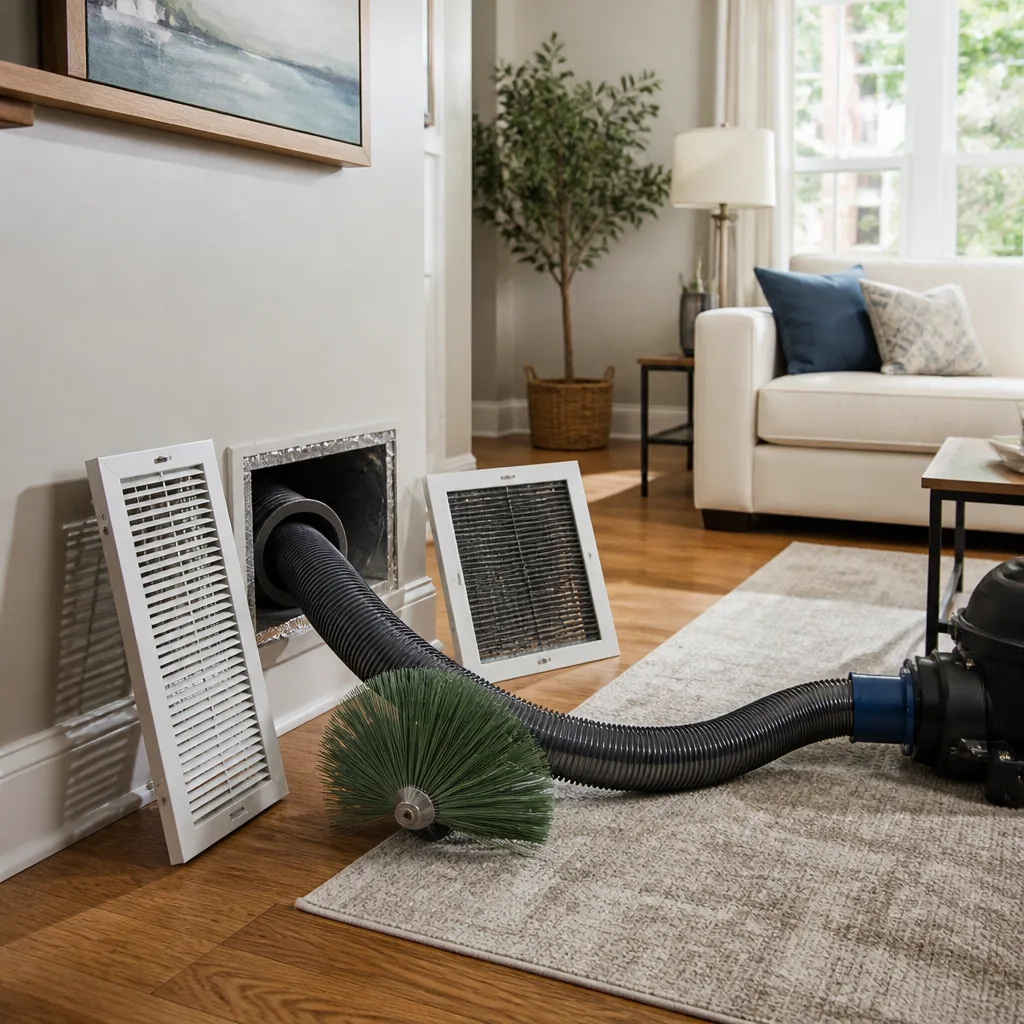 Whole-home duct cleaning
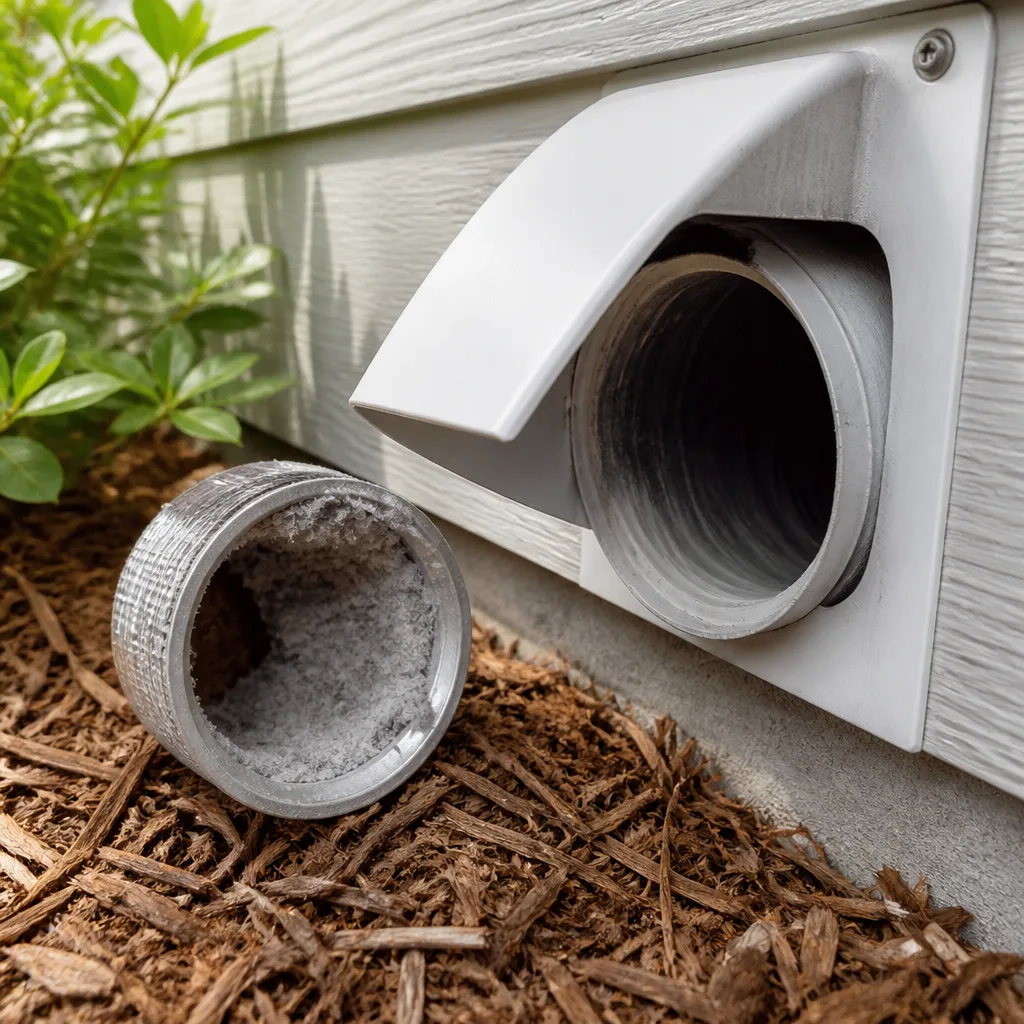 Dryer vent cleaning
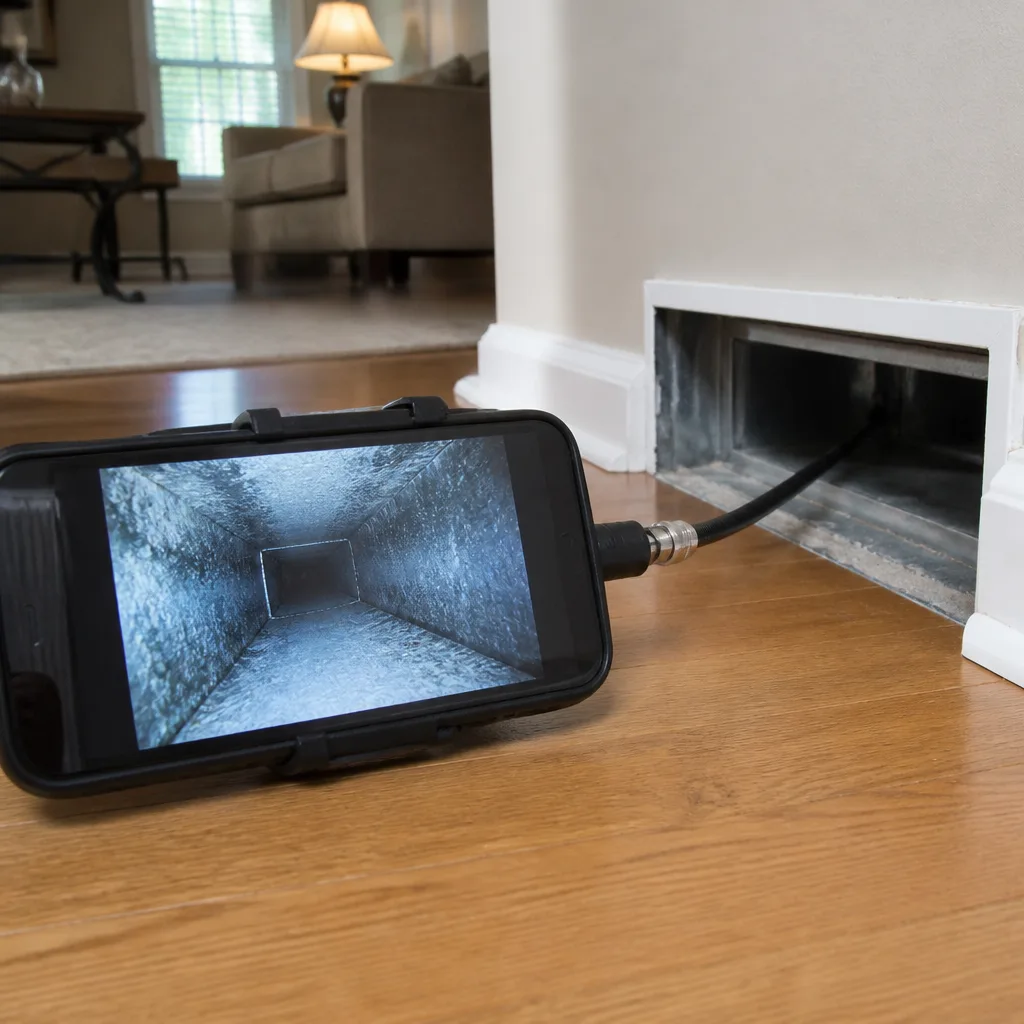 Camera inspection
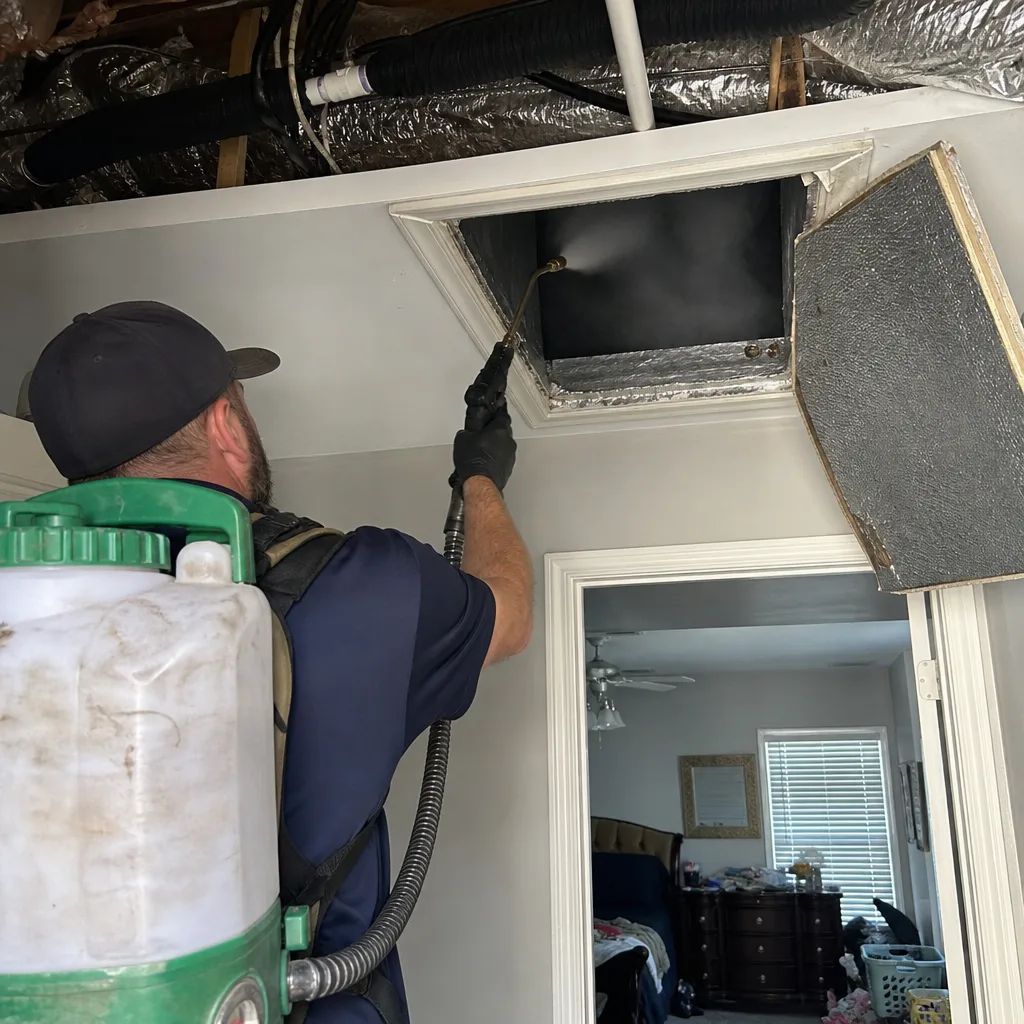
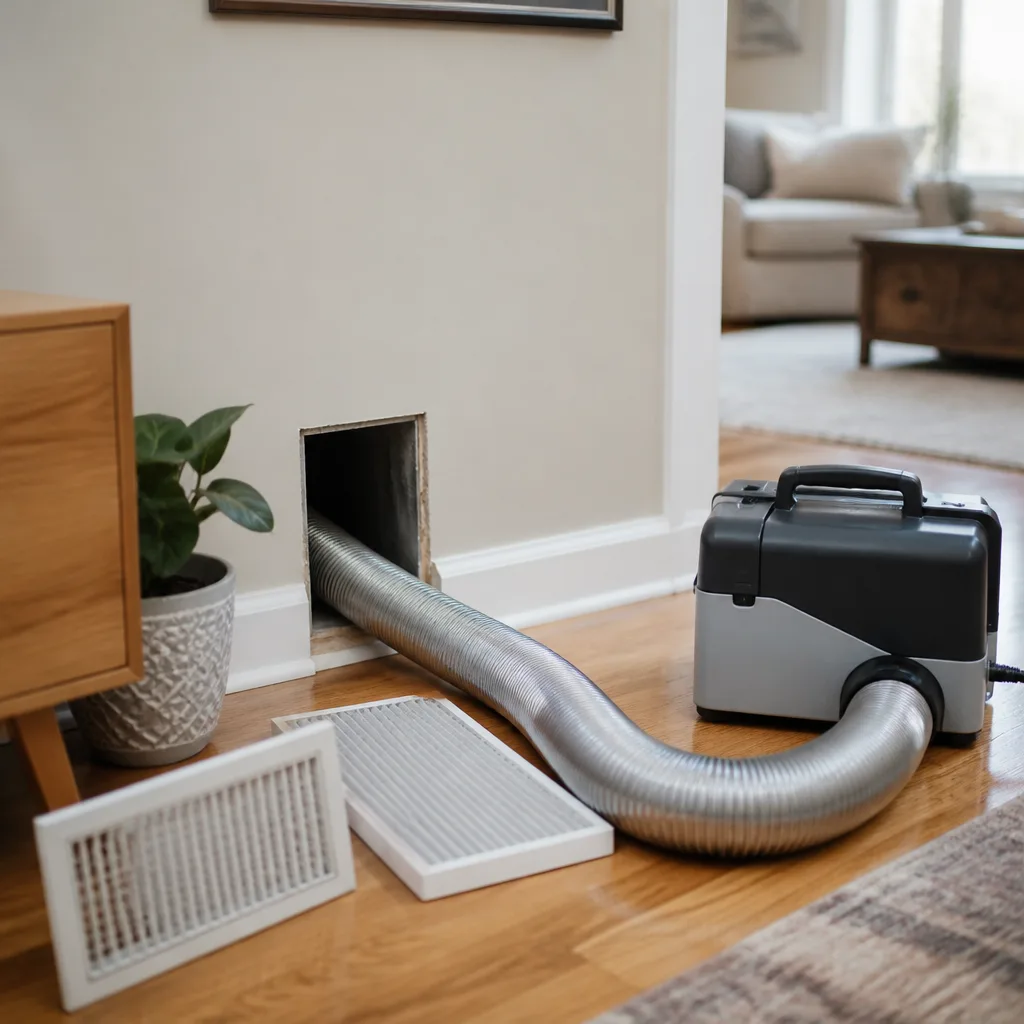 Sanitizing & deodorizing
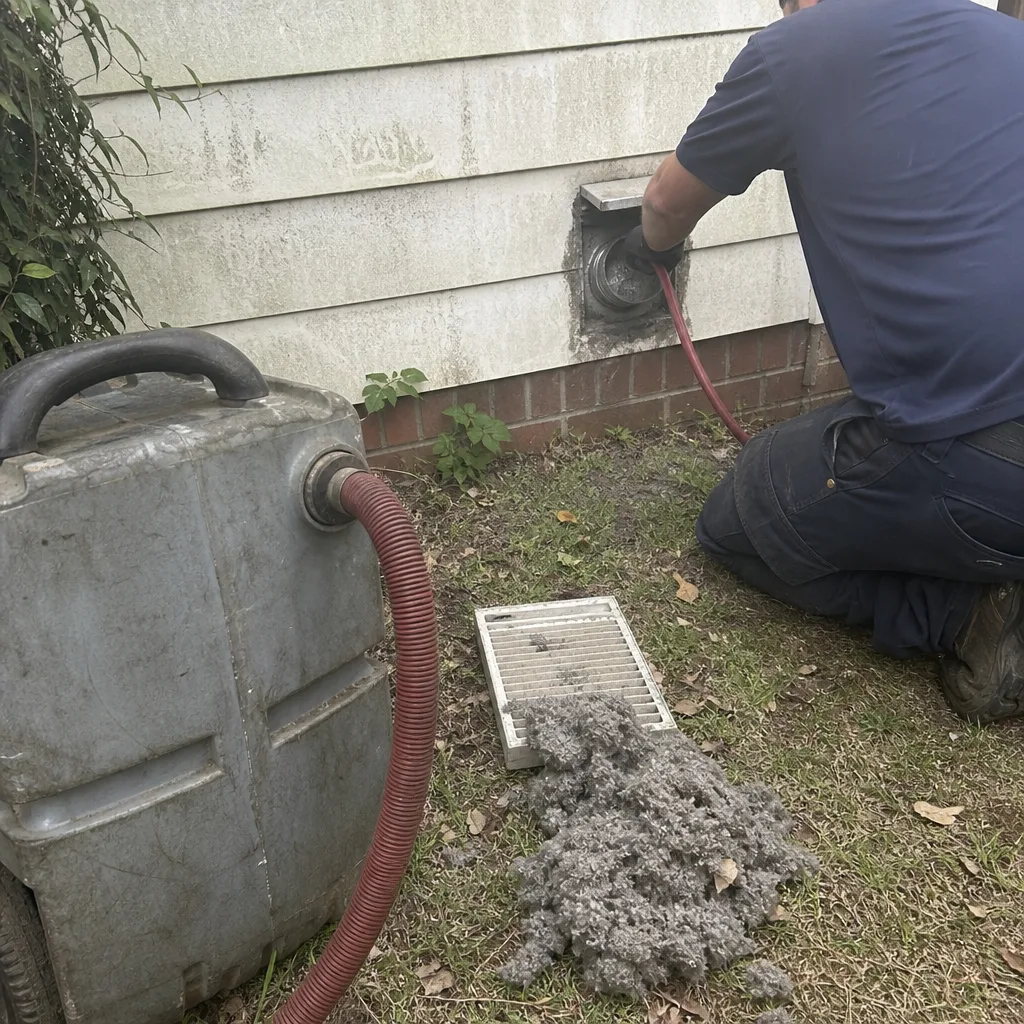
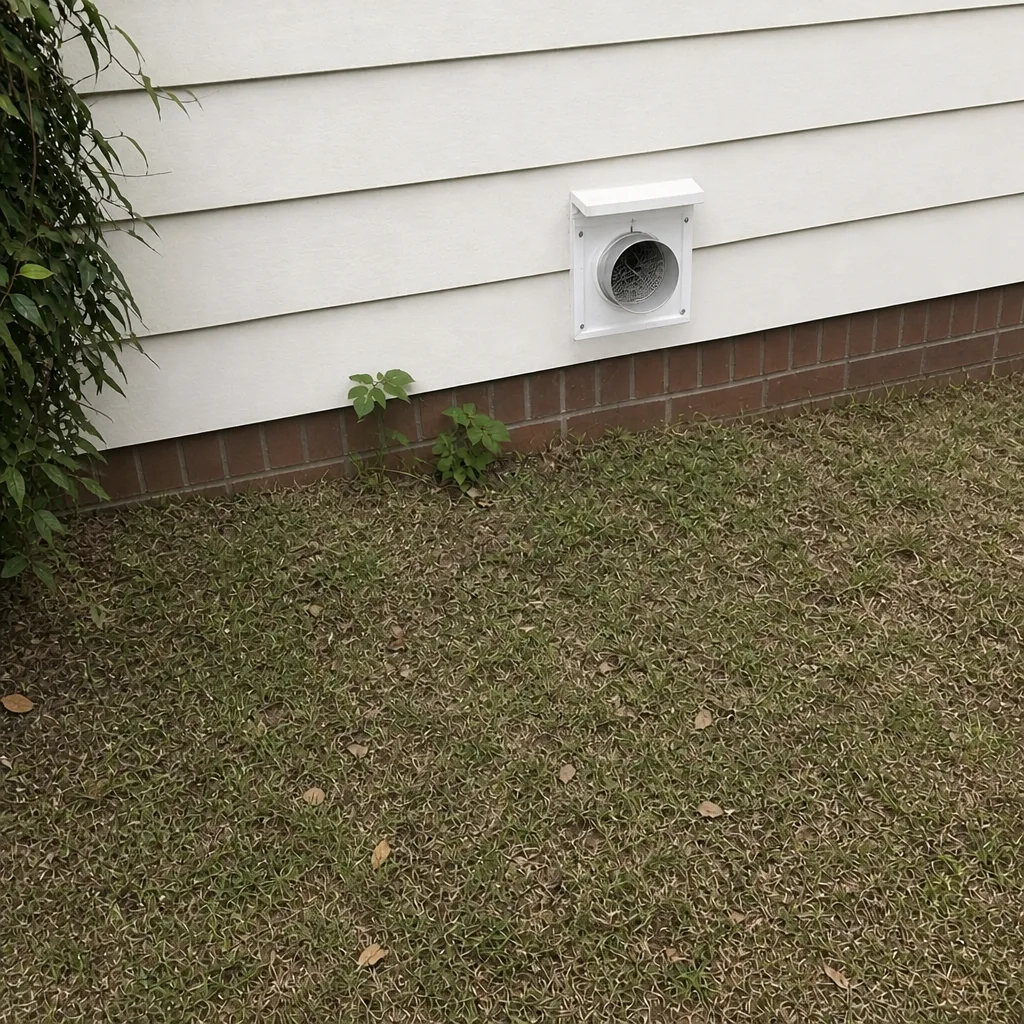
Whole-system duct and dryer vent check with before-and-after photos - you see exactly what came out of your vents
That "$99 whole-house special" is a bait ad - the real number appears once they are in your hallway, or the "clean" is a shop-vac at the register. We photograph the inside of your ducts before and after instead.
DIY vs Professional Air Duct Cleaning: The North Raleigh Homeowner’s Decision Guide
Most homeowners who look into duct cleaning are trying to solve a simple problem: the air coming out of the registers smells off, the dust keeps coming back, or a recent inspection turned up visible debris. The instinct to rent a shop vac and handle it yourself is understandable, and it’s not always the wrong one. But there’s a physical question underneath the DIY-versus-professional debate that rarely gets asked out loud: can the equipment you own actually move what’s sitting inside a residential duct run? This guide is written for North Raleigh homeowners who want an honest answer to that question, including what DIY genuinely accomplishes, what it redistributes, and where the line sits between routine maintenance you can do and work that needs a professional.
Quick Answer
Consumer vacuums and shop vacs can handle surface dust at the registers and grilles, but they cannot generate enough negative pressure to extract debris lodged in duct runs or coating the interior walls of the system. Professional cleaning in North Raleigh uses purpose-built vacuum and brush equipment (like Rotobrush and Nikro systems) with HEPA or Abatement Technologies filtration to pull contaminants out rather than stir them into the living space. DIY is appropriate for filter changes, register cleaning, and visible grille dust; anything past that is professional work.
Styles & brands we work with
- Whole-home duct cleaning
- Dryer vent cleaning
- Camera inspection
- Sanitizing & deodorizing
Table of Contents
- The physics at the center of the DIY debate
- A direct equipment comparison: what DIY tools can and cannot do
- What you can safely handle yourself in North Raleigh
- Why fiberglass duct liner changes the equation
- The documentation gap: before-and-after proof that DIY cannot give you
- An honest cost-benefit framework
- North Raleigh-specific factors: humidity, pollen season, and tight construction
- A step-by-step approach to deciding what your home needs
The physics at the center of the DIY debate
Air duct cleaning is an extraction problem, not a sweeping problem. To move debris through a duct run, you need sustained negative pressure strong enough to lift settled particles off the duct wall and carry them against the airflow direction into a collection system. A typical household shop vac generates somewhere in the neighborhood of 1 to 2 inches of water column, which is enough to suck up dust on a flat floor and nowhere near enough to move material through 20 or 30 feet of duct that’s already designed to channel air away from the vacuum. A truck-mounted extraction unit built for duct cleaning generates roughly 8 to 12 inches of water column, and portable professional units run in the same range. That gap is not a modest upgrade. It’s the difference between pulling debris out and churning it up.
This matters most in homes where the duct system has any accumulation that’s settled into corners, elbows, or the rough interior surface of galvanized metal. When the vacuum can’t overcome the resistance, the debris doesn’t stay put and it doesn’t get removed. It becomes airborne inside the duct and gets pushed toward the nearest open register by the HVAC blower. In practice, that means the homeowner who tried to clean their own ducts can end up with a temporary spike in dust levels through the house after the cleaning, which often gets blamed on other things.
There’s a second principle at work too: air follows the path of least resistance, and a cleaning method that doesn’t agitate the duct wall (with a rotary brush or a whip line) only removes the loose fraction sitting in the middle of the airstream. The stuck-on fraction, the part that actually matters for indoor air quality, needs mechanical contact. The professional equipment we use in North Raleigh is designed for exactly that contact point, with rotary brush heads sized to the duct diameter that scrub the interior while the vacuum pulls loosened debris back to a collection unit running Abatement Technologies filtration.
A direct equipment comparison: what DIY tools can and cannot do
The most useful thing a homeowner can do before deciding is to look at what each tool is actually built for. Here’s how the categories stack up in the field:
- Shop vac (1 to 2 inches water column): Handles surface dust on registers, grille faces, and the floor of a return plenum if you can reach it. Cannot overcome duct-run resistance; will not extract material embedded in fiberglass liner or stuck to metal walls.
- Wet/dry HEPA vacuum (typically 3 to 5 inches water column): Better on dust containment at the opening, but the airflow capacity is still far below what’s needed for a full run. Useful for localized debris near an accessible boot.
- Dryer vent brush kits (hand-driven or drill-driven): Effective on a short, straight dryer vent run where the homeowner can reach both ends. Not designed for the branching geometry of an HVAC duct system, and not safe for flexible duct liner if used aggressively.
- Hardware-store “duct cleaning” attachments: Mostly designed for cleaning registers and the first few inches of a boot. Useful as part of monthly register maintenance. Not a substitute for a system cleaning.
- Professional portable HEPA unit (Rotobrush, Nikro, similar): Purpose-built vacuum plus rotary brush on a flexible drive shaft, with HEPA filtration on the exhaust. Reaches the full run and mechanically agitates the duct wall.
- Truck-mounted extraction (8 to 12 inches water column): Highest suction available; typically paired with Abatement Technologies air filtration running inside the home during service to capture any debris dislodged in the living space.
The gaps here aren’t marketing differences. They’re measured airflow differences, and they translate directly into how much of the debris in the duct system actually leaves the house versus how much gets stirred up. If you want to know the exact equipment and process a professional brings to your air duct cleaning, we name ours for exactly that reason. Rotobrush and Nikro are industry-standard systems with documented performance specs, and they’re what a legitimate North Raleigh duct cleaning job should show up with.
What you can safely handle yourself in North Raleigh
Plenty of duct-related maintenance is well within a homeowner’s reach, and doing it consistently makes a real difference between professional cleanings. In our experience, these are the tasks where DIY genuinely wins:
- Filter replacement. The single highest-impact air quality habit. Change the return filter on the manufacturer-recommended interval, check it monthly in heavy pollen season (March through May in the North Raleigh area), and use the correct MERV rating for your system rather than the highest one on the shelf.
- Register and grille cleaning. Pop the supply and return registers off, wash them in the sink with mild soap, dry them fully, and reinstall. Do this a few times a year and you’ll notice the difference in visible dust at the openings.
- Exterior return grille vacuuming. A vacuum with a brush attachment on the return grille face pulls off the dust matting that builds up over months. It’s not the same as cleaning the plenum behind it, but it’s worth doing.
- Accessible boot and plenum wiping. If you have a basement or crawlspace with visible duct boots, wiping down the exterior surfaces with a damp cloth is fine and keeps dust from re-entering the airstream.
- Dryer vent lint trap maintenance. Emptying the lint trap after every load and vacuuming the trap housing a few times a year is basic fire safety. A professional dryer vent cleaning handles the full run, which is a separate job.
- Keeping the return paths clear. Furniture, rugs, and storage bins blocking a return grille force the system to work harder and pull dirtier air. Ten minutes of rearranging is free air quality improvement.
What does not belong on this list: opening up duct runs to clean them, using a shop vac on a disconnected supply trunk, or pushing a brush or drain snake into an active duct system. Those are the situations where a homeowner most often does more harm than good, and where the dust that gets dislodged ends up somewhere the homeowner can’t easily clean it out of.
Why fiberglass duct liner changes the equation
Many homes built from the 1970s through the 1990s, including a large share of the housing stock in neighborhoods around North Raleigh, use internally lined fiberglass duct board or lined sheet metal for at least part of the system. The liner quiets the system and helps with insulation, and it’s also a textured surface that traps dust and biological growth in a way that bare galvanized metal doesn’t. That trapped material sits in the fiber matrix rather than on the surface, and it does not come off with a light vacuum pass.
Here’s where DIY becomes risky rather than just ineffective. A home-grade vacuum or an aggressive brush driven by a hand drill can abrade the fiberglass liner, breaking the binder that holds the fibers together. When that happens, the previously trapped particles release into the airstream, and some of the fiberglass itself comes off the wall. A homeowner who goes after a lined duct with a stiff brush can end up with a system that sheds fibers and particulate for weeks. Professional cleaning on lined duct uses softer brush heads and controlled vacuum, and if the lining is already deteriorated, the repair may be the more important service than the cleaning. That’s one reason we offer duct repair and sealing as a first-party service: cleaning a lined duct that’s failing at a joint or a return boot can expose damage that then needs to be addressed properly, and we’d rather handle it on the same visit than send the homeowner looking for a second contractor.
If you don’t know whether your ducts are lined, that’s a question a professional inspection answers quickly. It’s also a reasonable question to ask any contractor before they start work.
The documentation gap: before-and-after proof that DIY cannot give you
For insurance claims, real estate disclosures, and resale documentation, the difference between DIY and professional duct cleaning isn’t just what’s removed. It’s what’s provable afterward. A DIY cleaning, even a careful one, produces no record. A professional cleaning produces photos of the duct interior before and after, often with airflow readings taken at the registers to document any change. For a homeowner selling a North Raleigh home, that documentation is often requested during a buyer’s inspection response, and a written report with dated photos is what settles the conversation. For an insurance claim tied to smoke, water intrusion, or a specific contaminant event, the same documentation is what supports the claim.
This applies even more directly if you’re in a home that’s been through a renovation. Drywall dust, construction debris, and sawdust settle through the return system in a way that’s rarely visible from a register, and a documented post-renovation cleaning with before-and-after evidence is the version of the service that holds up if there’s a later question about air quality or system performance.
A second documentation point worth naming: a professional cleaning gives you an inspection report on the rest of the system. That means anything a homeowner’s own visual check misses (damaged flex duct, a disconnected run, a failing joint in the return plenum) gets flagged on the same visit. We bring Honeywell and Aprilaire compatibility to the conversation because whole-home air quality upgrades, from filtration to humidity control, follow naturally from what the inspection reveals, and they show up on a thermostat the homeowner can actually monitor over time.
An honest cost-benefit framework
DIY isn’t cheaper if it doesn’t do the job, and professional cleaning isn’t automatically the right answer for every home. Here’s a practical way to sort it:
- DIY is genuinely appropriate when: the home is newer, the ducts are clean on inspection, there’s no visible debris at the registers, no unusual smell, no recent renovation, and no one in the household has respiratory sensitivity. Routine filter changes and register cleaning handle this scenario well.
- DIY is a stopgap when: the issue is localized to one or two registers that collected dust near a return. Register cleaning and filter changes buy time, but if the debris is coming from further up the system, it will be back.
- Professional cleaning is the right call when: the ducts haven’t been cleaned in the home’s documented history, there’s visible debris or a smell at the registers, the home recently changed hands, a renovation took place, someone in the home has asthma or allergies, or the HVAC system has been running noticeably harder than usual.
- Avoid the low-bid temptation. In the North Raleigh market, quotes that come in far below the typical professional range are usually structured around per-vent pricing that balloons once a technician is on site, or around equipment that isn’t purpose-built for duct cleaning. We quote one flat price per system agreed before work starts, with before-and-after photos of the ducts themselves, so the price on the invoice matches the written estimate.
If the honest answer for your home is “filters and register cleaning for now,” that’s what a professional estimate should tell you. The service stops being worth it the moment it’s offered as a default rather than a fit.
North Raleigh-specific factors: humidity, pollen season, and tight construction
North Raleigh sits in a climate that puts real load on a duct system over the course of a year. The humid summers mean the system runs long hours, and the condensate and moisture that ride along with the cooled air can encourage biological growth on any surface inside the duct that stays damp, particularly on fiberglass liner. The spring pollen season from mid-March through May pulls large particulate through the return system, and many of the newer, tighter-built homes in North Raleigh have less natural air exchange than older construction, which means a higher share of what enters the house comes through the HVAC return. Homes around neighborhoods like Bedford, Falls River, Wakefield, and the older streets closer to North Hills carry a range of construction eras, and each one has its own duct profile: lined board in the 1980s and 1990s homes, more flexible duct in some of the newer builds, and a mix in the ranch-era homes closer in.
What that means practically is that a duct system in North Raleigh tends to accumulate more over a given period than the same system would in a drier climate with a shorter cooling season. It’s one more reason a professional baseline cleaning, with photo documentation of what was removed, is useful to have on file for the household’s own reference and for any future inspection or resale.
A step-by-step approach to deciding what your home needs
If you’re not sure where your own home sits on the DIY-versus-professional line, this sequence is the one we’d recommend, in order:
- Walk the house and look at every register. Note visible dust, dark staining around the frame, or anything growing on the grille face. Photograph what you see; it’s useful for comparison later.
- Smell the air at each supply register with the system running. A musty or stale smell is the most reliable at-home signal that the issue isn’t just surface dust.
- Check the filter. If it’s loaded past the manufacturer’s replacement interval or visibly clogged, replace it and give the system a week before deciding anything else. Sometimes the fix is that simple.
- Clean the registers and grille faces as described in the tasks section. This is DIY work and worth doing regardless of what comes next.
- Look for any recent trigger events: a renovation, a water intrusion, a new-to-you home, or a change in household allergies. Any of those moves the answer toward professional.
- Book a professional inspection and estimate if anything in steps 1 through 5 pointed that direction. A camera inspection of the duct interior gives you the same information a professional would use to make the call, and it’s the one piece of the decision you can’t replicate on your own.
If the inspection shows the ducts are largely clean and the issue is a filter or register-level problem, that’s what the report will say. Our technicians have up to 10 years of experience, and that experience is the reason we’ll tell a homeowner when a cleaning isn’t needed yet. The service that builds a relationship is the honest one.
Common Mistakes to Avoid
- Using a shop vac on a disconnected duct run. The vacuum can’t create the negative pressure needed to move debris through 20 or 30 feet of duct, and the disturbance it does create can push loose material into the airstream. It’s the most common DIY misstep and the least productive.
- Aggressive brushing on fiberglass-lined duct. Stiff brushes or drill-driven tools abrade the liner and release trapped particles and fibers into the home. If you don’t know whether your ducts are lined, check before touching them.
- Skipping the filter during heavy pollen season. North Raleigh’s spring pollen load is heavy enough that a filter assumed to have another month of life often doesn’t. Check it monthly from March through May.
- Choosing a quote on price alone. A quote far below the typical professional range usually means per-vent pricing that climbs once a technician is on site, or equipment not built for the job. Ask what equipment is being used before you book.
- Cleaning ducts without inspecting first. A cleaning that skips the inspection can miss a disconnected run, damaged flex, or a failing joint. The repair is often the more important service, and cleaning over the top of it doesn’t fix it.
- Ignoring the dryer vent. Dryer vent lint is a fire load that most homeowners never look at, and it’s separate from HVAC duct cleaning. A full professional pass on the dryer vent is its own safety check.
- Trusting a cleaning with no documentation. If the contractor doesn’t offer before-and-after photos and a written report, you have no way to confirm what was actually done, and no paperwork to use later for resale or insurance.
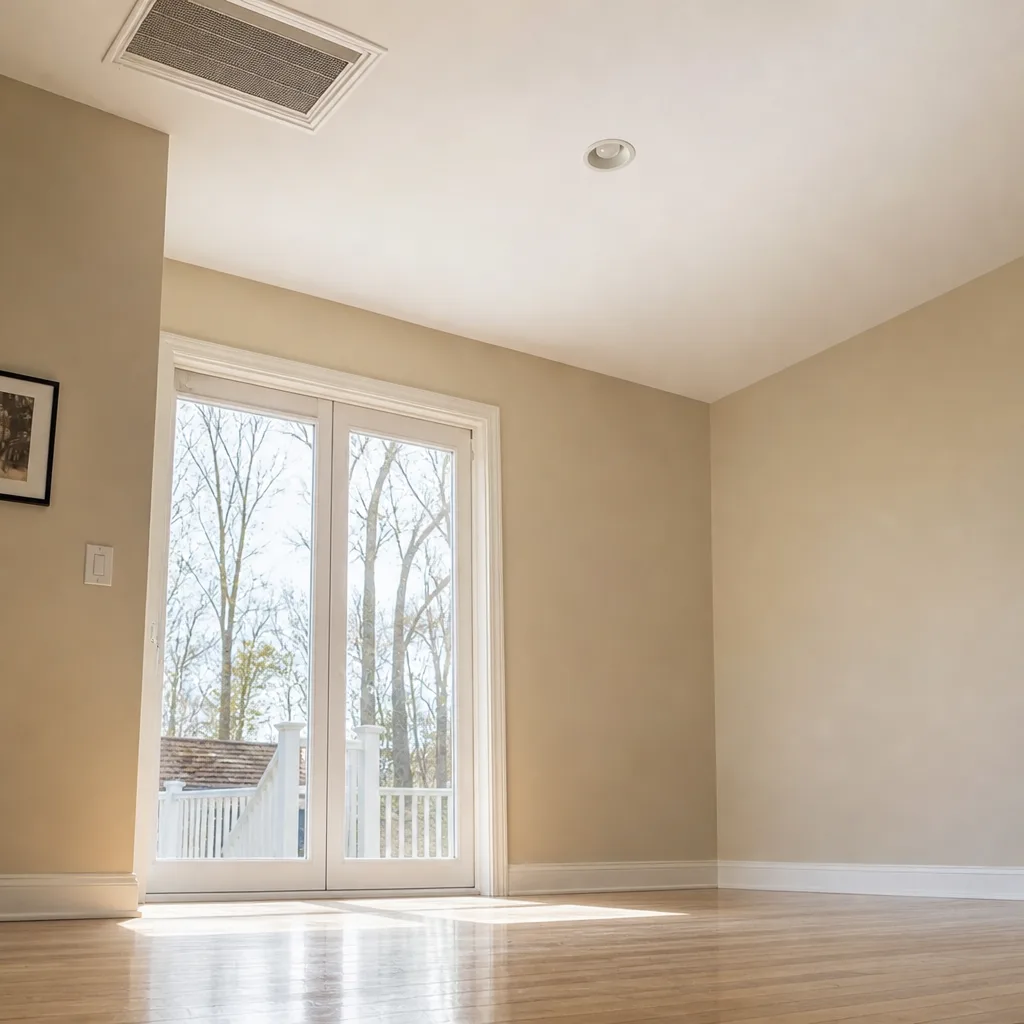
See the difference
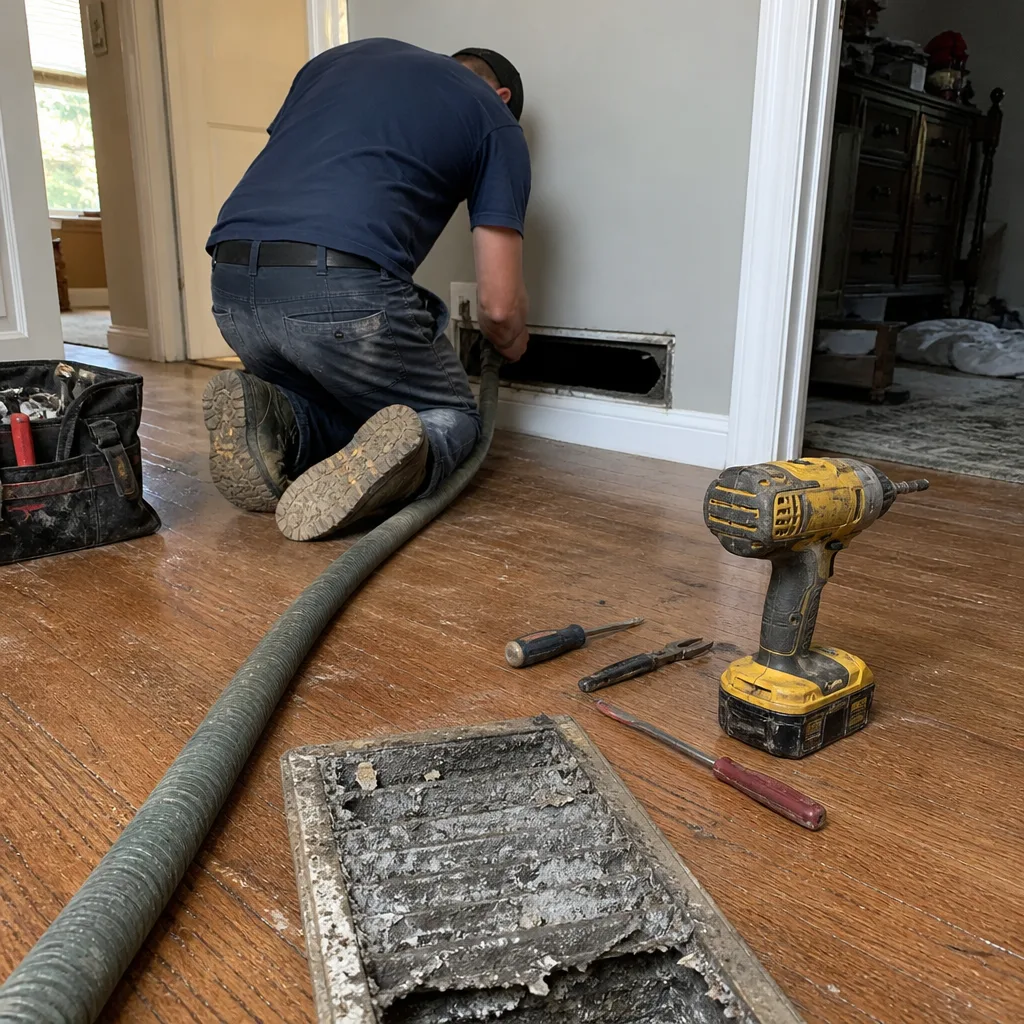 Before
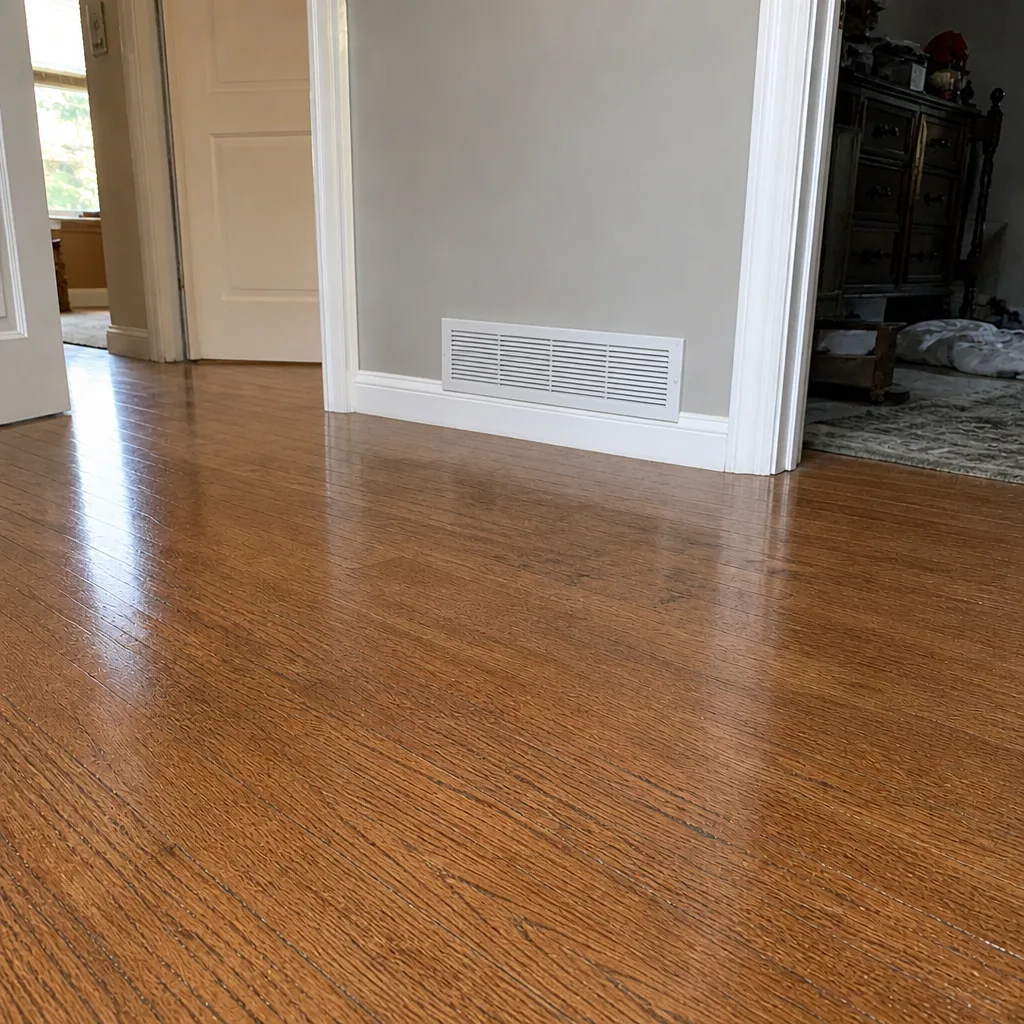 After
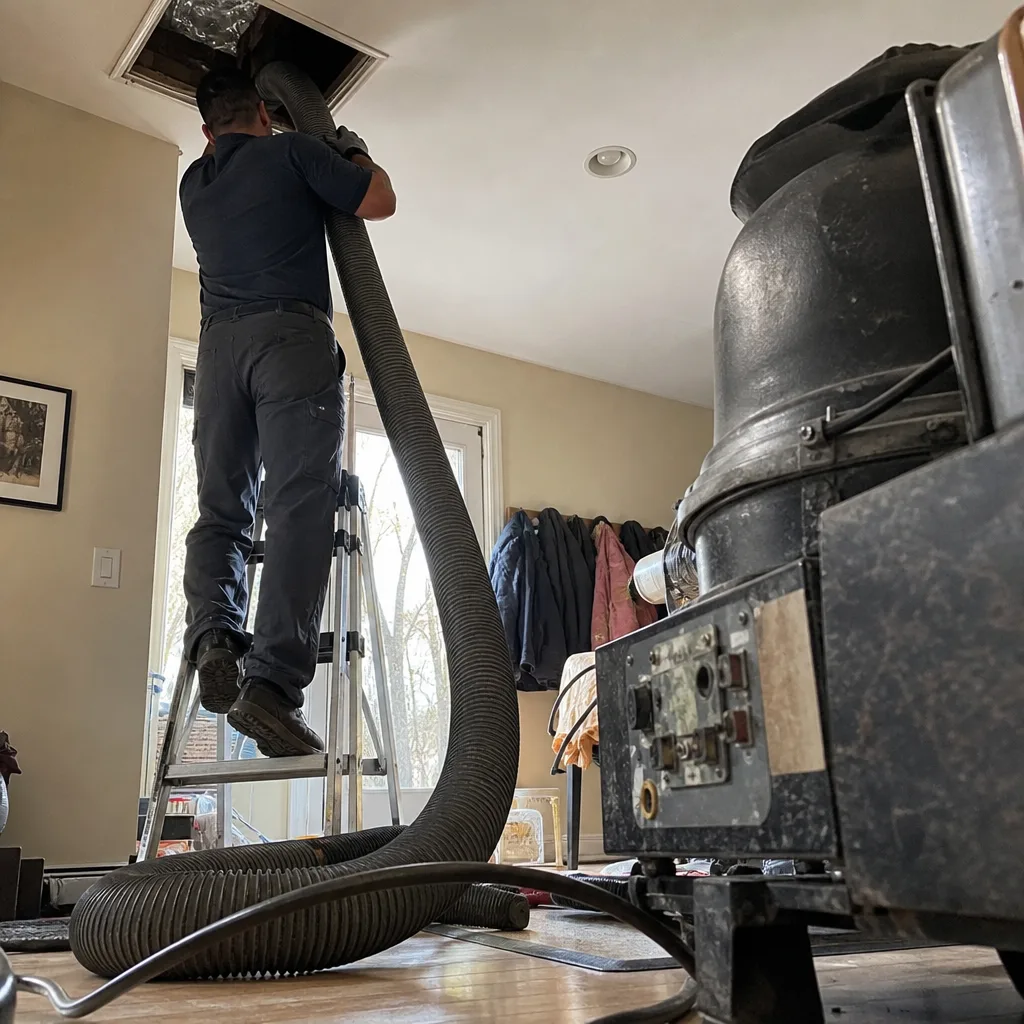 Before
 After
 Before
 After
When to Call a Professional
Call a professional when the ducts haven’t been cleaned in the home’s documented history, when there’s visible debris or a persistent smell at the registers, after a renovation or a water intrusion, or when someone in the home has respiratory sensitivity that makes airborne particulate a real concern. Call also if a camera inspection reveals damage, since HVAC cleaning and duct sealing are the follow-up services that repair what a cleaning reveals. Air Duct Cleaning North Raleigh offers free estimates in North Raleigh – call (877) 820-8110. We answer 24/7. Fast dispatch from 7am to 7pm, Sunday through Friday. One flat price per system agreed before work starts, and before-and-after photos of the ducts themselves.
Frequently Asked Questions
Professional air duct cleaning in North Raleigh is priced per system by written estimate, and the estimate is where the final price is set, after the technician sees the number of runs, the duct construction, and any repair needs. We don’t quote a per-vent teaser price because per-vent pricing is exactly the structure that lets an invoice grow once a technician is on site. Call (877) 820-8110 for a free estimate and a flat price for your system. Estimates are free.
No, a shop vac cannot clean a residential duct system. It generates roughly 1 to 2 inches of water column of suction, while professional extraction equipment generates 8 to 12 inches, and that gap means debris doesn’t leave the duct; it gets disturbed. A shop vac is useful on register faces and the first few accessible inches of a boot, and it’s the wrong tool for the runs themselves. Call (877) 820-8110 for an exact quote on a professional cleaning. Estimates are free.
Cheap duct cleaning quotes in North Raleigh are usually built on one of three things: per-vent pricing that climbs once a technician is on site, equipment not purpose-built for duct work (repurposed shop vacs and consumer-grade tools), or a cleaning that skips the inspection and documentation. None of those produce a verifiable result. What to look for instead is a flat price per system agreed before work starts, named professional equipment like Rotobrush or Nikro, and before-and-after photos of the ducts. Call (877) 820-8110 for an exact quote that holds. Estimates are free.
You know the work was done when you get before-and-after photos of your own ducts, a written report on what was removed and what condition the system is in, and airflow readings where relevant. That’s the documentation gap between a professional cleaning and any DIY attempt, and it’s what holds up for resale or an insurance claim. Ask any contractor for it in advance. Call (877) 820-8110 to schedule a cleaning with full documentation. Estimates are free.
Most North Raleigh homes don’t need a duct cleaning on a fixed schedule; they need one when a factor justifies it, such as a recent renovation, a new-to-you home, a water intrusion, visible debris or odor at the registers, or a change in household respiratory health. Between cleanings, filter changes and register cleaning are the maintenance that matters most. If you’re unsure, an inspection answers the question faster than a calendar does. Call (877) 820-8110 for a free estimate. Estimates are free.
You can handle the lint trap and short surface cleaning on a dryer vent, but the full run between the dryer and the exterior wall is best done professionally. Clogged dryer vents are a real fire risk, and the tools needed for a full pass on a long or elbow-heavy run are purpose-built. We offer dryer vent cleaning as a standalone service. Call (877) 820-8110 for a free estimate on the whole system. Estimates are free.
The Bottom Line
The DIY-versus-professional question isn’t a cost comparison at heart. It’s a question about whether the equipment in your garage can physically extract what’s in your ducts, and for most homes the honest answer is no. DIY work on registers, filters, and the accessible surfaces is worth doing and makes the system last longer between cleanings. What it doesn’t do is extract lodged debris, protect a fiberglass lining from damage, or produce the before-and-after photos and airflow documentation that a professional cleaning gives you. If a North Raleigh homeowner is on the fence, an inspection and a flat-quote estimate answer the question faster than any article can. We use Rotobrush, Nikro, and Abatement Technologies equipment because the work is built around negative pressure extraction, and the tools have to match. Call (877) 820-8110 for a free estimate. We answer 24/7. Fast dispatch from 7am to 7pm, Sunday through Friday. One flat price per system, agreed before work starts.
Written by the team at Air Duct Cleaning North Raleigh.