
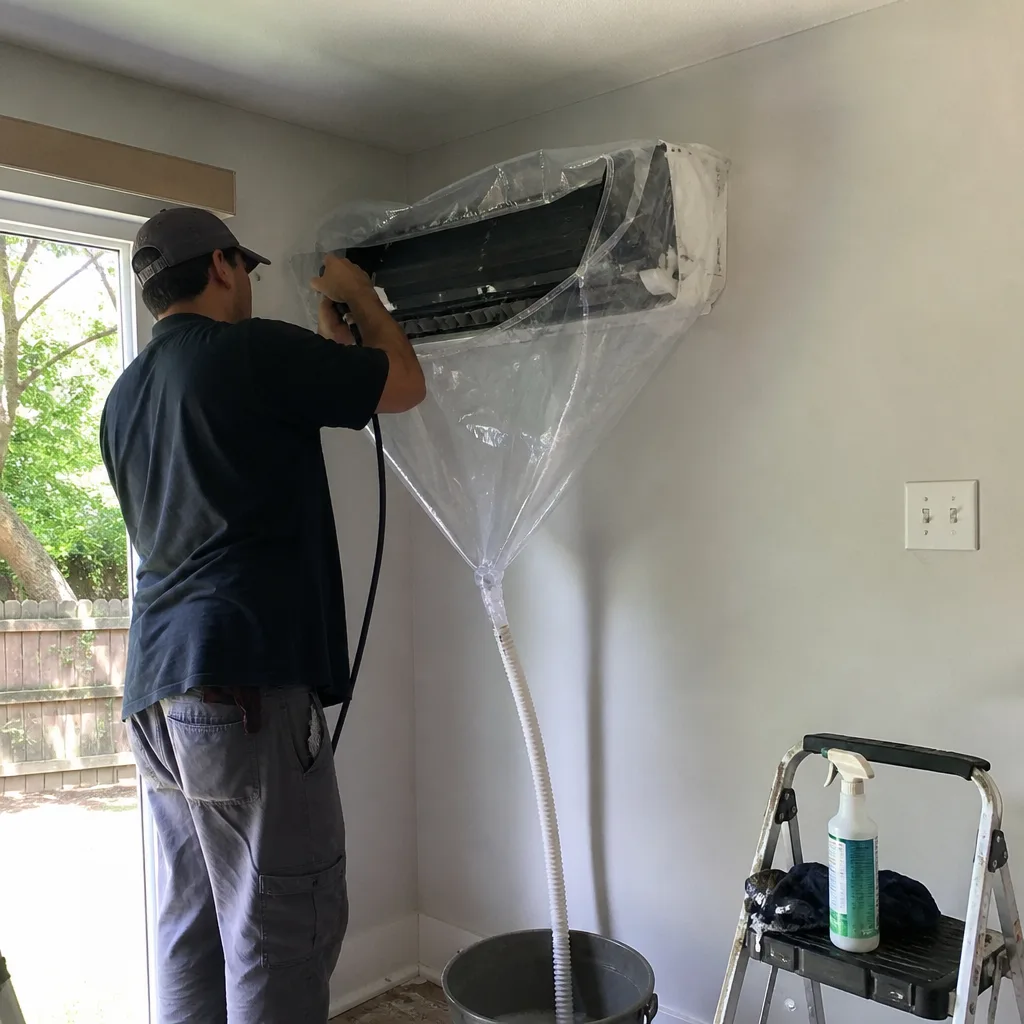
Last updated November 24, 2026
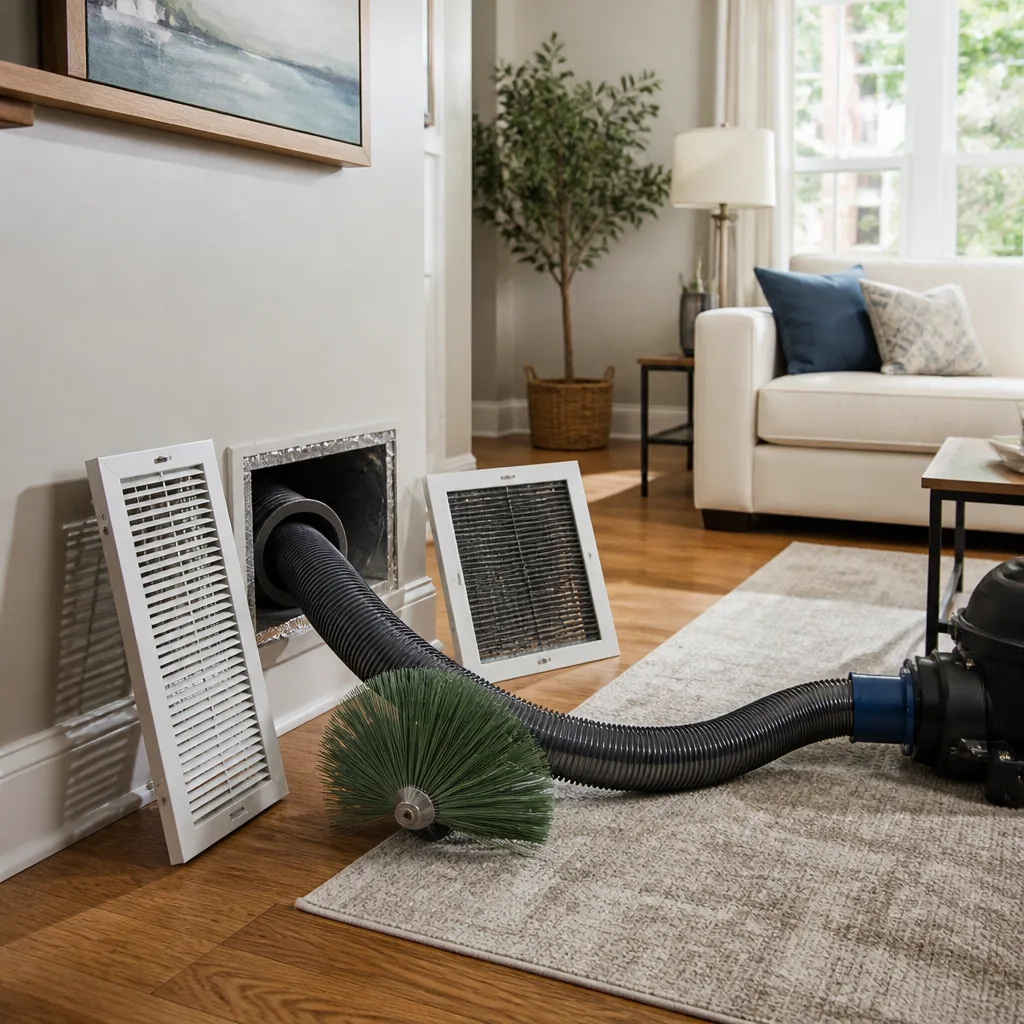 Whole-home duct cleaning
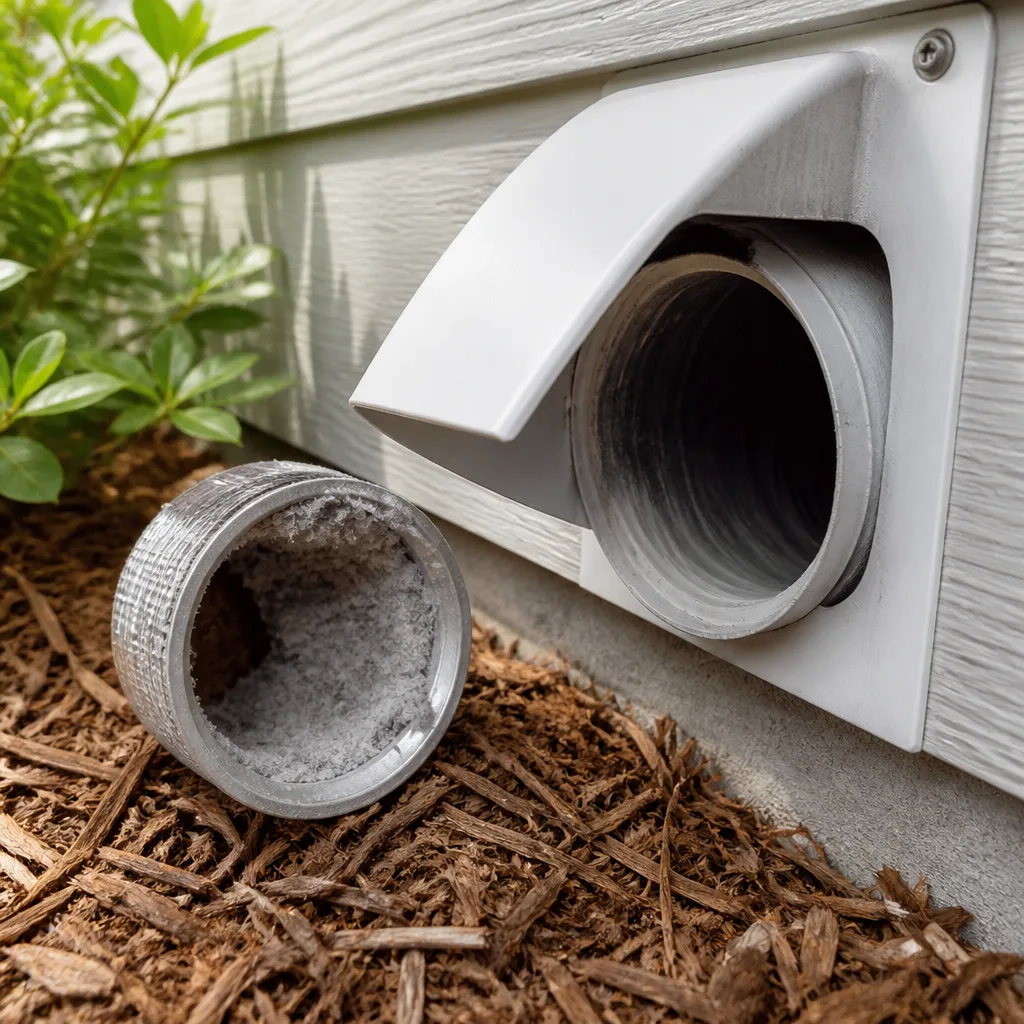 Dryer vent cleaning
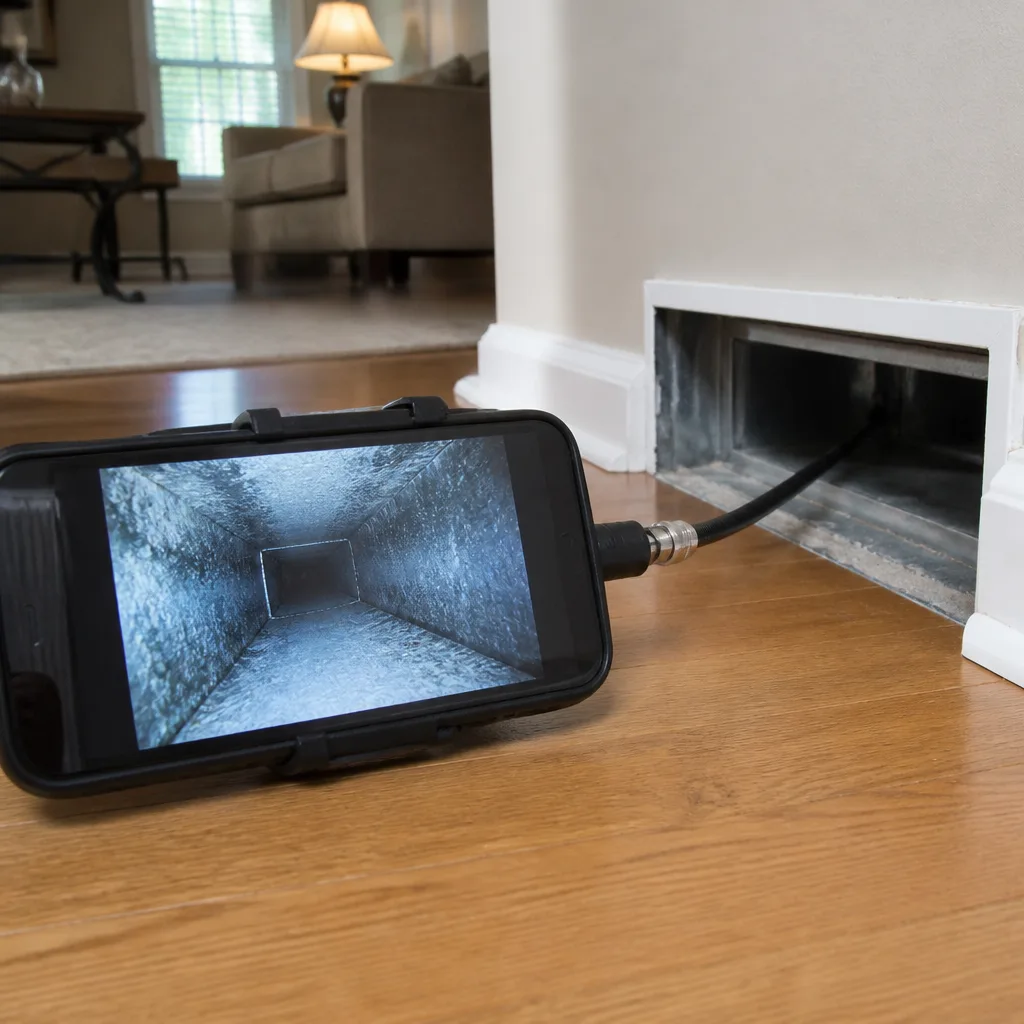 Camera inspection
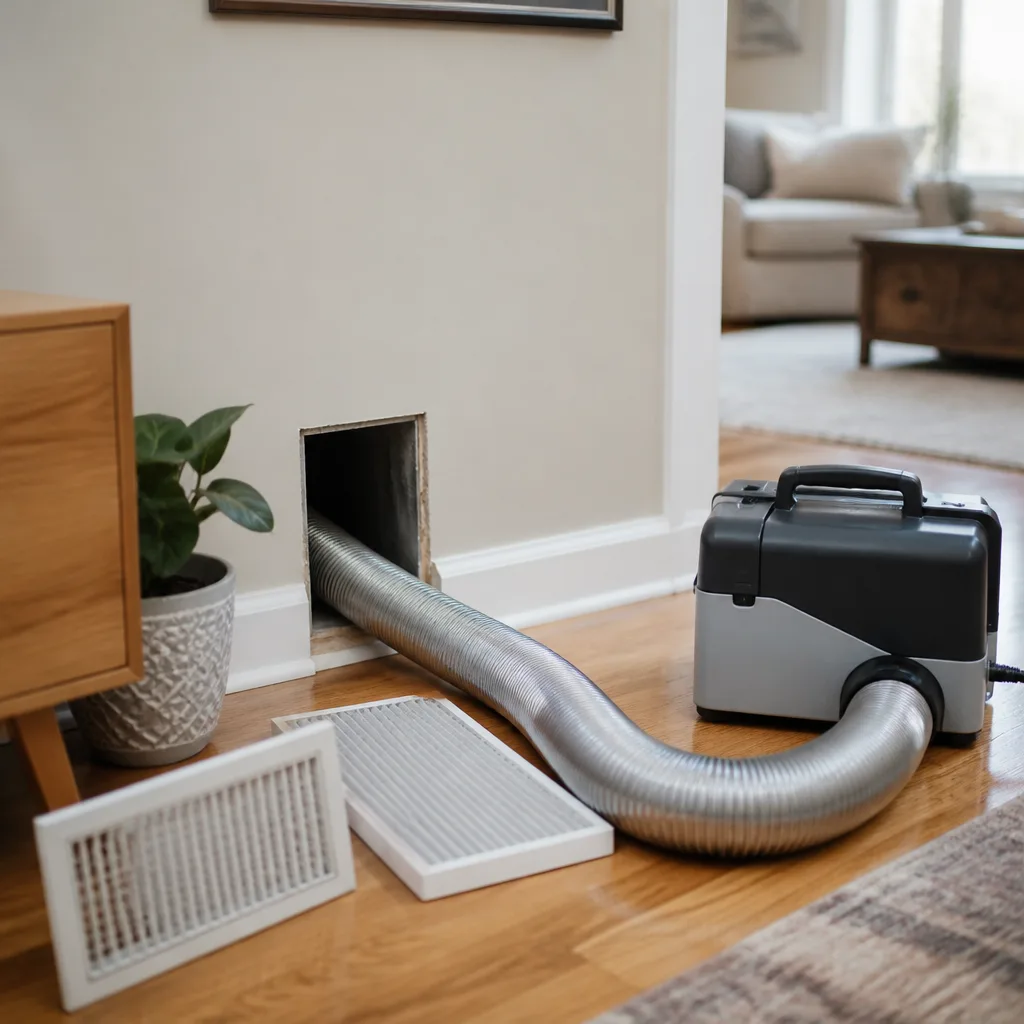 Sanitizing & deodorizing
Whole-system duct and dryer vent check with before-and-after photos - you see exactly what came out of your vents
That "$99 whole-house special" is a bait ad - the real number appears once they are in your hallway, or the "clean" is a shop-vac at the register. We photograph the inside of your ducts before and after instead.
Air Duct Cleaning Emergency Preparedness Guide for North Raleigh Homes
Most North Raleigh homeowners treat duct cleaning as routine maintenance – something you get around to eventually. But the events that make duct cleaning urgent here aren’t routine at all. They’re weather events. After a tropical system dumps six inches of rain on North Raleigh in 48 hours, crawlspace flooding doesn’t stay in the crawlspace. It migrates into flex duct systems through condensation, damp insulation contact, and pressure differentials, and microbial growth can start within 24 to 48 hours. That’s not a housekeeping problem; it’s a contamination event with a clock on it.
This guide covers what to do after the emergency, not before. We’ll walk through moisture assessment, smoke infiltration, construction debris, insurance documentation, and the timelines that actually matter. If you’ve just been through a storm, a fire nearby, or a major renovation in North Raleigh, the next hour of decisions counts.
Quick Answer
After a flood, storm, smoke event, or major renovation in North Raleigh, the first step is to isolate the HVAC system before restarting it – running a wet or contaminated system spreads moisture and particulates through every room. Document the system’s condition with photos and moisture readings immediately, because most insurers require evidence within 48 hours. If water, visible mold, or heavy smoke residue has entered the ducts, schedule a professional assessment rather than running the system. Call (877) 820-8110 for a free estimate; we answer 24/7 and dispatch from 7am to 7pm, Sunday through Friday.
Styles & brands we work with
- Whole-home duct cleaning
- Dryer vent cleaning
- Camera inspection
- Sanitizing & deodorizing
Table of Contents
- Post-Storm and Heavy Rain Protocol for North Raleigh
- How to Assess Whether Moisture Entered Your Duct System
- Wildfire and Smoke Events: What Duct Cleaning Actually Removes
- Post-Renovation Contamination in North Raleigh’s Construction Boom
- What to Document After a Contamination Event
- Emergency Response Timelines: What Waits and What Doesn’t
- Why Equipment Choice Matters After a Contamination Event
- Prevention and Long-Term Air Quality in North Raleigh
Post-Storm and Heavy Rain Protocol for North Raleigh
North Raleigh sits in a region that sees both hurricane remnants and ice storms, and both can push water into places homeowners don’t expect. The duct system is one of them. Flex duct runs through crawlspaces and attics, and both spaces are vulnerable to moisture intrusion. The protocol after a major rain event is straightforward but it has to be done in order.
- Shut the HVAC system off. Not down – off at the thermostat and, if you’re comfortable doing it, at the breaker. A running system pulls air from the crawlspace into living areas.
- Check the crawlspace and attic visually. Look for standing water, saturated insulation, and condensation on duct surfaces. Don’t touch electrical components in a wet crawlspace; call a licensed professional for that part.
- Photograph everything. Before you move anything, take wide shots and close-ups with dates visible.
- Note the HVAC system’s state – whether it was running when the water arrived, and for how long.
- Call for an assessment before restarting the system. A professional can measure moisture in the ducts and insulation and tell you whether cleaning, drying, or replacement is the right call.
The most common mistake we see in North Raleigh after a storm is restarting the system the moment the power comes back on. If there’s moisture in the ducts, that first hour of operation distributes it. We use Abatement Technologies air filtration on-site during service specifically because dislodged debris and moisture need to be contained, not pushed into the next room. If you want a sense of what standard cleaning looks like before a storm hits, our air duct cleaning page covers the basics.
How to Assess Whether Moisture Entered Your Duct System
You can’t always see water in a duct system from the living room. The signs are indirect but they’re consistent, and they show up fast. Here’s what to check in the 24 to 48 hours after a storm.
- Musty or earthy smell when the system runs. This is the clearest early indicator of microbial growth.
- Condensation on vents or duct surfaces, especially in humid weather after a rain event.
- Sagging flex duct in the crawlspace or attic – waterlogged insulation gets heavy.
- Visible water stains on ceiling drywall near vents, which often means moisture traveled along a duct run.
- Increased allergy symptoms in the household within a few days of the storm, particularly in rooms closest to the air handler.
- Higher humidity indoors that won’t drop even with the AC running.
If any of these are present, the system needs professional assessment. Microbial colonies can establish in 24 to 48 hours in damp duct conditions, and by the time a smell is obvious, the growth is typically already present. A moisture meter reading from a trained technician tells you what the nose can’t. Our technicians have up to 10 years of experience reading these systems, and they can tell the difference between “this needs cleaning” and “this needs replacement.”
Wildfire and Smoke Events: What Duct Cleaning Actually Removes
Smoke doesn’t respect closed windows. During a wildfire event, even hundreds of miles away, fine particulate matter works into a home through the HVAC system’s return air path, through gaps in the building envelope, and through the duct system itself. Standard filters capture some of it. Most capture far less than homeowners assume.
Here’s what matters after a smoke event:
- Smoke residue settles on duct walls, not just in the filter. The filter catches what’s airborne at the moment of passage; the residue stays behind.
- Odor is a chemical signal, not just a smell. It usually means volatile compounds have adsorbed onto surfaces inside the system.
- Post-smoke cleaning is a different job than routine dust removal. It requires agitation – brushing – not just vacuuming, and it typically benefits from sanitizing afterward.
After a smoke event in North Raleigh, we run a full cleaning cycle with Rotobrush and Nikro equipment and follow with an air quality and sanitizing pass if the odor persists. Standard dust removal won’t do it; the contaminants are bonded to surfaces, not loose. If you want to know what our full service menu looks like, our HVAC cleaning page covers the system-level work, and the Air Duct Cleaning North Raleigh home page lays out the full range.
Post-Renovation Contamination in North Raleigh’s Construction Boom
North Raleigh has been under heavy construction for years – additions, kitchen remodels, full second-story builds. Every one of those projects produces a debris load that ends up in the duct system. Drywall dust, sawdust, fiberglass particles, and paint overspray are the four most common, and they behave differently than household dust.
Drywall dust is the worst of the four. It’s fine enough to pass through standard filters, and once it’s inside the duct system it settles into the seams and the flex duct corrugations. It also becomes airborne again every time the system cycles on. Sawdust is heavier and settles faster, but it’s a fire risk near the furnace. Fiberglass particles from insulation are abrasive and can shorten the life of the blower motor.
The protocol after a major renovation in North Raleigh:
- Have the contractor seal off return air vents during the work. This is the single most effective step and it costs almost nothing.
- Change the HVAC filter at the end of the project, not during – it will load up fast either way.
- Schedule a full duct cleaning once the drywall dust has settled (typically a few days after final sanding).
- Have the ducts inspected for damage – remodeling often dislodges flex duct connections or kinks a run behind a new wall.
That last step is why we offer Duct Repair & Sealing as a first-party service. Most duct cleaners only clean. Cleaning reveals problems, and it’s better to fix them in the same visit than to source a second contractor after the inspection. If you’re planning a renovation and want to understand the full-service picture, take a look at our dryer vent cleaning page too – construction dust often lines the dryer vent as well, and that’s a fire risk most contractors don’t flag.
What to Document After a Contamination Event
Insurance coverage for duct contamination is real, but it depends on documentation. In our experience, the claims that go smoothly are the ones where the homeowner took photos within the first 48 hours. Waiting can void coverage, and even when it doesn’t, it makes the claim harder to substantiate.
Document these five things immediately:
- Wide photos of every affected space – crawlspace, attic, mechanical closet, and rooms with vents downwind of the air handler.
- Close-up photos of moisture on ducts, insulation, or drywall near vents.
- The HVAC system’s operating state at the time of the event – whether it was running, off, or cycling.
- Moisture readings if you have a meter, or a professional assessment if you don’t. A written assessment from a technician carries weight with adjusters.
- Dates and times of the event and of your inspection.
Save the original photos before you resize or text them – adjusters want the originals. If the event involved water intrusion from outside, get the exterior photos too. Every adjuster we’ve worked with wants that context. We can provide a written assessment after inspecting the system, and we’re happy to work with your insurer on the documentation side.
Emergency Response Timelines: What Waits and What Doesn’t
Not every contamination event needs same-day attention. Here’s an honest breakdown of what can wait a week and what needs the system isolated right away.
| Event | Isolate HVAC? | Cleaning timeline |
|---|---|---|
| Visible water or standing water in crawlspace | Yes, immediately | Same day |
| Smoke infiltration with persistent odor | Yes, if odor is heavy | Within 2-3 days |
| Heavy drywall dust from renovation | No | Within a week |
| Musty smell after storm (no visible water) | Yes, until assessed | Same day or next day |
| Light dust accumulation from routine living | No | Schedule at convenience |
| Dryer vent lint accumulation | Not applicable to HVAC | Within 1-2 weeks |
Two rules of thumb: if the system could be moving moisture into living spaces, isolate it. If the system could be recirculating combustion byproducts or heavy particulates, isolate it. Everything else is a scheduled job. When in doubt, shut it down and call. A few hours without AC in North Raleigh is inconvenient; a week of circulating mold spores is a different category of problem.
After a power outage during a storm, be especially careful about smoke infiltration. Fireplaces and generators running during an outage push combustion byproducts that get pulled back into the return air path when the HVAC comes back on. That’s a real and underappreciated risk.
Why Equipment Choice Matters After a Contamination Event
Contamination events aren’t the time to shop on price. Routine maintenance is forgiving of lightweight equipment. Post-storm moisture and post-fire smoke are not. The difference between a proper job and a cheap one shows up in what’s actually inside the duct when the technician finishes.
Here’s what proper equipment looks like, and why we name ours:
- Rotobrush and Nikro systems are purpose-built duct cleaning machines with brush-and-vacuum heads designed for flex duct and rigid duct. They agitate the surface and capture the debris simultaneously. A repurposed shop vac doesn’t do either well.
- Abatement Technologies air filtration runs on-site during the cleaning. This is what captures dislodged contaminants at negative pressure so they don’t redistribute into the room. It’s the difference between cleaning and spreading.
- Honeywell and Aprilaire integration means we can connect the cleaning work to a long-term air quality upgrade – whole-home filters, humidifiers, fresh air systems – that the homeowner can actually verify on the thermostat.
We name our equipment because it matters. It’s built for this work, and it’s what we’d want in our own homes after a storm.
Prevention and Long-Term Air Quality in North Raleigh
You can’t stop hurricanes. You can make the duct system less vulnerable when they hit. Three upgrades do the most work in North Raleigh homes:
- Sealed duct connections. Every unsealed joint is a moisture path. Duct Repair & Sealing closes them, and it’s also a straight efficiency gain.
- Higher-MERV filtration installed correctly. Most residential systems can handle MERV 11 to MERV 13 with the right filter housing; our Aprilaire compatibility lets us size the upgrade to the system.
- A whole-home dehumidifier for crawlspace-adjacent homes. Keeping indoor humidity under control reduces the odds that a small intrusion becomes a microbial colony.
Dryer vent cleaning belongs on that list too. Construction dust and lint build up quietly, and the dryer vent is one of the more neglected fire-risk paths in a home. Routine service on it is cheap; recovering from a dryer fire is not.
Common Mistakes to Avoid
- Restarting the HVAC immediately after a storm. If there’s moisture anywhere in the system, the first hour of operation distributes it to every room. Leave it off until you’ve assessed or had it assessed.
- Skipping photos for insurance. Coverage exists, but claims without documentation are fragile. Take the photos before anything gets moved.
- Hiring the cheapest post-storm cleaner. Contamination work requires equipment most low-bid operators don’t carry. In North Raleigh, we’ve watched homeowners pay twice because the first crew vacuumed without agitating the surfaces.
- Running a renovation without sealing the returns. Drywall dust goes everywhere. Two minutes of plastic sheeting and tape on the vents saves a full cleaning.
- Assuming smoke dissipates on its own. Odor that persists past a few days means residue has adsorbed onto the ducts. It doesn’t leave without cleaning and, usually, sanitizing.
- Ignoring the crawlspace after heavy rain. A wet crawlspace is a duct system problem two days later, even if the living space looks dry.
- Treating dryer vent cleaning as optional. It’s a fire safety service, not a convenience. It deserves the same schedule discipline as the HVAC filter.
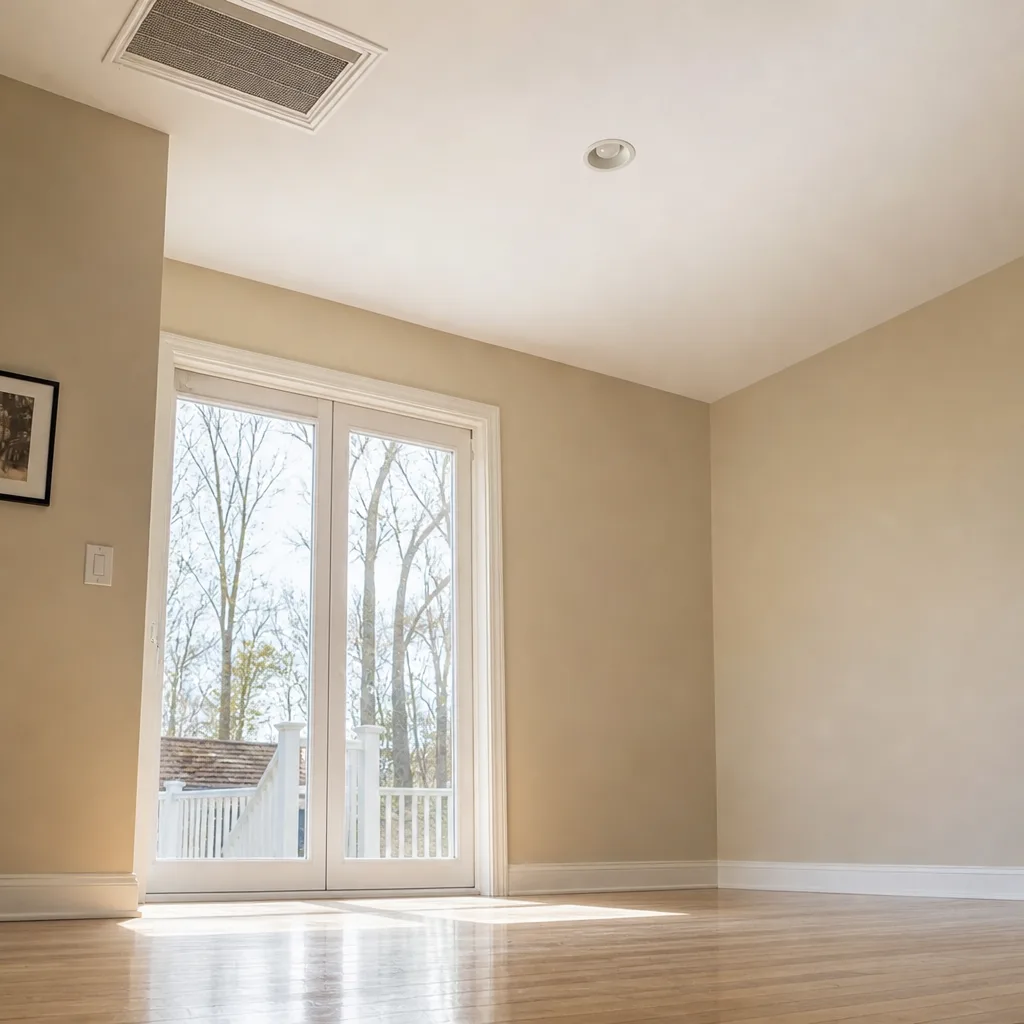
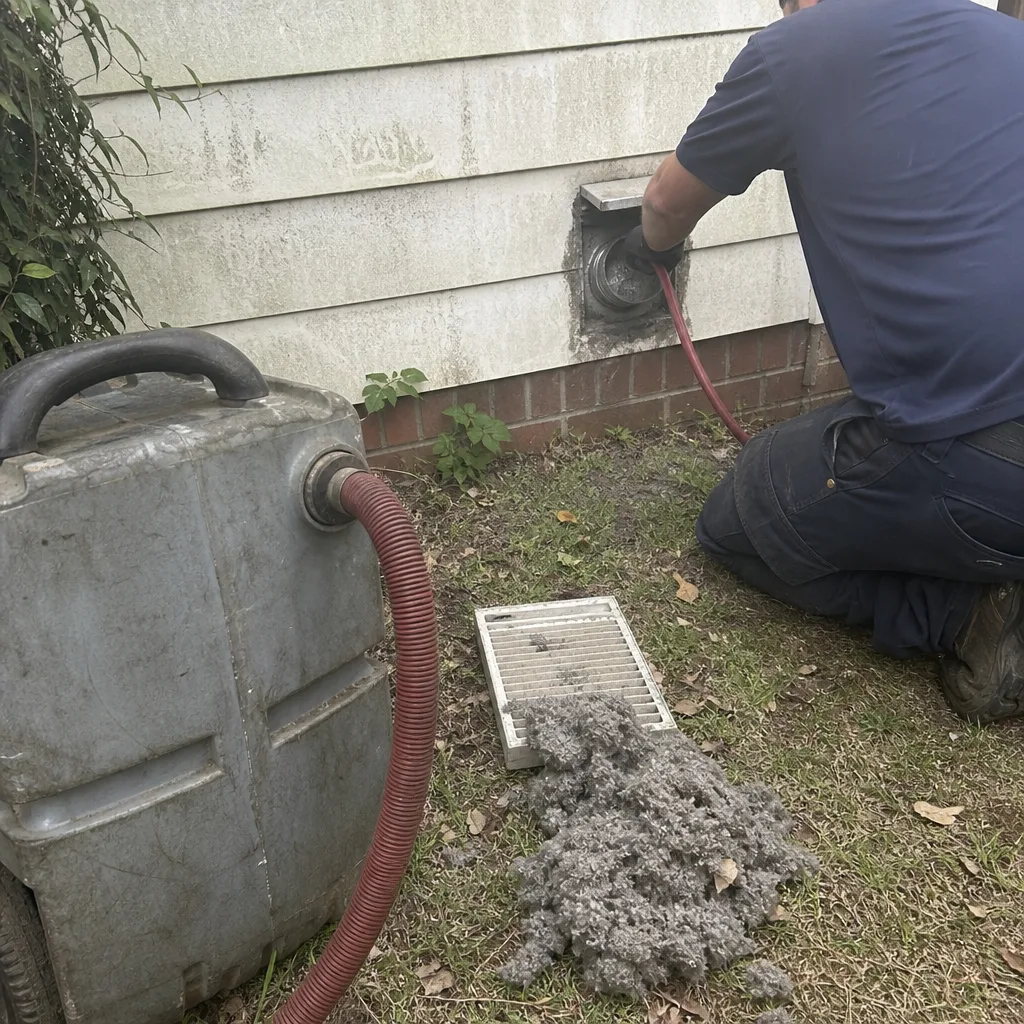
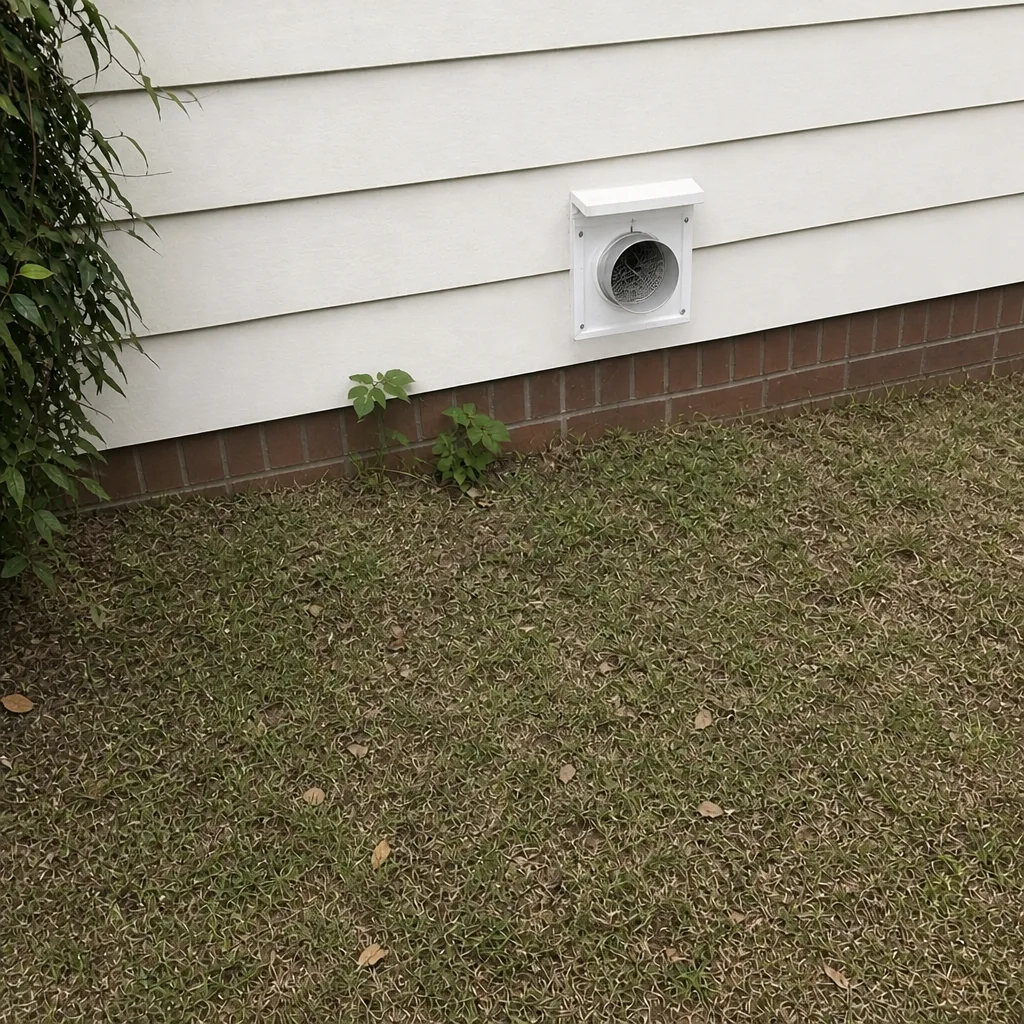
See the difference
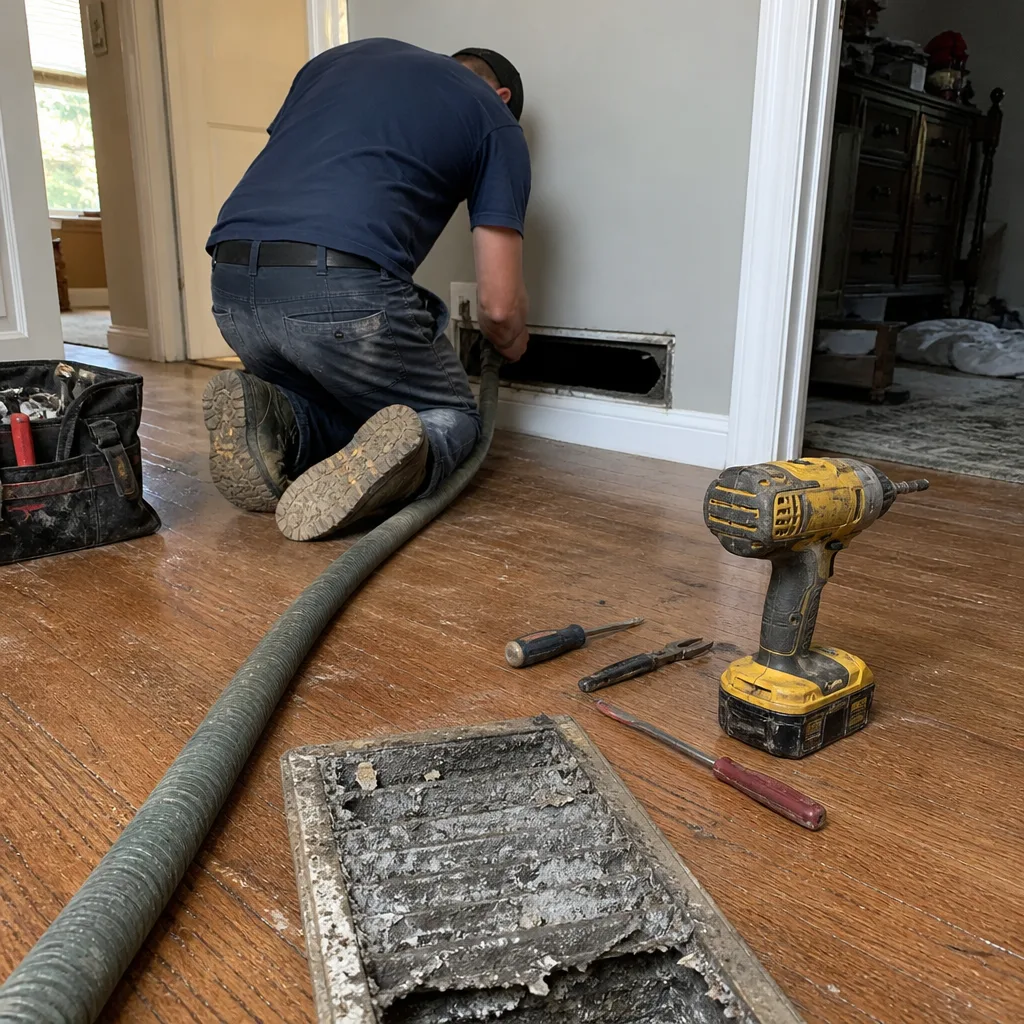 Before
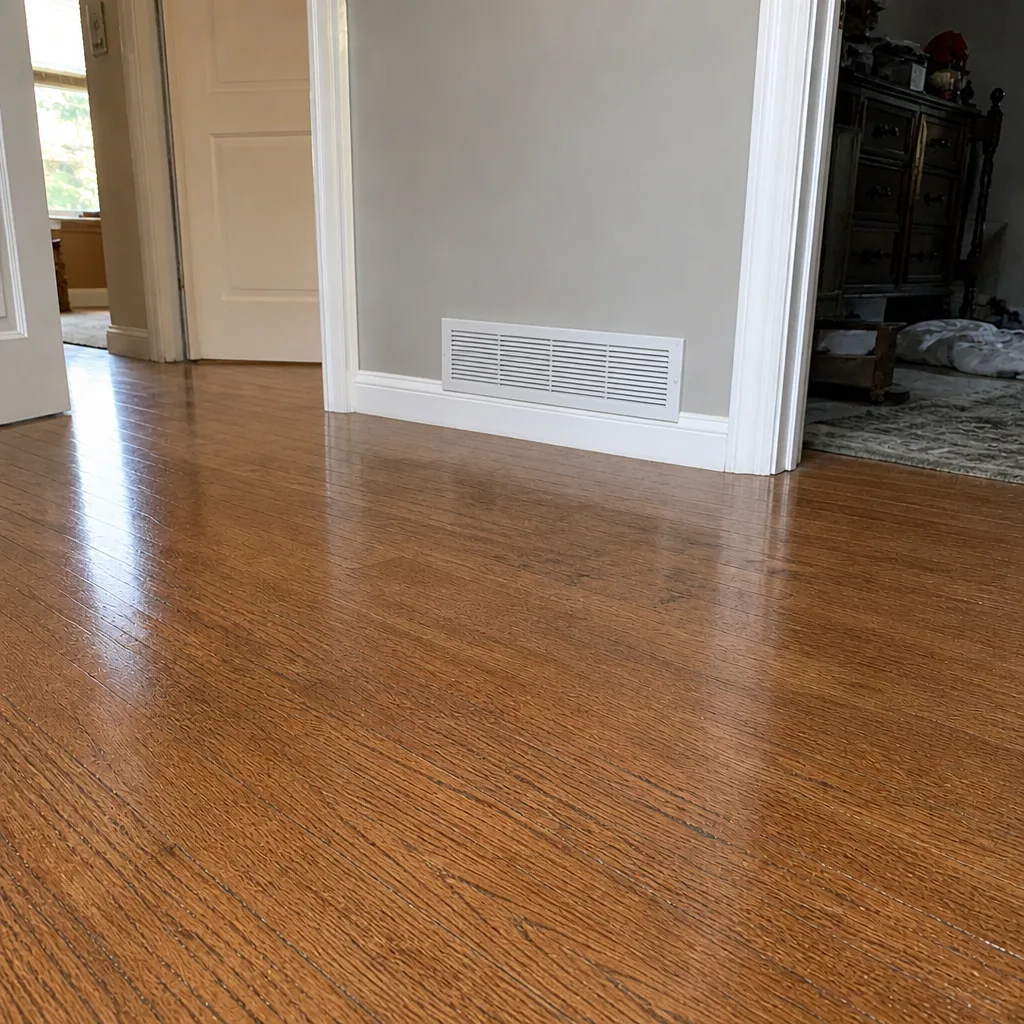 After
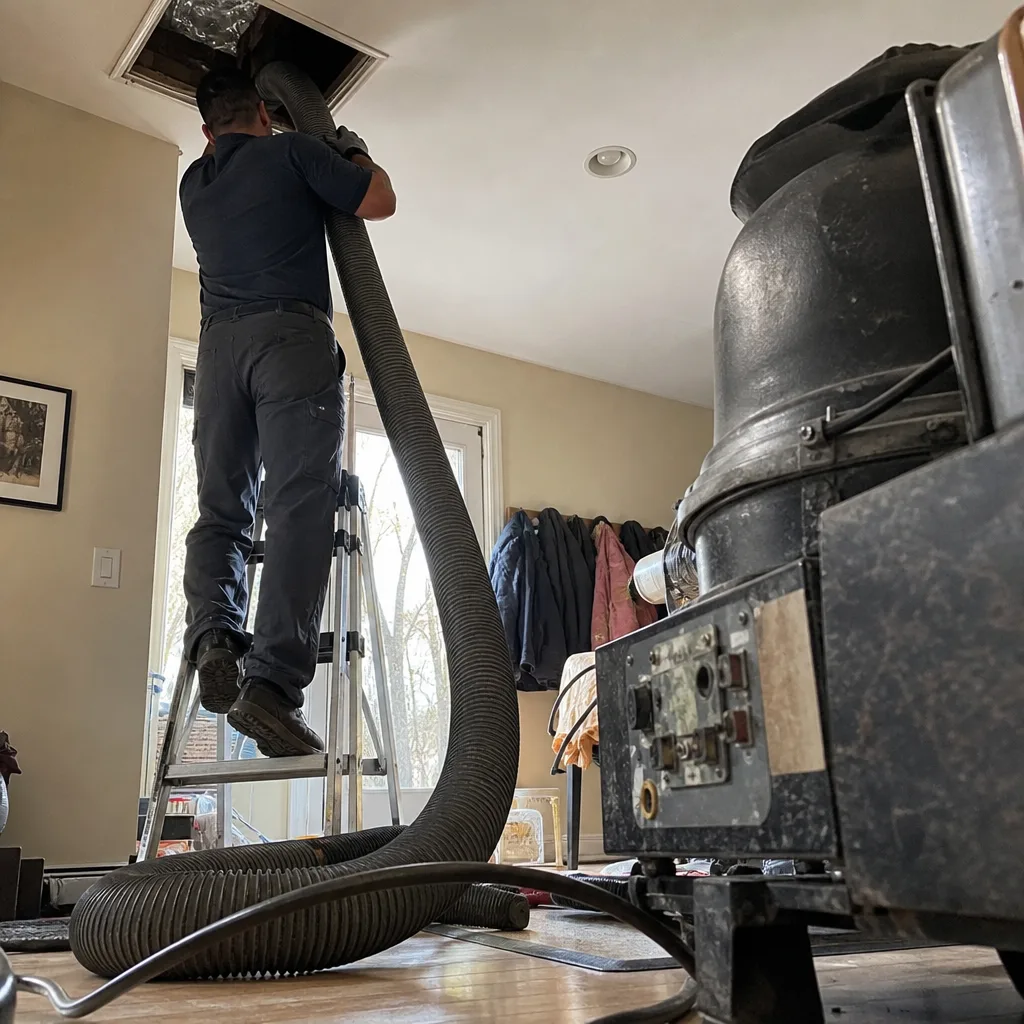 Before
 After
 Before
 After
When to Call a Professional
Call a professional if any of the following are true: water was visible in the crawlspace or attic for more than a few hours; the system ran during the event and continues to run; musty smell or humidity indoors has risen since the event; smoke odor has persisted for more than two days; a major renovation is underway or just finished; or you’ve noticed a decrease in airflow or increased dust since the last big storm. Those six triggers cover most of the emergency-level cases we see in North Raleigh. Air Duct Cleaning North Raleigh offers free estimates in North Raleigh – call (877) 820-8110. We answer 24/7. Fast dispatch from 7am to 7pm, Sunday through Friday. One call covers the whole system: duct cleaning, dryer vent cleaning, HVAC cleaning, sanitizing, and duct repair and sealing.
Frequently Asked Questions
Within 24 to 48 hours if water or moisture is suspected, because microbial growth can establish in that window. If there’s standing water or visible wet insulation in the crawlspace, isolate the HVAC system immediately and call for assessment the same day. If the storm brought rain but the crawlspace stayed dry, standard cleaning within a week is fine. Call (877) 820-8110 for an exact quote – estimates are free.
A full-system duct cleaning typically runs in the range of $300 to $700 for a standard single-family home in the North Raleigh market, with post-contamination work (moisture or smoke) often higher because it involves sanitizing and additional equipment time. Pricing is per job, not per vent, and the written estimate before work starts is the final price. We don’t quote teaser coupons. Call (877) 820-8110 for an exact quote – estimates are free.
Because they’re quoting less work than the job needs. A vacuum-only pass without agitation doesn’t remove bonded contaminants, and a repurposed shop vac doesn’t capture what it loosens. The result is debris redistributed through the home, which is the opposite of what you’re paying for. Our pricing reflects the equipment on the truck – Rotobrush, Nikro, Abatement Technologies filtration – and the time needed to do the job right. Call (877) 820-8110 for an exact quote – estimates are free.
Before-and-after photos of your own ducts, taken by the technician on-site and shown to you before they pack up. That’s the standard we work to. You shouldn’t have to trust a verbal report. Call (877) 820-8110 for an exact quote – estimates are free.
It helps when it’s done with the right equipment. Smoke residue adsorbs onto duct surfaces and doesn’t leave through normal filter changes. Proper cleaning agitates and captures that residue, and a sanitizing pass after reduces residual odor. If the smoke event was distant and the system was off the whole time, cleaning may not be necessary. Call (877) 820-8110 for an exact quote – estimates are free.
Every three to five years for a typical household, sooner if there are pets, recent renovation, or any of the contamination events this guide covers. Homes with serious allergy concerns often run closer to every two to three years. Post-storm and post-renovation cleaning happen on top of that schedule, not instead of it. Call (877) 820-8110 for an exact quote – estimates are free.
The Bottom Line
The emergencies that make duct cleaning urgent in North Raleigh aren’t the ones most homeowners prepare for. Storms, smoke events, and construction projects are the triggers, and each one has a different response window. The pattern that matters: isolate the HVAC system before running it in any moisture or smoke event, document everything within 48 hours for insurance, and clean the system with equipment designed for contamination work rather than generic dust removal. Routine maintenance will handle a normal year. The events in this guide are the ones that need a decision in the next 24 hours.
Contact
If you’re reading this after a storm, a fire event, or a major renovation in North Raleigh, don’t wait to see whether the system “recovers on its own.” Call (877) 820-8110 for a free estimate. We answer 24/7. Fast dispatch from 7am to 7pm, Sunday through Friday. We’ll tell you honestly whether the system needs cleaning, sanitizing, or repair – and if it doesn’t need anything yet, we’ll say so.
Written by the team at Air Duct Cleaning North Raleigh.