
Last updated November 24, 2026
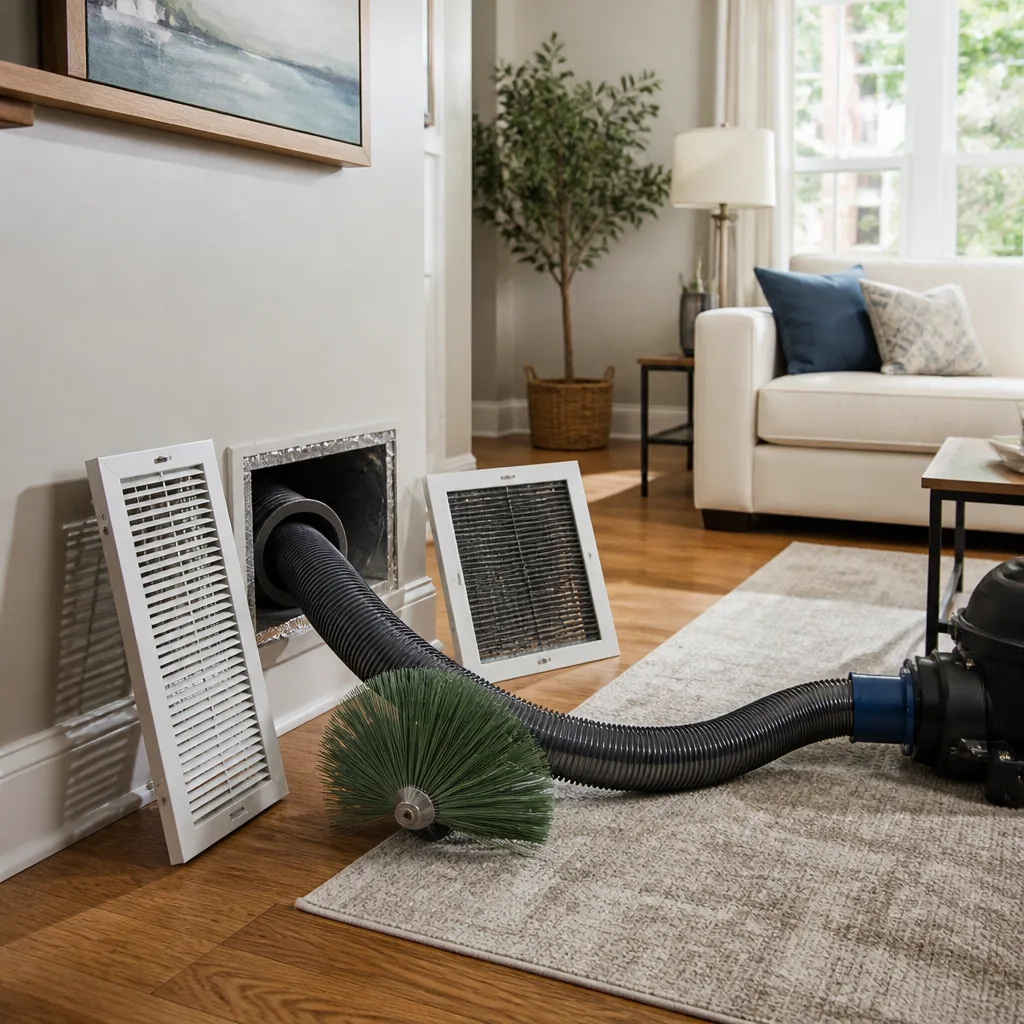 Whole-home duct cleaning
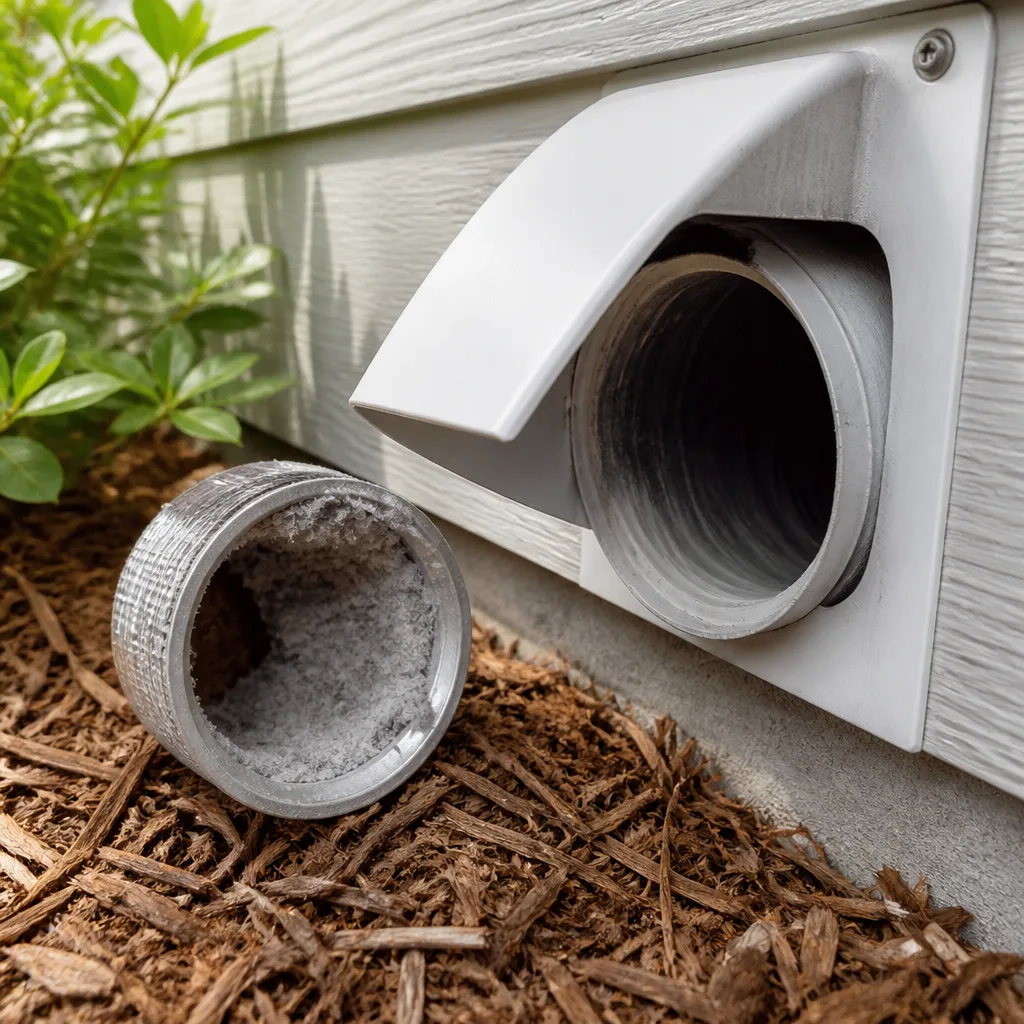 Dryer vent cleaning
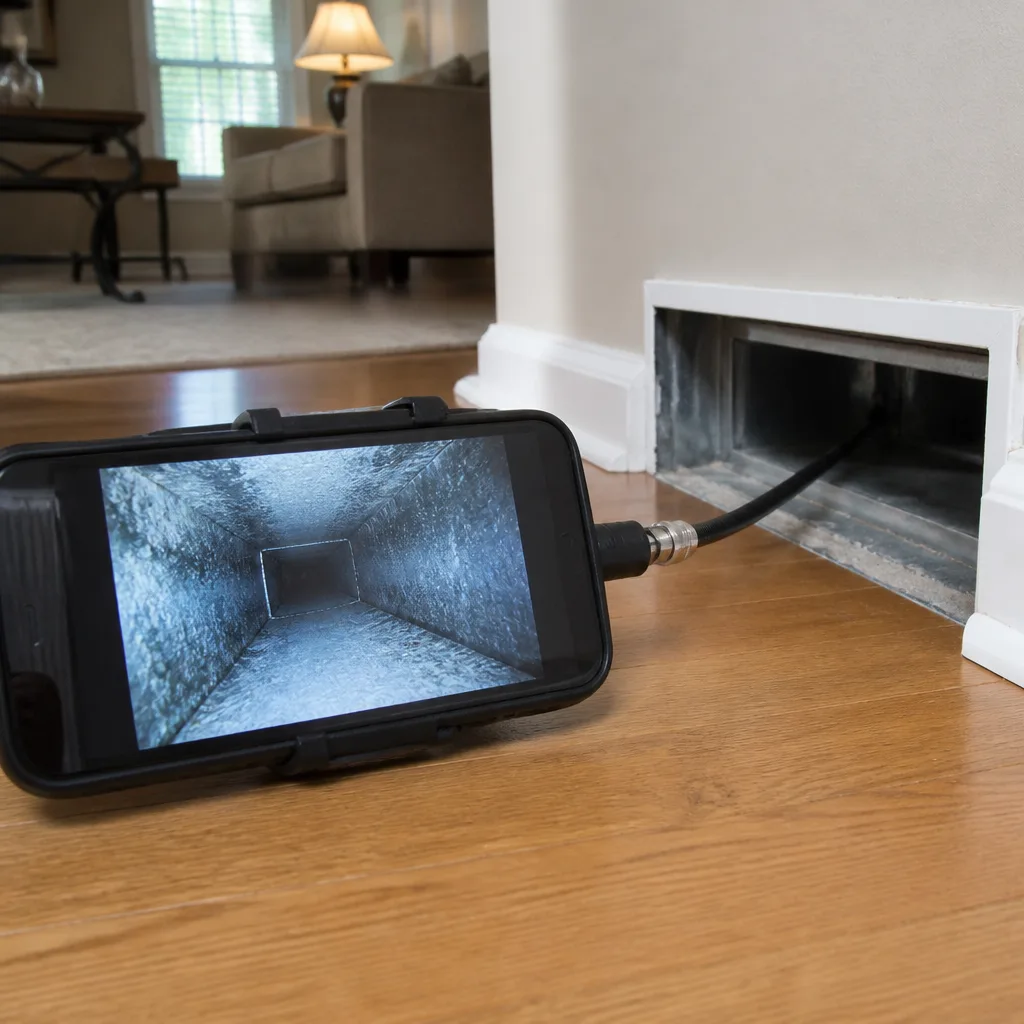 Camera inspection
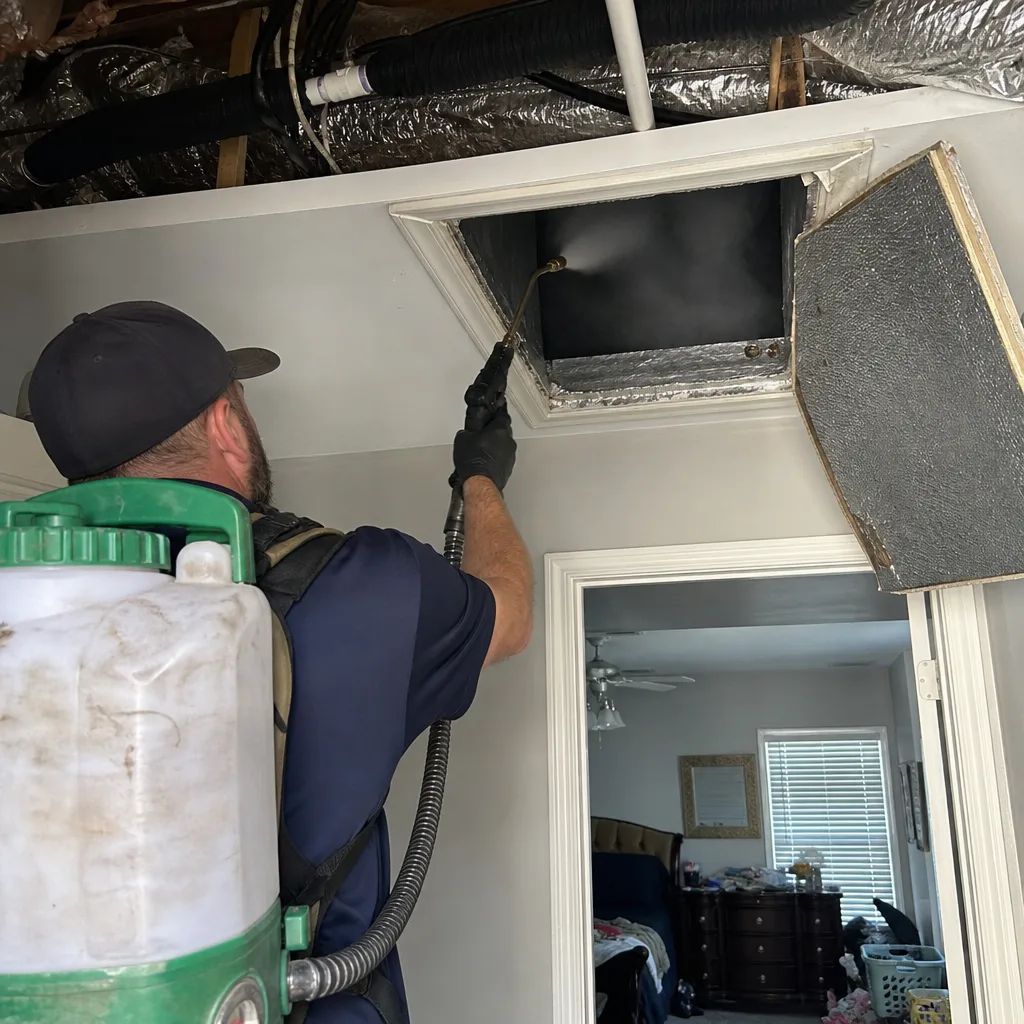
 Sanitizing & deodorizing
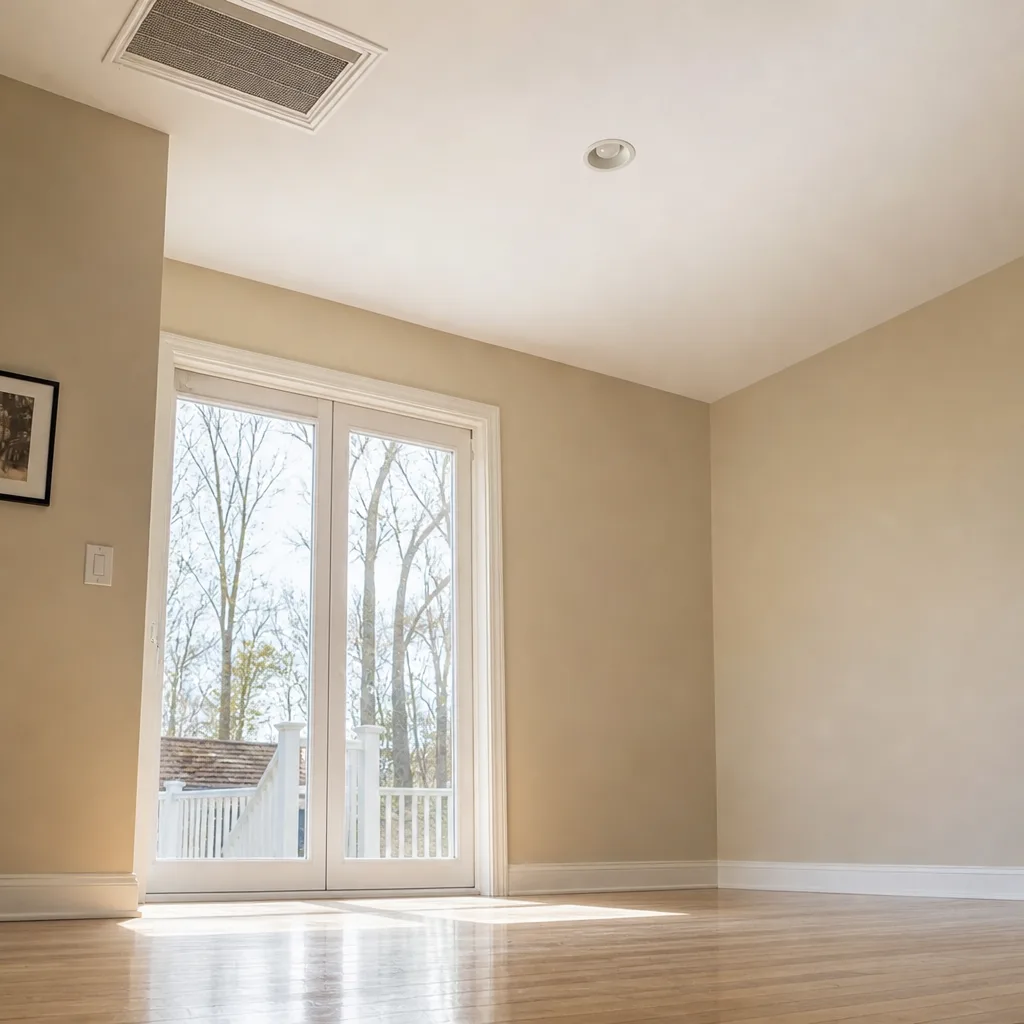
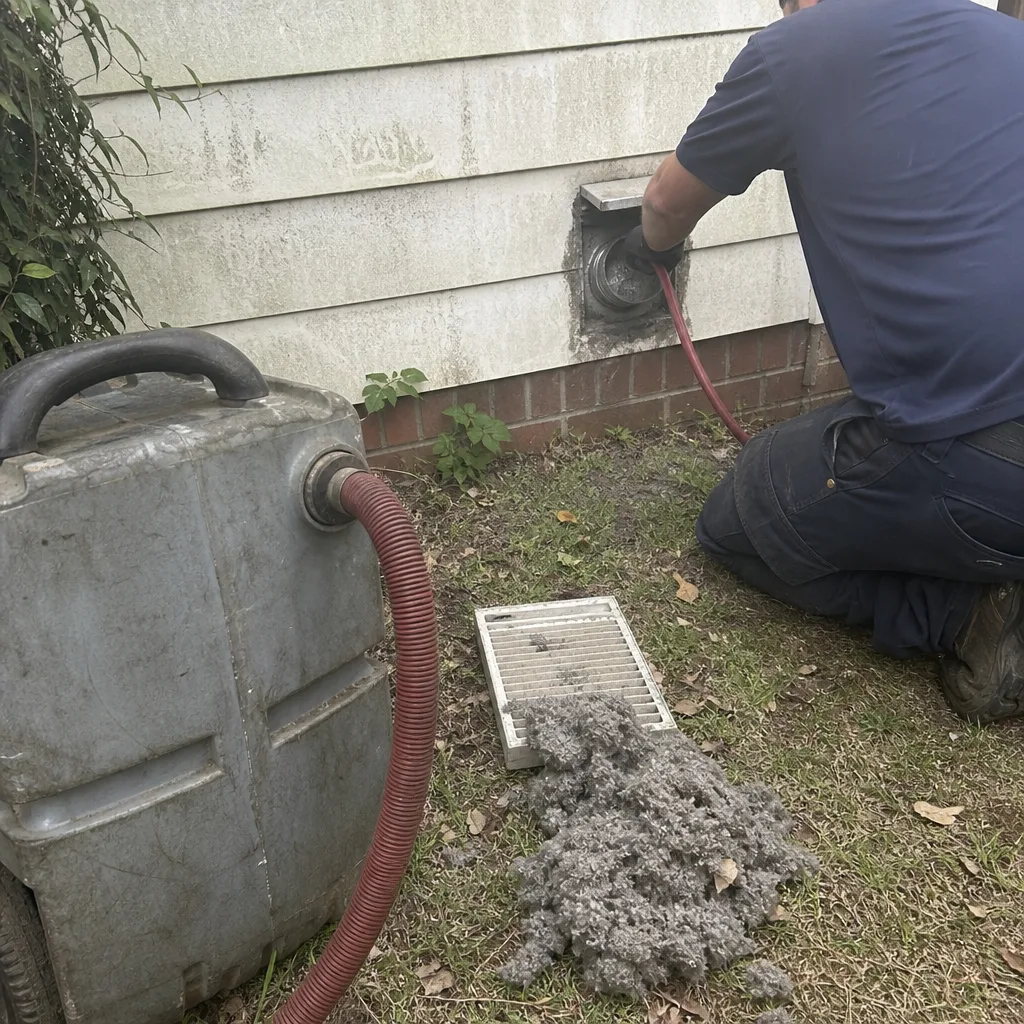
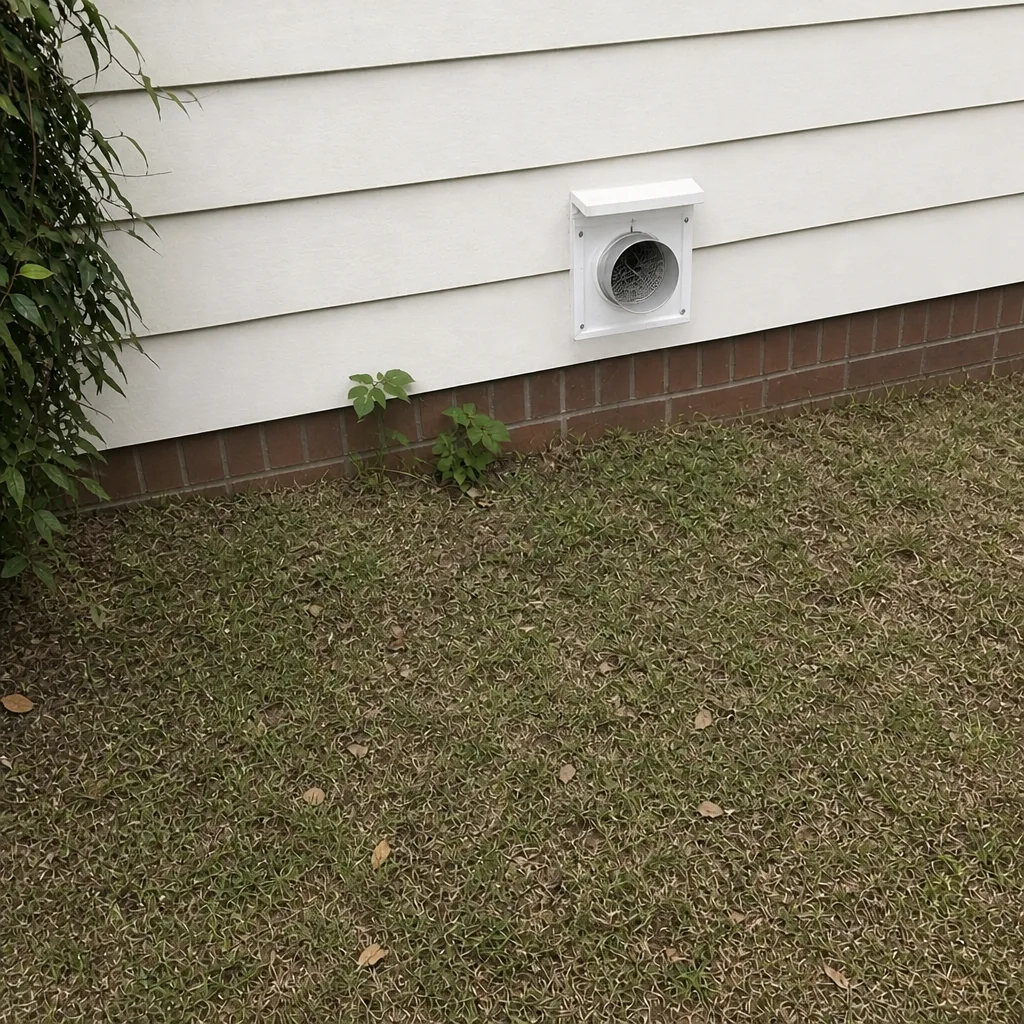
Whole-system duct and dryer vent check with before-and-after photos - you see exactly what came out of your vents
That "$99 whole-house special" is a bait ad - the real number appears once they are in your hallway, or the "clean" is a shop-vac at the register. We photograph the inside of your ducts before and after instead.
Choosing the Right Air Duct Cleaning Brand: A Buyer’s Guide for North Raleigh
Most air duct cleaning companies in North Raleigh won’t name the equipment brands they use on their websites. That’s not because the information is proprietary. It’s because generic imported rotary brushes and unrated portable vacuums don’t hold up to scrutiny once a homeowner knows what to look for. When a company hides its gear behind the phrase “professional-grade equipment,” it’s usually telling you the gear wouldn’t survive a close look. This guide teaches you to read the equipment stack instead of the logo, ask the right questions, and interpret the answers. You’ll finish knowing which tools actually matter, which brands separate a real duct cleaning operation from a surface-level vacuum job, and how to spot the difference before anyone climbs into your attic.
Quick Answer
Choosing the right duct cleaning brand in North Raleigh has less to do with the company name and more to do with the equipment the technicians bring through your door. A technically equipped service names its equipment (Rotobrush and Nikro vacuum and brush systems, Abatement Technologies filtration units), uses source-containment filtration during cleaning, and provides borescope camera images of your ducts before and after. If a company can’t or won’t name those tools, that silence tells you what tier of equipment you’re paying for.
Styles & brands we work with
- Whole-home duct cleaning
- Dryer vent cleaning
- Camera inspection
- Sanitizing & deodorizing
Table of Contents
- What Equipment Should a Duct Cleaning Company Be Using?
- How Do You Ask a Contractor About Their Equipment?
- Truck-Mounted vs. Portable Units: Which Does Your Home Need?
- Why Does Price Track Equipment So Closely?
- What Does Real Inspection Documentation Look Like?
- Why Do Clean Ducts Only Cover Part of the Job?
- What Makes Duct Cleaning Different in North Raleigh Homes?
What Equipment Should a Duct Cleaning Company Be Using?
Professional duct cleaning runs on five equipment categories working together. If any one is missing from a company’s process, the results suffer in a specific, predictable way. Here’s the buyer’s glossary most companies won’t give you.
1. Negative Pressure Units (Vacuum Systems)
These are the engines of the whole operation. A negative pressure unit creates a controlled vacuum on your duct system while cleaning happens, so loosened debris travels toward the collection point instead of into your living room. Rotobrush and Nikro both build purpose-designed vacuum and brush systems for this work. What separates them from a repurposed shop vacuum is airflow sustained over a full job, sealed connections at the duct opening, and a multi-stage filtration stack that captures what the unit pulls in. A shop vac will run out of suction in the middle of the job and won’t filter fine particulate at all.
2. Agitation Tools
Dust bonded to duct walls doesn’t lift with airflow alone. Agitation tools break it loose mechanically. The main types are air whips (compressed air lines that flail inside the duct), rotary brushes (motorized heads sized to duct diameter), and skipper balls (whip-and-skip nozzle combinations for larger runs). Rotobrush’s rotary brush systems are built specifically for residential ductwork, and the difference between a purpose-built brush and a generic imported head shows up in consistent coverage and in the tool not marring the duct interior.
3. HEPA Filtration
Where does everything go once it’s dislodged? This is where a lot of cheap operations fail quietly. Abatement Technologies builds professional-grade air filtration equipment used during controlled-environment work. Deployed on-site during duct cleaning, it contains contaminants rather than letting your cleaning redistribute fine particulate through the house. This matters in a North Raleigh home where the HVAC fan cycles air through every room, including bedrooms where people sleep.
4. Inspection Cameras
A borescope camera records the inside of the ducts before and after. It’s the only verifiable proof of cleaning results. Without it, a technician’s report that “the ducts look great” is an opinion, not evidence.
5. Sealing Materials
Cleaning reveals leaks. Duct Seal or equivalent mastic, foil tape rated for HVAC use, and the tools to apply them turn an inspection finding into a fixed problem instead of a referral to a second contractor.
How Do You Ask a Contractor About Their Equipment?
The right questions are specific enough that a vague answer is impossible to give. Use this numbered sequence when you call any duct cleaning company serving North Raleigh, and pay attention to what the answer contains rather than whether it sounds rehearsed.
- “What vacuum system do you run on the truck, and who makes it?” A professional with a real equipment stack will name it: Rotobrush or Nikro, for example. A company that says “a big one” or “commercial-grade” is telling you something valuable.
- “What agitation tools do you use, and will you show me the heads before the job starts?” Anyone with proper equipment can show you the brush heads and whip lines. Refusal to show them says the tools are locked away for a reason.
- “Do you deploy filtration during cleaning, or just vacuum?” The right answer mentions a HEPA or negative air machine running in the home while work happens, not a machine only at the end. Abatement Technologies units are purpose-built for exactly this.
- “Will I get before-and-after photos from a borescope camera?” Any company doing real cleaning documents it. Photos of the inside of your ducts before and after are standard with quality equipment.
- “If you find leaks or disconnects, can you repair and reseal them, or do I need a different contractor?” Cleaning without a repair capability is half a service. Ask up front.
Vague responses like “professional-grade equipment,” “state-of-the-art technology,” and “the best tools available” all signal the same thing: the equipment is unremarkable enough that naming it would be a disadvantage. When we name our equipment, it’s because the names stand on their own.
Truck-Mounted vs. Portable Units: Which Does Your Home Need?
Truck-mounted and high-powered portable systems serve different job profiles, and the right choice depends on your duct layout, not on which company is easier to book. A truck-mounted system parks a large vacuum outside your home and connects through a hose run to the duct system. It delivers enormous airflow and is the correct tool for long, straight duct runs, larger homes, and jobs where a lot of debris needs to move. It also requires hose access from the truck to the ductwork, which matters most on homes where the equipment can’t pull close to the entry point.
High-powered portable systems trade some total airflow for maneuverability. They reach duct systems in tighter spaces, work in split-level and ranch homes with limited exterior access, and suit jobs where the duct layout has multiple branches rather than one dominant trunk. Rotobrush’s portable systems are built for residential work and pair well with rotary brush heads that fit branch runs.
What matters is that the company can honestly assess which one your home needs, and that they’re running a purpose-built unit either way. A generic wet-dry vac dressed up as a duct cleaning machine isn’t either tier, and it can’t create enough negative pressure to hold debris while brushes agitate. In our experience, the ask is simple: “What’s your setup for a home like mine, and why?” A technician with real equipment answers that question in one sentence.
Why Does Price Track Equipment So Closely?
The lowest bid almost always reflects the lowest equipment tier, not operational efficiency. Professional duct cleaning machines, rotary brush heads sized to fit residential ductwork, HEPA filtration, and camera systems all cost the company real money before the first job. A company running generic imported rotary heads and a repurposed wet-dry vac has a much lower cost structure, and that gap shows up in the bid.
That’s why we’re wary of any company pricing per vent. A per-vent price rewards the company for calling rooms clean on a glance and discourages an honest whole-system approach, because the number grows and shrinks with a sales tactic, not with the work. What you want is a flat price per system, agreed in writing before work starts, covering the whole duct system, registers, and the return side. If a bid can’t be explained as a whole-system number, the equipment behind it is worth questioning.
An honest bid also accounts for the full scope of the work on the table. A company that only cleans ducts and can’t repair them has to send you elsewhere the moment an inspection reveals a disconnected run or a crushed flex duct, and a company that doesn’t clean dryer vents leaves one of the more fire-prone parts of the typical home untouched. Repairs and dryer vent work are their own line items, but a company that offers both is signaling it has the equipment and expertise to finish what cleaning starts.
When you compare bids, compare what’s in them. Ask for:
- The equipment manufacturer used for vacuum, agitation, and filtration.
- Whether the price is flat per system or priced per vent.
- Whether before-and-after photos come standard.
- Whether leak or disconnect repairs are available as a first-party service.
- Whether the bid includes register and return covers.
If a bid checks all five, price means something. If it checks none of them, it’s the cheapest version of a job you’re about to pay for twice. We handle air duct cleaning in North Raleigh as a whole-system job with a single flat price agreed before work starts, and the written estimate sets the final number.
What Does Real Inspection Documentation Look Like?
Real inspection documentation is a borescope camera set of before-and-after photos of your own ducts, timestamped and shown to you directly, not a generic set from a brochure. That’s the short version. Here’s how to evaluate what you’re handed.
A technician who runs a quality borescope records the duct interior at several points: the main trunk near the air handler, at least one branch run, and the return side. Before photos show dust bonded to the metal, and if the duct is flexible, debris settled in the low points. After photos show clean sheet metal or flex liner, with no standing debris on the floor of the run. The lighting is consistent, and the angle is identifiable, so you can tell it’s your duct and not a stock photo.
What to watch for:
- Photos as standard, not on request. A company confident in its equipment documents every job, because the equipment delivers provable results.
- Photos shown on a device screen during the visit. If the technician walks through the house with a tablet or camera screen, you can spot-check a branch yourself.
- Consistent before and after angles. If the “after” photo is a different duct section, the documentation isn’t proof of anything.
- Inspection notes paired with photos. A proper walk-through flags disconnected flex runs, crushed ducting, and leak points in writing, not just a verbal “all good.”
In our experience, North Raleigh homeowners who ask to see the before-and-after footage get a more useful final report because the technician is explaining what the camera shows as they go. The camera is doing double duty: it’s the invoice evidence and the homeowner’s education. If a company doesn’t use one, you can’t verify the work, and that’s the whole reason to insist on it.
Why Do Clean Ducts Only Cover Part of the Job?
Clean ducts are only the beginning, because the duct system is one link in a chain that also includes the air handler, the blower, the evaporator coil, the dryer vent, and the sealing that holds it all together. A company that cleans ducts and stops is leaving the other links untouched. That’s why a full-service indoor air quality specialist is a different kind of call than a one-trick duct cleaner.
The typical residential chain in a North Raleigh home looks like this:
- Air duct cleaning removes the debris load from the ducts themselves.
- HVAC cleaning handles the air handler, blower wheel, and coil surfaces, the downstream surfaces that collect what the ducts deliver.
- Dryer vent cleaning addresses the exhaust line from the dryer to the exterior, a separate system with its own fire-safety profile.
- Air quality and sanitizing follows cleaning with a treatment that targets odors and biological growth in the ducts after the physical debris is gone.
- Duct repair and sealing fixes what cleaning reveals, which ties the whole system back together.
These overlap, but they aren’t interchangeable, and a company that offers all five covers the whole chain in one visit rather than handing you off to a second contractor. On the product side, Honeywell and Aprilaire equipment fits into that picture too: whole-home filtration, humidification, and thermostat-linked air quality products that a full-service provider can recommend and integrate. A company that only cleans ducts never has a reason to mention them, and one that does have a reason shouldn’t be the one to leave the system half-addressed.
Our approach to HVAC cleaning reflects that: the ducts are the entry point, and the rest of the system is where the value compounds. Similarly, we treat dryer vent cleaning as a legitimate standalone service, since it addresses a leading cause of house fires and is often skipped by HVAC-only cleaners entirely.
What Makes Duct Cleaning Different in North Raleigh Homes?
North Raleigh’s housing profile changes how duct cleaning should be approached. Much of the housing stock around Falls River, Bedford, Wakefield, and the neighborhoods along Six Forks and Creedmoor roads is newer construction, which matters in two ways. First, newer homes often have flexible duct runs in unconditioned attic space, and that flex duct is more vulnerable to crushed runs, sagging low points, and disconnected joints than rigid metal ducting. Second, the same attic exposure means the duct system runs through intense summer heat and winter cold, and any sealing weakness loses conditioned air to the attic on a large scale.
That’s part of why we treat duct repair and sealing as a first-party service. When a borescope inspection shows a crushed flex run or a joint that has come apart, the fix is what makes the cleaning worthwhile in the first place. A company without those tools can clean the ducts and still leave the system leaking.
Humidity is another factor. North Raleigh’s summers are hot and humid, and an air handler running hard to keep up with the load pulls a lot of moisture through a duct system. Moisture plus trapped dust is a recipe for biological growth, especially in return-side ducting and on coil surfaces. That’s why sanitizing sits inside the same service family as cleaning and HVAC work rather than as an add-on: it addresses the condition cleaning exposes. Similarly, the pollen load in spring is heavy enough that filtration-quality upgrades matter, and Honeywell and Aprilaire products give a homeowner a way to see the effect on their thermostat. None of this changes the core question – who’s doing the work and with what – but it helps explain why a full-service provider fits North Raleigh homes better than a vacuum-only operation.
Common Mistakes to Avoid
- Choosing on the bid alone. The lowest price reflects the lowest equipment tier, and a shop vac dressed up as a duct cleaning machine can’t hold negative pressure for a full job. Compare the equipment stack first, then the price.
- Accepting “professional-grade equipment” as an answer. That phrase means the company doesn’t want to name its tools. Ask for manufacturer names and listen for Rotobrush, Nikro, or a comparable brand.
- Not asking about filtration during cleaning. Without a HEPA or negative air unit running on-site, dislodged debris goes somewhere, and usually that somewhere is your living room.
- Skipping the before-and-after photos. If the company doesn’t document the inside of the ducts, you have no proof the cleaning happened. In a North Raleigh home, that documentation is also your record if you sell or refinance.
- Hiring a duct cleaner who can’t repair what cleaning reveals. Disconnected flex runs and crushed ducting are common in the newer attic-flex layouts around Wakefield and Falls River. A company without sealing and repair capabilities will find the problem and leave it.
- Treating dryer vents as an afterthought. The dryer exhaust is a separate fire-safety system, and HVAC-only cleaners routinely skip it. Ask whether it’s a standalone service.
- Paying per vent. Per-vent pricing rewards eyeballing rooms instead of cleaning the whole system. A flat price per system is the honest structure.
See the difference
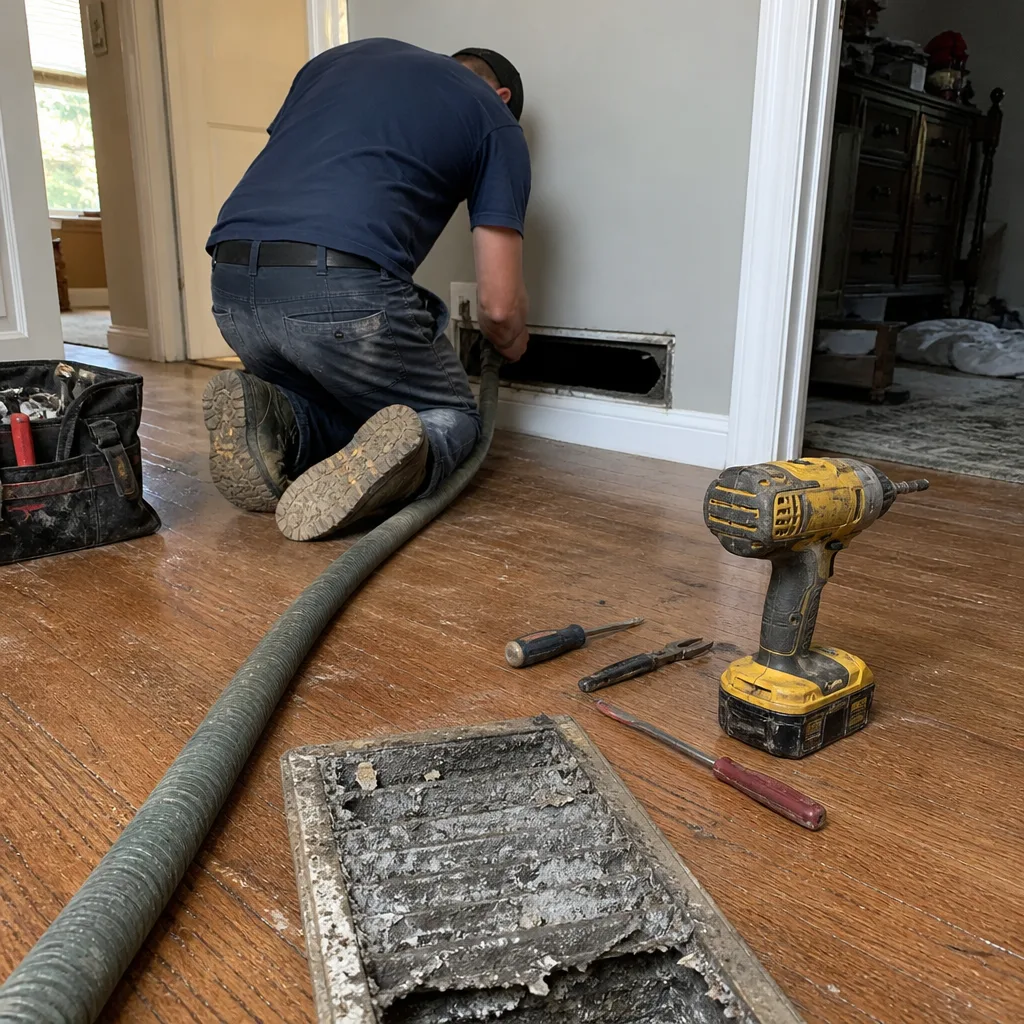 Before
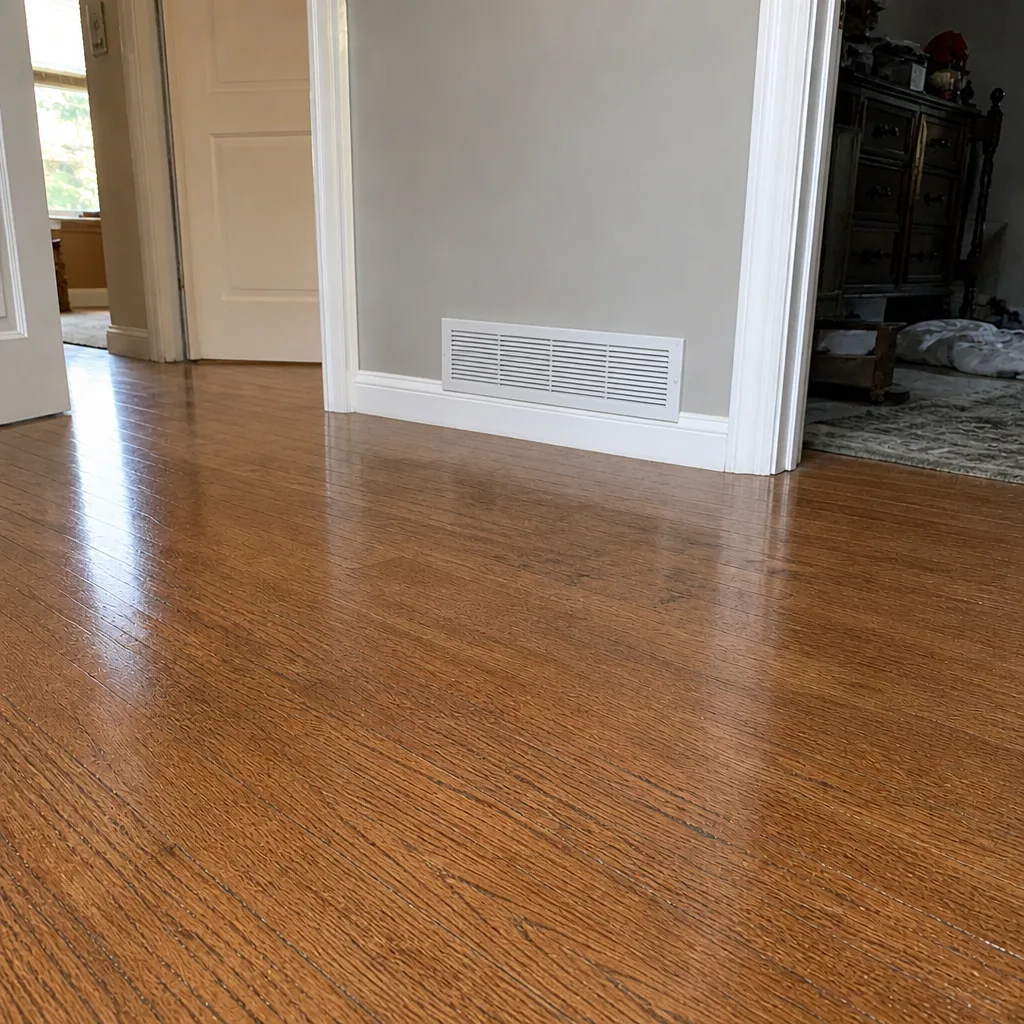 After
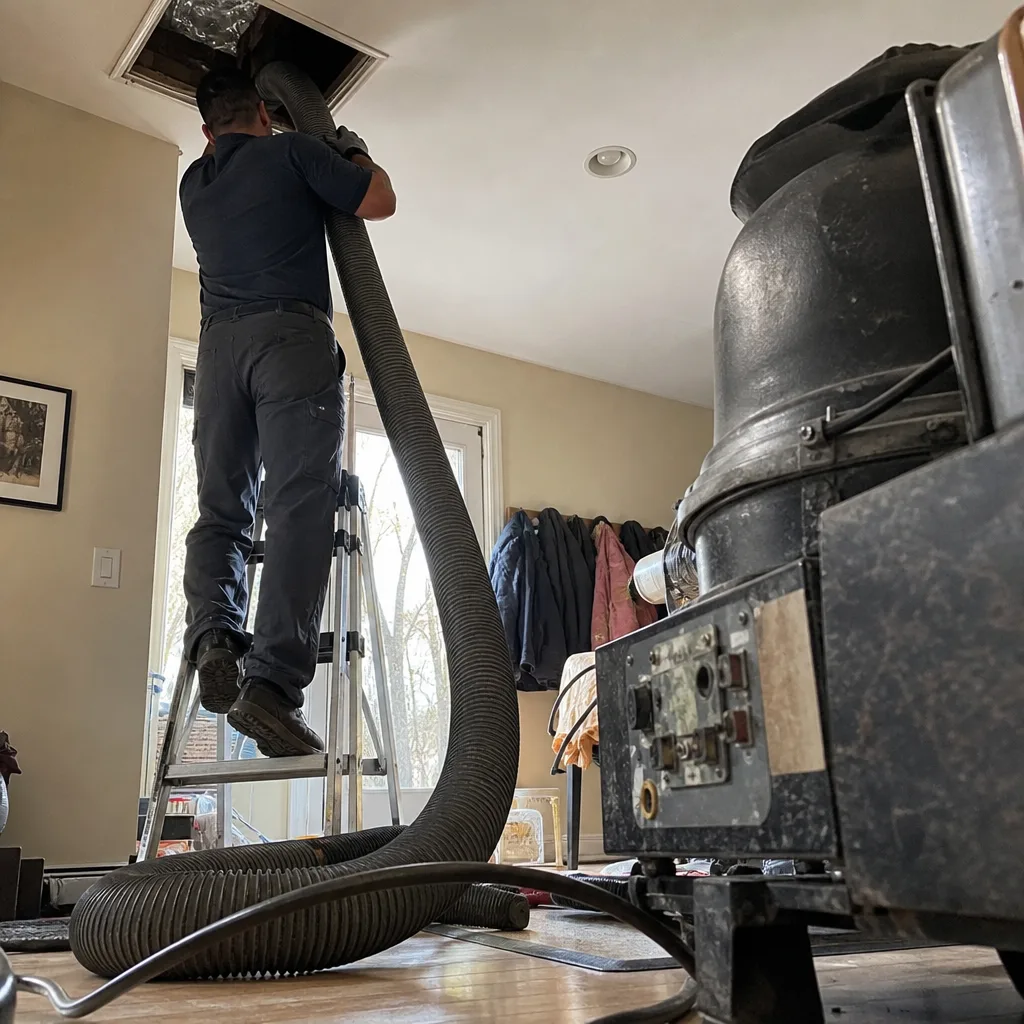 Before
 After
 Before
 After
When to Call a Professional
Some duct conditions are safe to live with for a while, and some aren’t. Call a professional if you’ve recently bought a home and don’t know when the ducts were last cleaned, if you notice visible dust blowing out of registers when the system starts, if any room in the house feels under-served by airflow, or if there’s a persistent musty smell when the HVAC runs. Health concerns are another reason: if someone in the household has respiratory sensitivity, the duct system is a reasonable place to start. Visible mold near a register or on the air handler is a call-now condition, not a wait-and-see one. Dryer vent cleaning deserves its own mention, since lint accumulation is a recognized fire risk that builds quietly. Air Duct Cleaning North Raleigh offers free estimates in North Raleigh. Call (877) 820-8110. We answer 24/7. Fast dispatch from 7am to 7pm, Sunday through Friday. The estimate is free and the job is priced as a flat system rate in the written estimate before work starts. Our technicians have up to 10 years of experience, and the local pro is licensed and insured as the state requires.
Frequently Asked Questions
Air duct cleaning in North Raleigh is priced as a flat rate per system, not per vent, and the written estimate sets the final number. We quote whole-system pricing with the estimate, and we won’t quote a teaser price that changes once a technician is on site. Call (877) 820-8110 for an exact quote, which is free. We answer 24/7. Fast dispatch from 7am to 7pm, Sunday through Friday.
Cheap quotes reflect cheaper equipment: generic imported rotary brushes, repurposed shop vacuums instead of purpose-built units, and no on-site filtration during cleaning. A company running Rotobrush and Nikro equipment plus an Abatement Technologies filtration unit has real overhead behind every job, and that shows in the price. A price that feels too low usually means something specific was left out of the scope. Call (877) 820-8110 and we’ll walk you through what’s in our bid line by line.
You know the work was done when you see before-and-after borescope camera photos of your own ducts, shown on a screen during the visit. Photo documentation from a borescope is the only verifiable proof of cleaning results. A verbal “all clean” isn’t evidence, and a brochure photo isn’t your duct. We photograph every job. Call (877) 820-8110 to schedule a free estimate.
Most homes land somewhere in the three-to-five year range, though that’s a general guideline, not a rule. Homes with pets, recent renovations, or heavy pollen exposure often need it sooner, and a home where ducts have never been cleaned may need it regardless of when it was built. A borescope inspection tells you what your specific system actually looks like. Call (877) 820-8110 for a free estimate and we’ll document what we find.
We use both setups depending on the home’s duct layout: truck-mounted systems for long duct runs and larger homes, and high-powered portable Rotobrush units for branch layouts and homes with limited exterior access. The technician should be able to explain which one fits your home and why. Call (877) 820-8110 and we’ll help you figure out which applies to your house.
Yes. Duct repair and sealing is a first-party service, not a referral, so a disconnected flex run or crushed section found during inspection gets fixed during the same service relationship. That’s common in North Raleigh’s newer attic-flex layouts. Call (877) 820-8110 to schedule an inspection and a free estimate.
The Bottom Line
Duct cleaning brand is equipment brand, and the company name on the truck matters less than the tools that come through the door. Ask for the vacuum system manufacturer, the agitation tools, the filtration unit deployed during cleaning, and before-and-after borescope photos. Pay attention to whether the bid is flat per system or per vent, and whether the company can repair and reseal what cleaning reveals. In North Raleigh homes, where newer construction often means attic flex duct and humid summers stress the whole system, that distinction shows up in results. Name the equipment, verify the process, and the choice makes itself.
Because “clean ducts” pull debris out of the system once, not regularly, most homes in North Raleigh land on dryer vent cleaning as its own scheduled service, separate from the ducts themselves. If a technician finds a disconnected run, we handle HVAC cleaning alongside it so the whole system is addressed in one visit. For a homeowner comparing bids, the strongest evidence remains the borescope record of what’s inside the ducts, not a brochure. We put our equipment names on the page because they separate a real operation from a vacuum job, and we’re glad to explain every tool in the stack before you decide. If you’re ready to compare, call Air Duct Cleaning North Raleigh at (877) 820-8110 for a free estimate. We answer 24/7. Fast dispatch from 7am to 7pm, Sunday through Friday.
Written by the team at Air Duct Cleaning North Raleigh.