
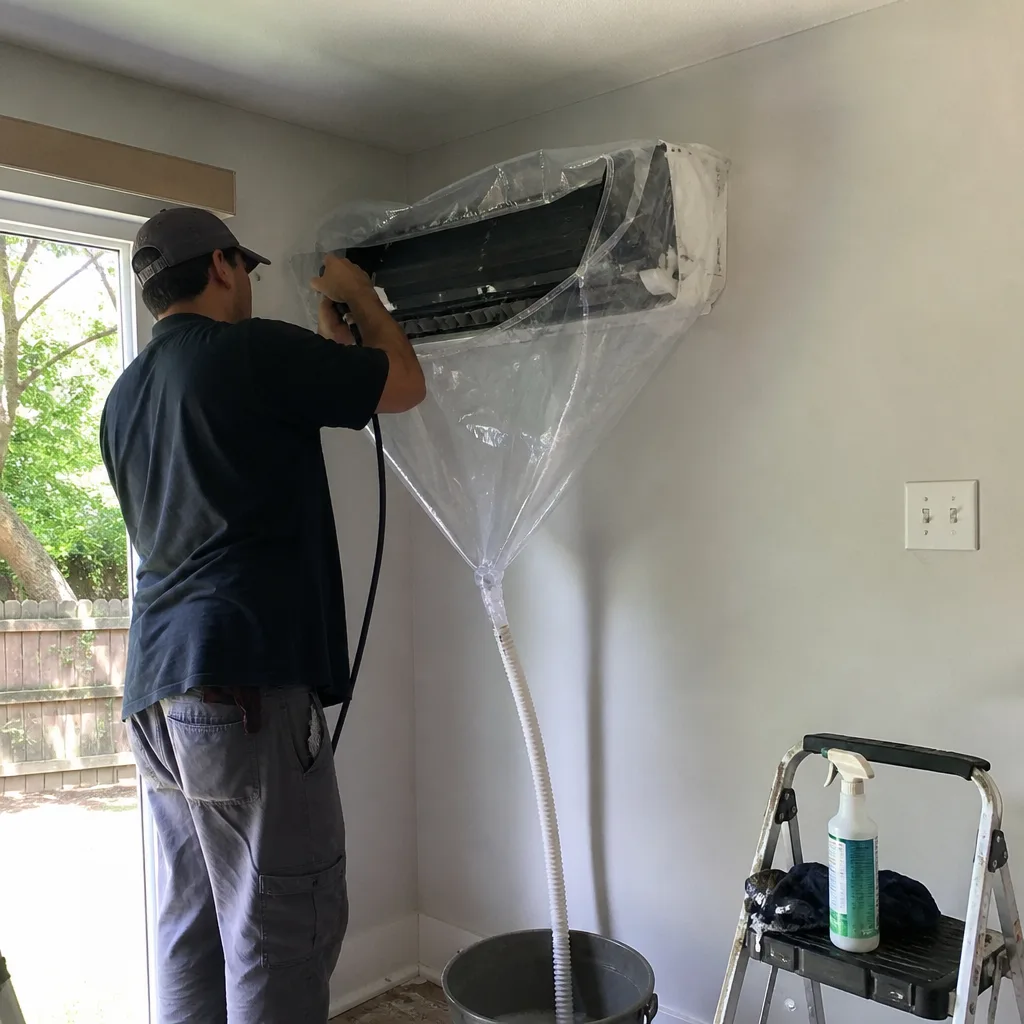
Last updated November 24, 2026
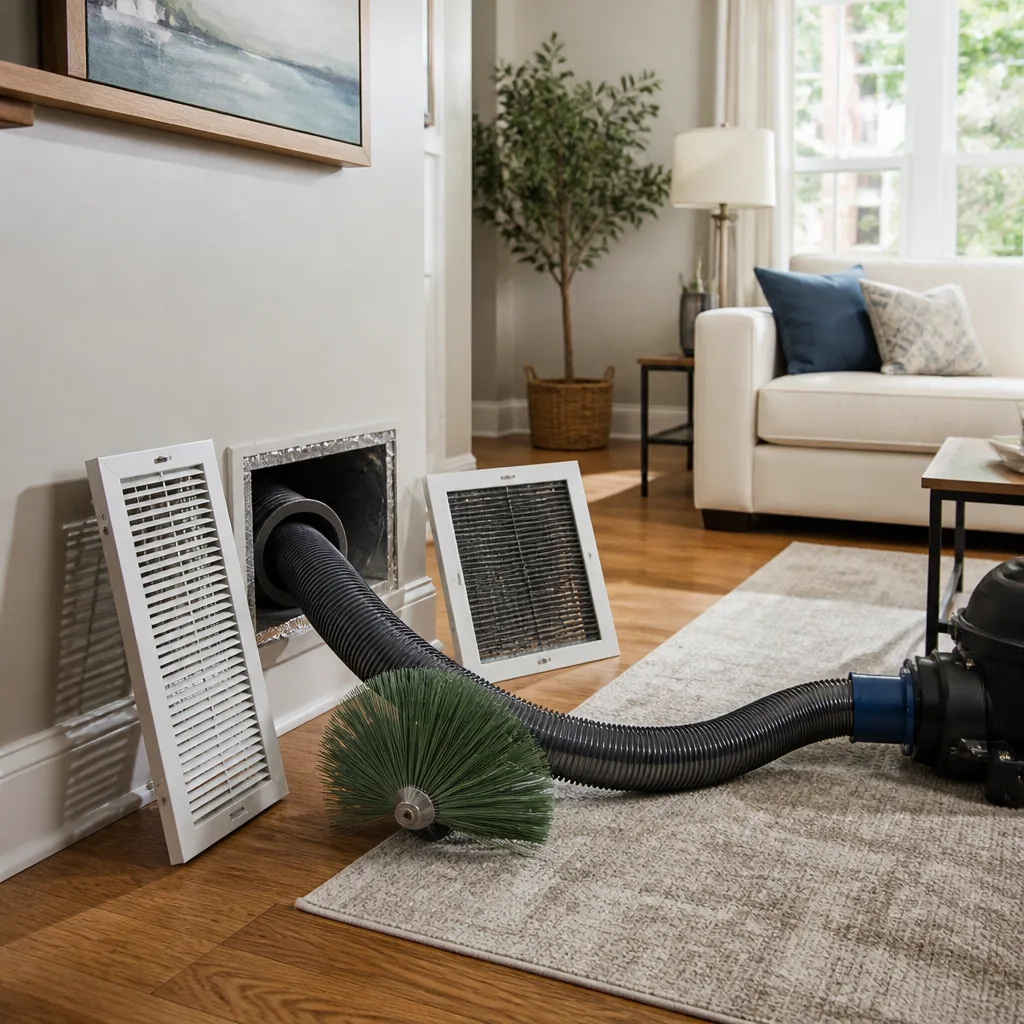 Whole-home duct cleaning
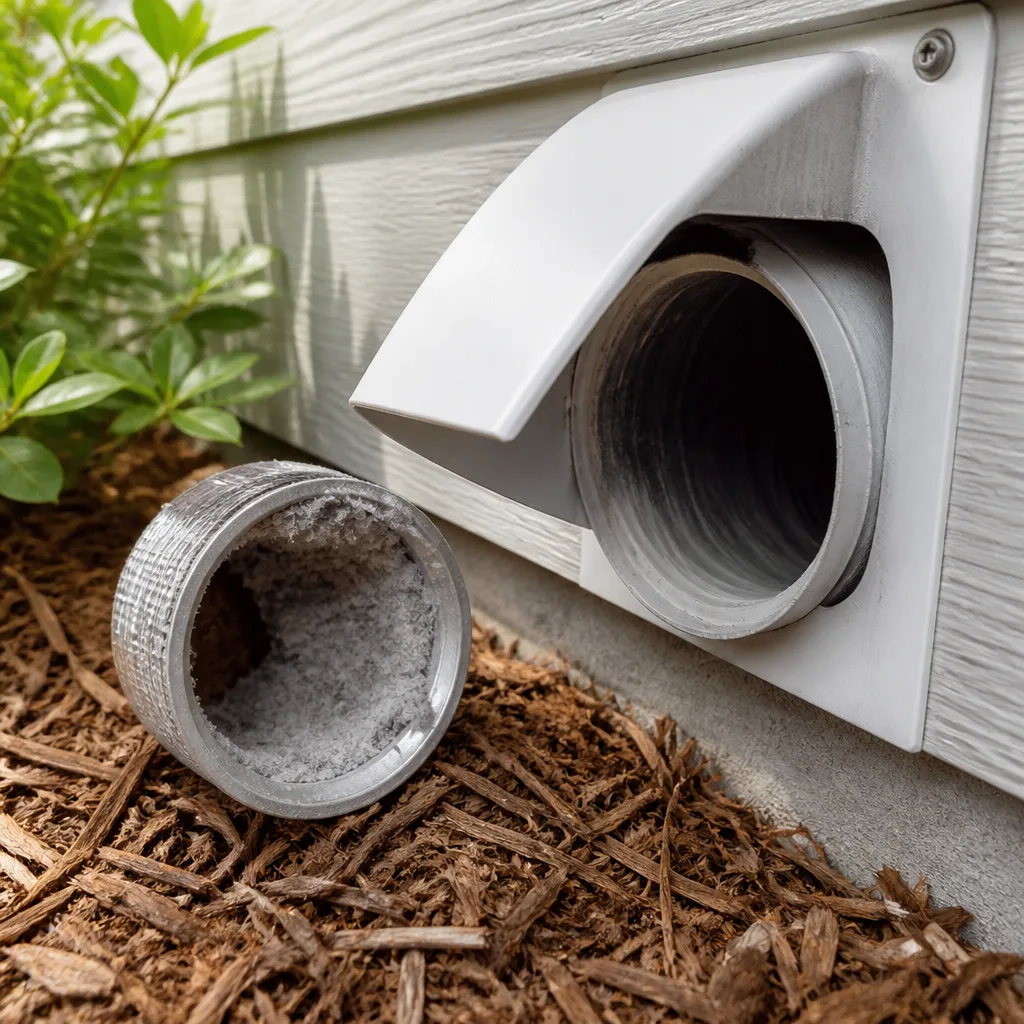 Dryer vent cleaning
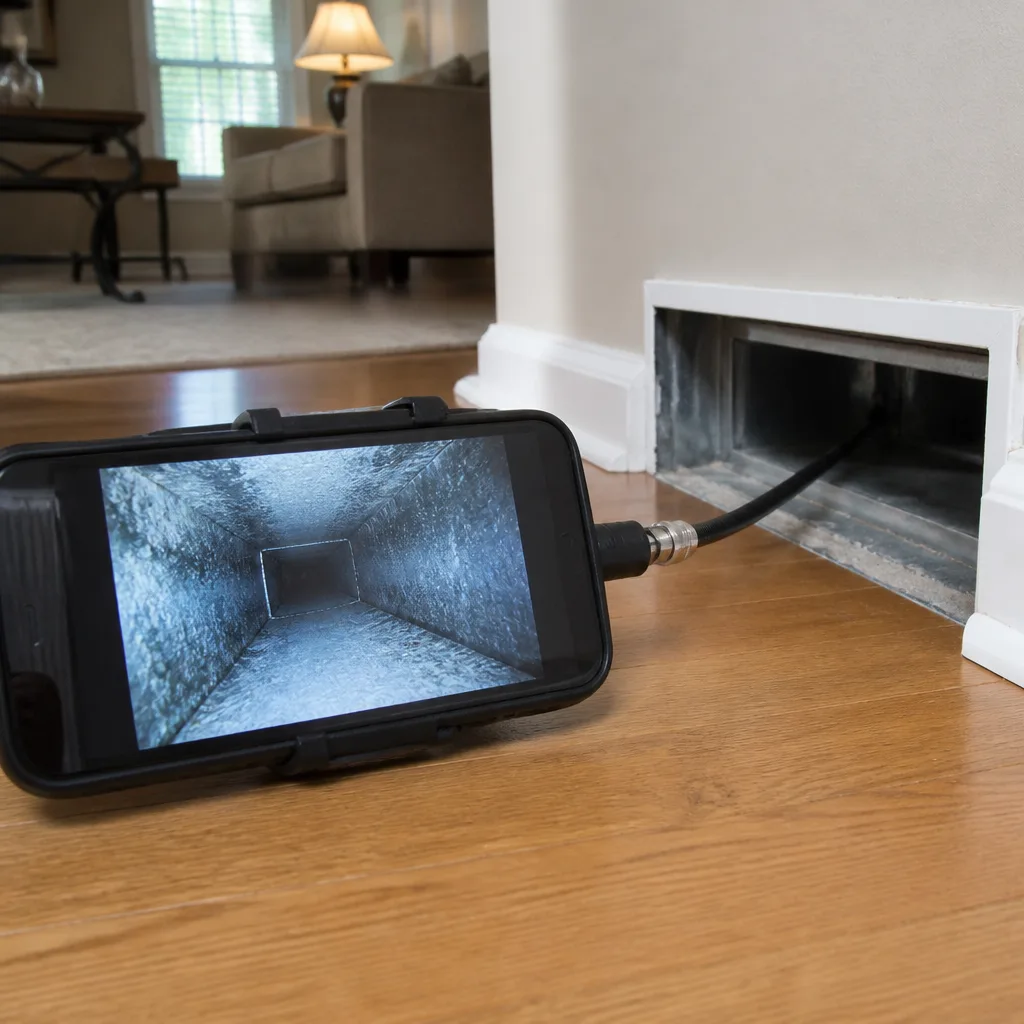 Camera inspection
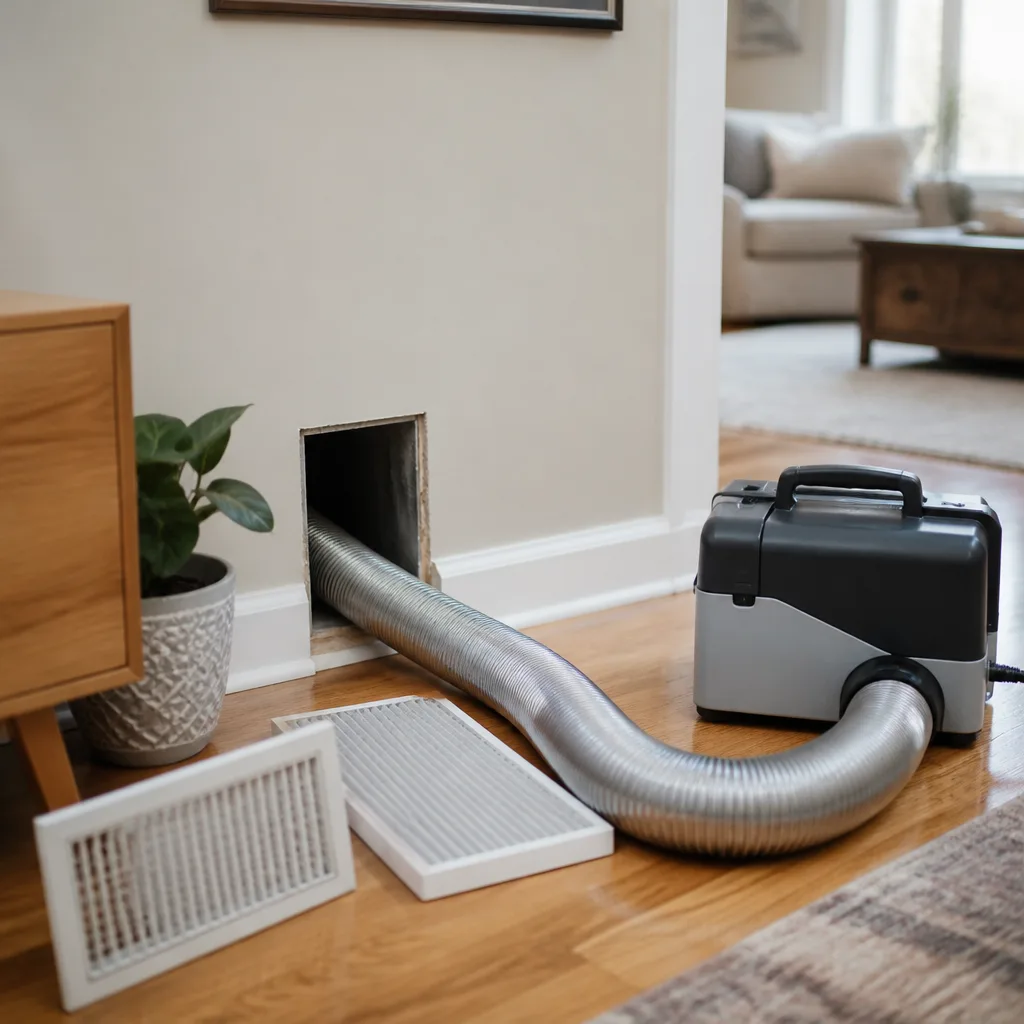 Sanitizing & deodorizing
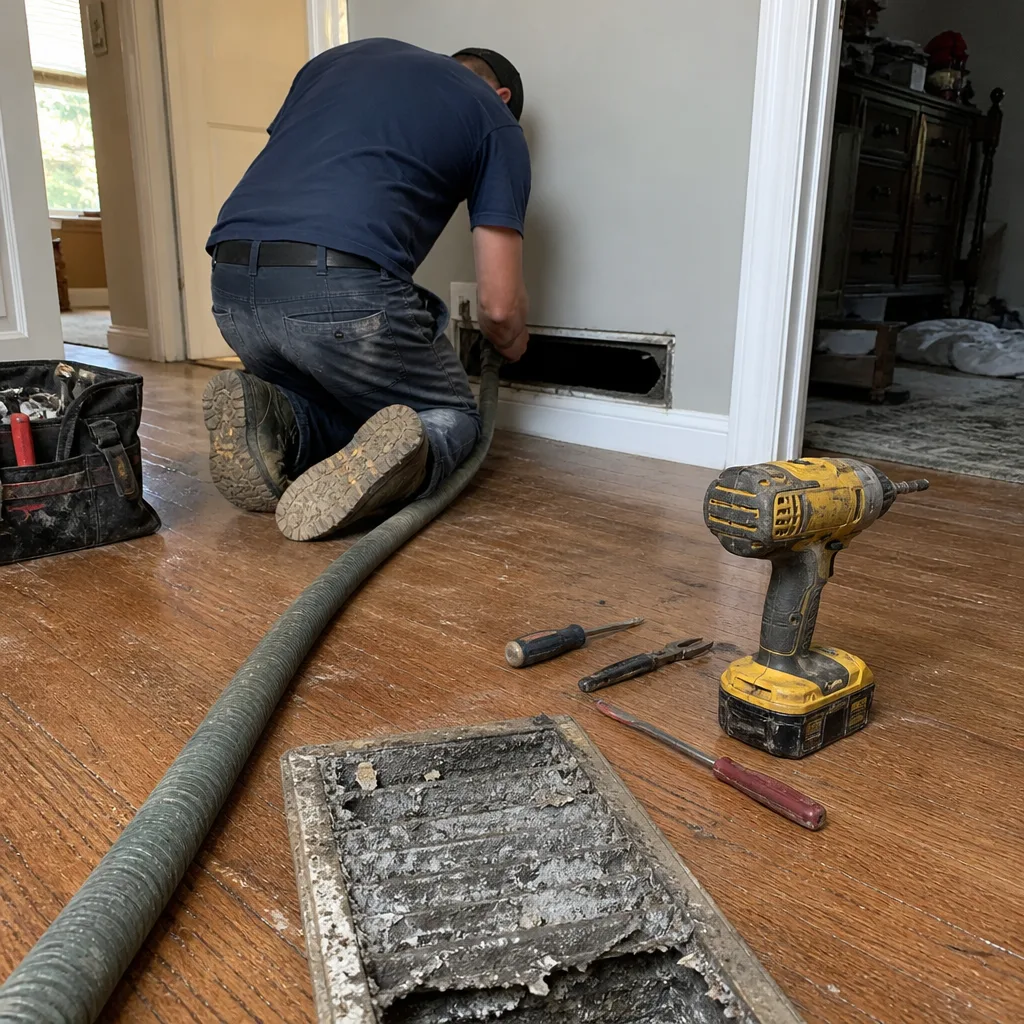
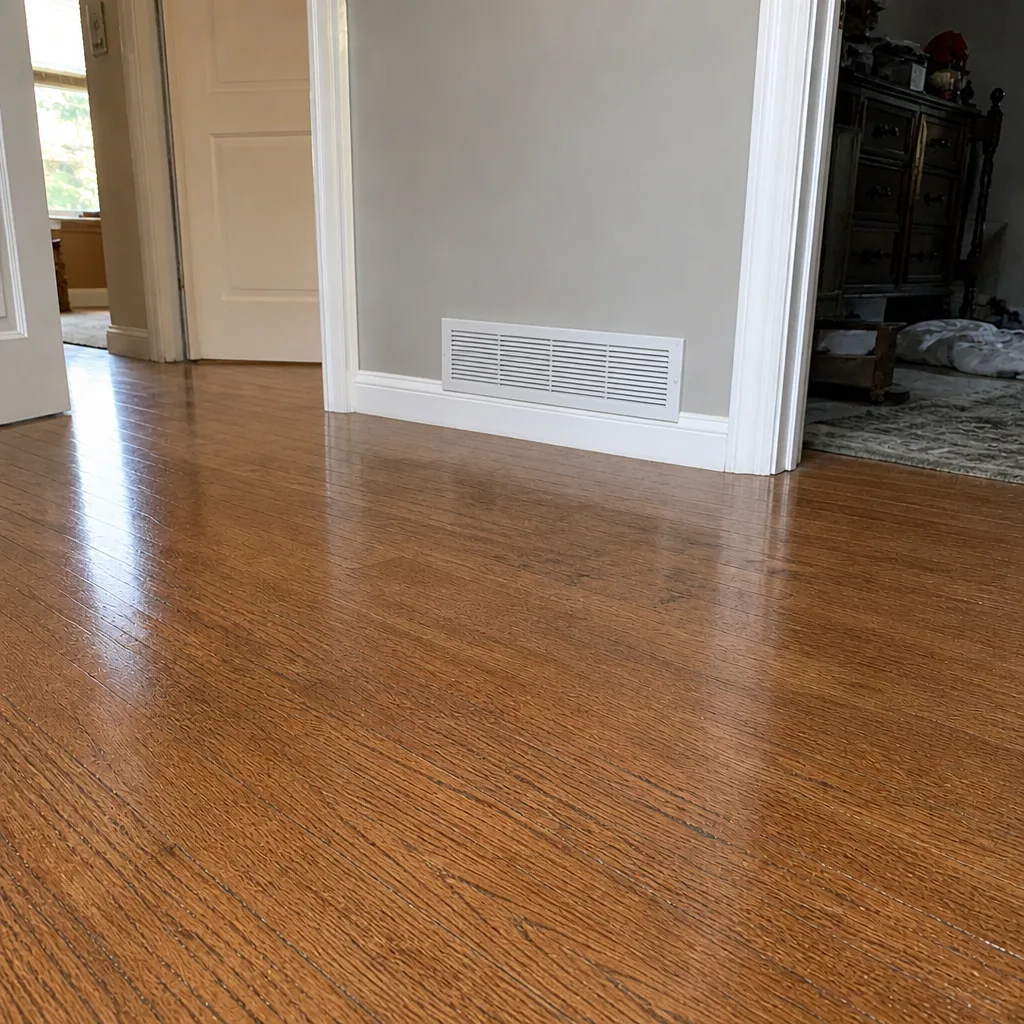
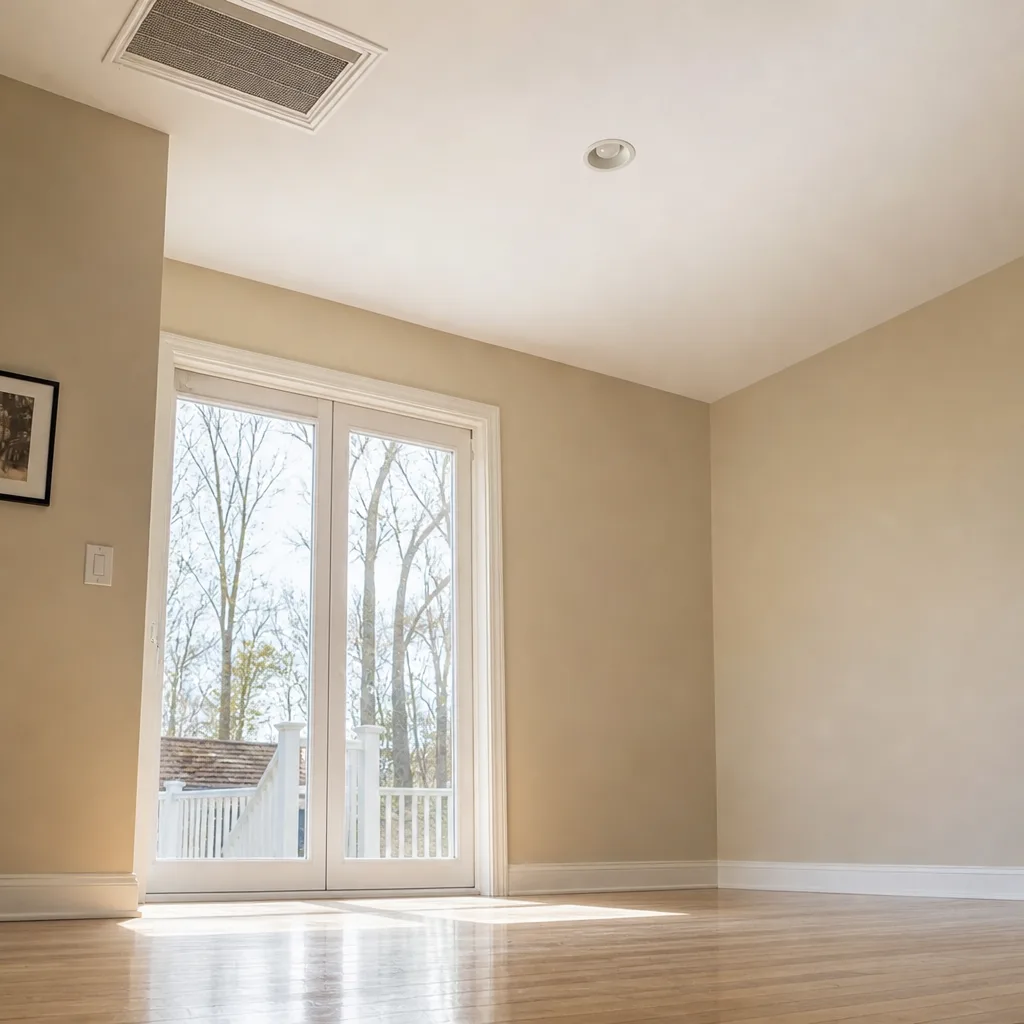
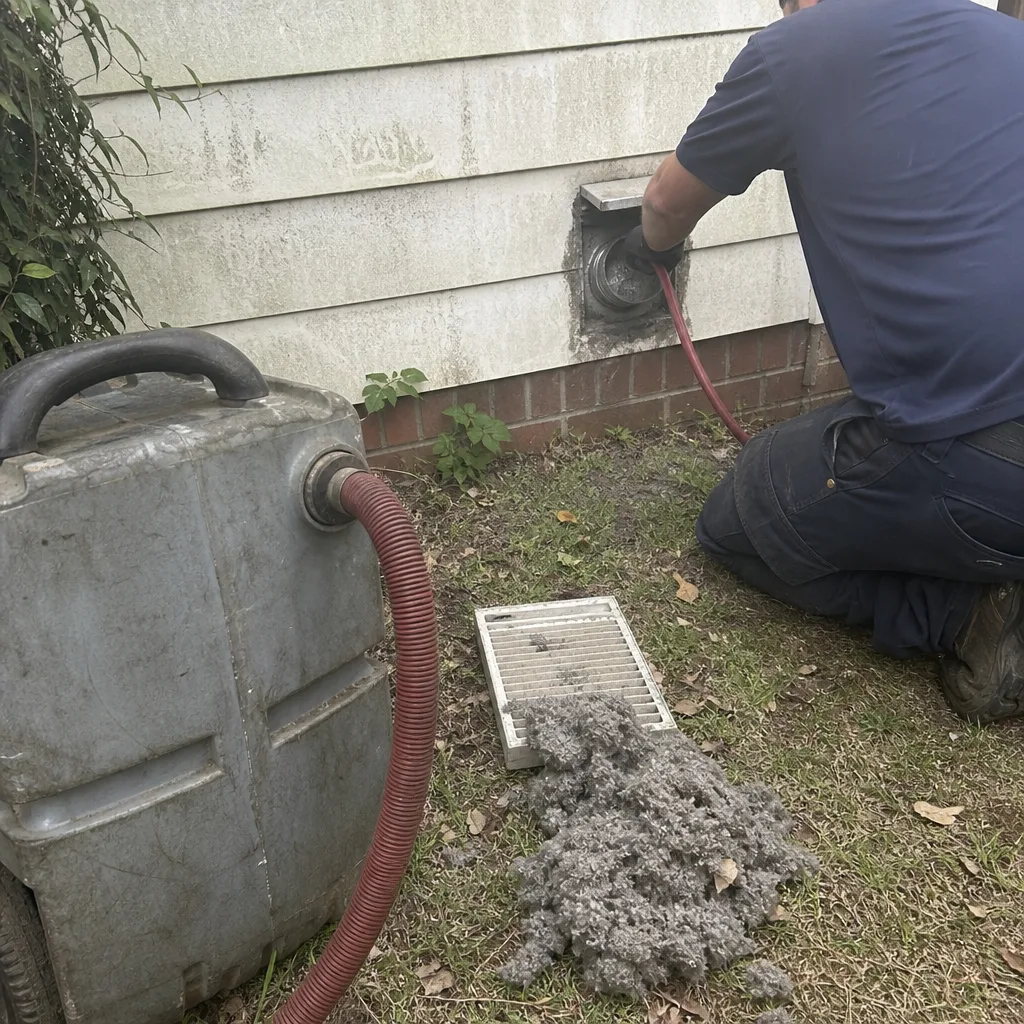
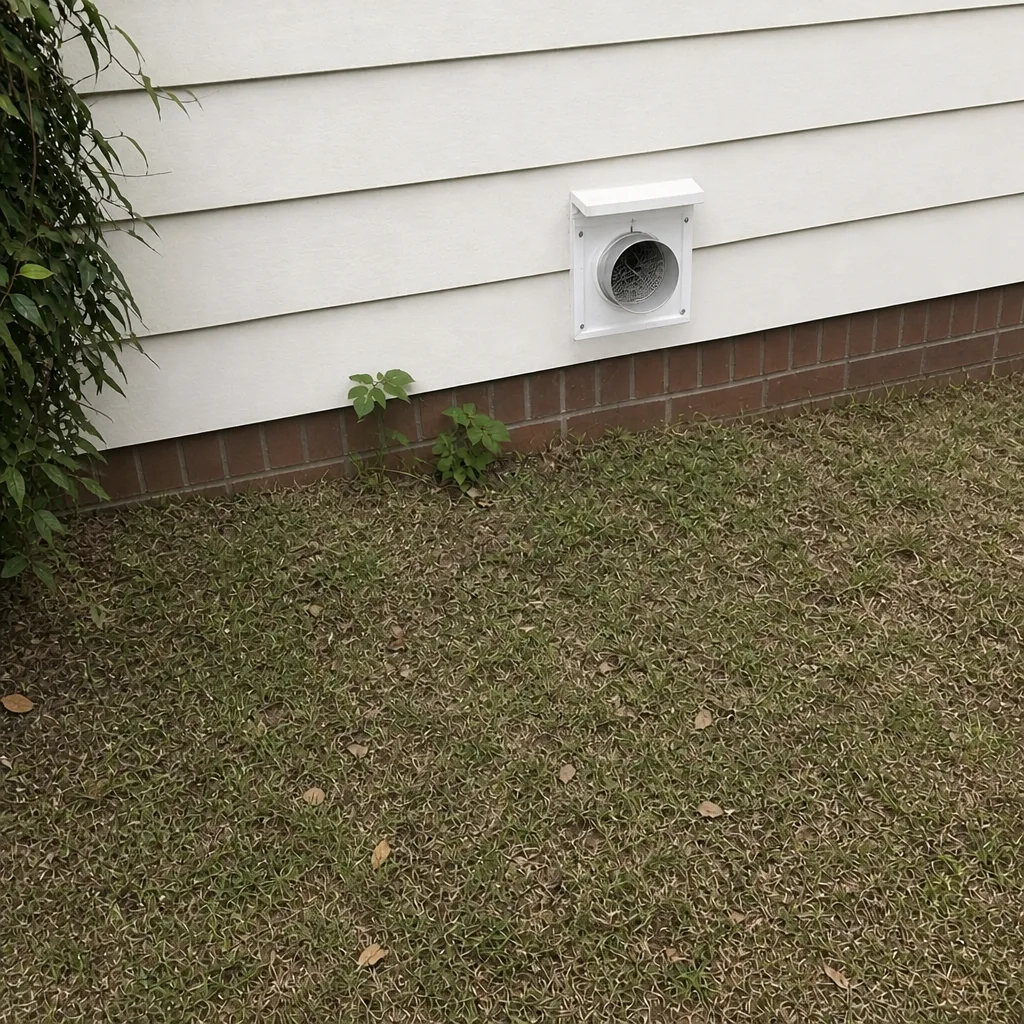
Whole-system duct and dryer vent check with before-and-after photos - you see exactly what came out of your vents
That "$99 whole-house special" is a bait ad - the real number appears once they are in your hallway, or the "clean" is a shop-vac at the register. We photograph the inside of your ducts before and after instead.
Air Duct Cleaning Maintenance Checklist for North Raleigh Homeowners
Changing your MERV-8 filter on schedule but skipping return-air grille inspections is like rotating your tires while ignoring brake pad wear. The most expensive failure point in a duct system stays invisible because it sits behind a grille you never look at. Dust loads, pollen film, and condensation don’t announce themselves. They accumulate in patterns, and patterns are readable if you know where to look and when. This guide gives you a month-by-month rhythm built for North Raleigh’s oak and pine pollen peaks, its humid summers, and the first cold snap that starts your heating season. You’ll learn what to inspect yourself, what each discoloration pattern signals, when to call in professional equipment, and how to log findings so a technician can read trends instead of a single snapshot.
Styles & brands we work with
- Whole-home duct cleaning
- Dryer vent cleaning
- Camera inspection
- Sanitizing & deodorizing
Quick Answer
A proper air duct maintenance checklist in North Raleigh runs on a seasonal cycle: inspect and change filters monthly or as pressure drop dictates, check supply registers and return grilles quarterly for dust patterns, examine the air handler cabinet every season, and schedule professional cleaning when you see consistent buildup, musty odors, or visible debris past the grille. Oak and pine pollen peaks in spring and fall make those the two highest-load periods for a Raleigh-area home, so inspections matter most right after each peak. The complete system check at the end of each cycle is where most homeowners find the problems worth fixing.
Table of Contents
- Why a Checklist Beats a One-Time Cleaning
- The North Raleigh Seasonal Duct Calendar
- What to Inspect Yourself and What Each Pattern Means
- Filter Selection by Home Age and Duct Material
- Month-by-Month Task Breakdown
- What You Can Handle vs. What Requires Professional Equipment
- How to Log Findings So a Technician Can Read Trends
- Common Mistakes to Avoid
- When to Call a Professional
- Frequently Asked Questions
Why a Checklist Beats a One-Time Cleaning
A single cleaning resets the clock. A checklist keeps you ahead of it. In our experience, the homes that avoid expensive remediation aren’t the ones cleaned most often; they’re the ones whose owners notice the change early. Contamination that gets caught at the first sign of buildup costs far less to address than contamination that reaches the plenum or coats the inside of the air handler cabinet.
Duct systems don’t fail suddenly. They degrade in a sequence: filter loading, then bypass around the filter frame, then dust accumulation on supply run walls, then backdraft into returns, then motor strain from restricted airflow. Each stage produces a visible clue. A checklist is simply the schedule for reading those clues before the next stage begins.
North Raleigh’s climate creates a specific load pattern. Oak pollen peaks in spring, pine pollen follows, and summer humidity keeps the interior of duct systems damp enough for dust to adhere and stay. Heating season then dries everything out and mobilizes that accumulated material into the airstream. If you inspect at the wrong points in that cycle, you miss the evidence – or you clean up material that would have been trapped by the filter anyway.
We name our equipment because it matters. Rotobrush and Nikro systems are purpose-built for the inside of a duct run, with contact brush heads and high-flow vacuum that scrub and extract. But the equipment matters less than the timing of when it gets called. A homeowner who knows the rhythm of their own system makes better decisions about both.
The rest of this guide teaches that rhythm. Not a generic filter-changing reminder, but a sequence tied to what actually happens in a North Raleigh house over twelve months. At the end, you’ll know exactly which tasks belong on your calendar and which belong on our schedule.
The North Raleigh Seasonal Duct Calendar
Treat your duct system as having four distinct load periods rather than four equal seasons. The spring and fall pollen peaks carry the most airborne particulate. Summer humidity turns that particulate into something that sticks. Heating season is when accumulated material becomes mobile again.
Spring in North Raleigh is dominated by oak pollen, with pine following close behind. Both produce fine, adhesive particles that pass ordinary furnace filters and coat the inside of supply runs. The window between February and April is when most homes see the fastest dust accumulation of the whole year.
Summer humidity is the second load factor, and the one most homeowners underestimate. An air-conditioned home recirculates air through a cooling coil that produces condensation. When that moisture migrates into the duct interior – through gaps at the plenum, loose joints, or unsealed boots – you get a damp surface that holds dust rather than shedding it. Warm, humid weeks are a poor time to skip an inspection, even if the dust looks less alarming than it did in spring.
Fall brings a second pollen peak and the heating-season startup. That combination is where overlooked summer accumulation becomes a visible problem. The first time the system runs heat after a humid summer, any material sitting on duct walls near the plenum can move.
Winter is inspection season rather than cleaning season. Cold, dry air keeps contamination stable and predictable. A filter check every three to four weeks through the heating months catches loading before airflow restriction begins, and a visual inspection of the air handler cabinet while the unit is running tells you more about leakage than it does in the humid months.
If your home has an Aprilaire or Honeywell filter cabinet, the timing of filter changes may follow a different schedule than a standard 1-inch slot. Manufacturer specs for those cabinets govern the change interval, not the general calendar. Check the cabinet documentation before adjusting the schedule.
What to Inspect Yourself and What Each Pattern Means
Three inspection points cover most of what a homeowner can safely read from inside the living space: supply registers, return grilles, and the air handler cabinet exterior. None of these require opening the duct system. Each one gives you a specific diagnostic signal.
Supply Registers
Remove a supply register grille (most pop off with tabs or two screws) and look at the first few inches of the interior duct wall. What you’re looking for is adhesion, not dust presence. A light, uniform film that wipes clear with a damp cloth is normal. What isn’t normal: a thick, uneven coating that concentrates on the bottom or on the sides near the boot, or visible dark streaks along the run. Those patterns indicate airflow condensation and suggest moisture is reaching the duct from the cooling coil or from duct gaps.
Another pattern worth noting: dust concentrated on one side of the run only. That usually means a gap at the joint is pulling attic or wall-cavity air into the supply run. The supply duct wasn’t dirty; it was pulling dirt in from somewhere it shouldn’t. That’s a sealing question, not a cleaning one, and it belongs on an Air Duct Cleaning North Raleigh inspection report.
Return Grilles
Returns load faster than supplies because they see the full return airstream before the filter catches it. Look at the inside of the return duct behind the grille. A uniform grey film is expected. What should trigger a call: dark spots near corners, visible hair and lint accumulation, or a musty smell when you put your face near the grille. Return-side smells that appear only while the system is running usually point to moisture in the return plenum or around the air handler.
Air Handler Cabinet
This is visual-only and exterior-only. Don’t open the cabinet. Look for: condensate around the base, water staining on the panel seams, rust at the bottom corners, and visible dust accumulating on the exterior of the panel joints. Staining means moisture; moisture and dust together mean the interior is likely a hospitable surface for biological growth. Any of those three patterns warrants a professional inspection before the next cooling season.
What Each Discoloration Means at a Glance
- Light grey film, even distribution: normal loading, clean when it wipes off easily.
- Thick dark buildup concentrated at bottom of run: condensation-related, check for duct leaks and cooling coil moisture.
- Dust on one side or a visible gap at joint: air infiltration, sealing needed before cleaning helps.
- Rust or brown staining in cabinet: moisture intrusion, professional inspection required.
- Black spots with a musty odor: likely biological growth, professional sanitizing and inspection.
- Visible hair or fiber accumulation on return side: source capture issue, check for nearby return intake pulls.
Filter Selection by Home Age and Duct Material
Filter selection isn’t universal. A 1960s North Raleigh ranch with hard-duct steel trunk lines can handle a heavier filter than a newer subdivision home with flexible insulated runs and a tight return plenum. The right choice depends on what your duct system was built to move.
Homes built in the older North Raleigh subdivisions – inside the Beltline, up through Falls River and mid-century neighborhoods near Millbrook – often have hard-duct trunks with sheet-metal branches. Those systems tolerate MERV 8 to MERV 11 filters well, provided the return drop is sized correctly. Stepping to MERV 13 without checking static pressure is a common mistake: the filter captures more, but the blower has to work harder to move the same air, and the resulting flow reduction can accelerate coil fouling.
Newer homes – typical builds in Wakefield and newer subdivisions in the 27614 and 27615 ZIP areas – often use flex duct runs with a right-sized return plenum. Those systems are usually happiest at MERV 8 to MERV 10. The flex duct interior has more surface area per linear foot, so it holds dust longer and shows buildup later. That means a heavier filter provides less marginal benefit than it would on hard duct, while the flow penalty is real.
Filter Selection by Duct Type
- Hard-duct sheet metal: MERV 8 to MERV 11, change every 60 to 90 days, more often during pollen season.
- Flex duct with insulated exterior: MERV 8 to MERV 10, change every 60 to 90 days, monitor static pressure if changing grades.
- Ductboard trunk lines: MERV 8, change every 60 days. Ductboard has more surface to trap material and is more sensitive to flow restriction.
- Homes with Aprilaire or Honeywell filter cabinets: follow the cabinet’s media filter spec and change interval, typically every 6 to 12 months for a 4-inch media filter.
One more factor: pets. A home with two shedding dogs loads a filter in roughly half the time of a pet-free home, regardless of duct material. That’s not a rule of thumb to apply before adjusting your schedule; it’s a baseline fact you’ll discover from your own filter checks.
Month-by-Month Task Breakdown
The schedule below translates the seasonal load pattern into specific tasks. Adjust the frequency if your home has heavy pet load or if a filter check reveals faster-than-expected loading. The point is to build the rhythm, then tune it.
- January – Filter check and cabinet inspection. Check filter loading. Inspect the air handler cabinet exterior for staining or condensate. Log the filter change date.
- February – Return grille inspection. Open each return grille and check for dust pattern and odor. Note anything asymmetric or concentrated at corners.
- March – Supply register check and pre-pollen filter change. Inspect two or three supply runs at the farthest end of the system. Change the filter ahead of the oak pollen peak.
- April – Post-pollen filter change. Change the filter again at the end of the oak and pine peak. Inspect supply registers for film adhesion on the run interior.
- May – Cooling season startup inspection. Check the cabinet exterior for condensate at the base. Look for pooled water or staining at the coil access.
- June – Filter change and return-side odor check. Change filter. Smell the return airstream while the system is running. Any musty note is a call-before-summer signal.
- July – Mid-summer visual. Check two supply registers for moisture-related buildup. Note the humidity level in the home.
- August – Filter change and cabinet inspection. Repeat the exterior cabinet check. Look for joint-level dust accumulation.
- September – Fall pollen filter change. Change ahead of the fall pollen load. Inspect one return and one supply for pattern changes versus spring.
- October – Post-fall filter change. Change filter again. Note any discoloration that appears only on the return side.
- November – Heating season startup. Run the system for the first time and check the cabinet for new condensate or staining. Note any odor on startup.
- December – Filter change and annual log review. Change filter, review the year’s log, and decide whether a full-system professional cleaning is due. This is also the right month for dryer vent cleaning and a separate dryer vent inspection.
Tuning the schedule: homes that see filters load in under 60 days should shift the filter-change intervals down and inspect registers more often. Homes that see it load more slowly can extend. The calendar is a starting point, not a ceiling. If you notice your system running longer or your energy use rising without an obvious cause, add a filter check regardless of where you are in the calendar.
What You Can Handle vs. What Requires Professional Equipment
The line is straightforward: anything inside the duct beyond the first few inches belongs on the professional side, and anything at the grille or cabinet exterior is yours. That boundary is based on what equipment is required to do the work without redistributing contamination into the home, not on whether a homeowner could physically reach the surface.
What You Can Do Yourself
- Remove and clean supply and return grilles with a damp cloth.
- Wipe the visible interior of the duct where a grille has been removed, out to about the first few inches.
- Change filters on schedule.
- Inspect the exterior of the air handler cabinet.
- Vacuum the plenum access panel exterior and the coil cabinet exterior with a household HEPA vacuum.
- Log observations and photographs.
What Requires Professional Equipment
- Cleaning past the first few feet of any duct run.
- Cleaning the air handler interior, the supply plenum, or the return plenum.
- Cleaning the evaporator coil.
- Sanitizing the duct system.
- Assessing flex duct for interior damage or condensation traps.
- Sealing leaks, reconnecting boots, or replacing damaged flex runs.
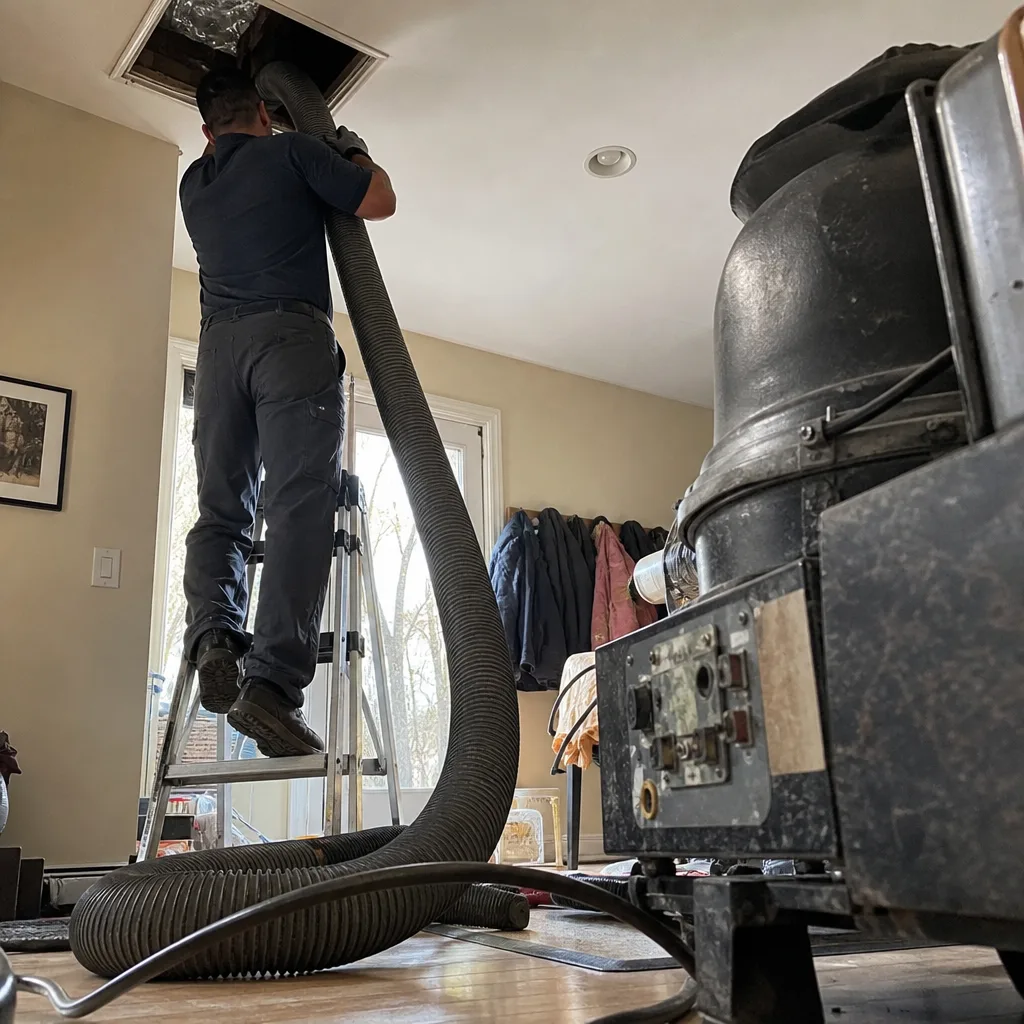
A household shop vac will remove material from the grille face. It will not maintain the negative pressure needed to keep dislodged material contained. That’s why we run air duct cleaning with a Rotobrush or Nikro system and deploy Abatement Technologies air filtration on-site during the work. The filtration captures what the brush head dislodges before it has a chance to settle anywhere in the house. Shop vacs and short brushes can’t do that.
The reason this matters isn’t marketing. It’s mechanical. If the equipment doesn’t maintain negative pressure at the brush head, you’re moving material into the room rather than out of it. Most homeowners can tell the difference when it happens because the air smells worse after the cleaning than before. That’s a sign the setup wasn’t configured for containment.
How to Log Findings So a Technician Can Read Trends
A log turns separate observations into a diagnostic trend. The minimum viable log has four fields: date, location, observation, and photograph. Anything less and a technician can only see the state of your system at the moment of inspection. A good log lets them see the rate of change.
The Log Structure
- Date and location. Note which register, which return, or which side of the cabinet.
- Observation. Describe what you saw: thickness of dust film, location on the run, odor.
- Photograph. Frame the same shot from the same angle each time. Consistency is what makes comparison possible.
- Filter change date. Note when the filter went in and when it came out.
- Context notes. Weather, recent furnace or AC startup, recent work in the home, or a new pet.
The value is in the comparison. A single snapshot of accumulated dust tells a technician almost nothing on its own. A pattern of “the return grille shows heavy accumulation six weeks after cleaning, then more again four weeks later” tells them the source is active. A pattern of “supply registers accumulate dark film every July but stay clean through winter” points at cooling-season condensation. Those are different problems, and they call for different work.
When you do call, share the log alongside the inspection findings. That’s how a technician decides whether HVAC cleaning belongs in the same visit as duct cleaning, and whether duct sealing needs to come first. Both decisions depend on the trend, not the snapshot.
If you use a Honeywell or Aprilaire connected thermostat, you may have access to runtime and filter-change data that adds to the log. Runtime hours plus filter loading is a good proxy for how hard the system is working for the volume of air it moves. That’s a useful trend to share with any technician who inspects the system later.
Common Mistakes to Avoid
- Skipping return grilles because supplies look clean. Returns load first and carry the highest dust concentration. If you only look at supply registers, you’ll miss the earliest stage of a loading problem.
- Stepping to a MERV 13 filter without checking static pressure. Higher filtration at the cost of restricted airflow can accelerate coil fouling and strain the blower. Match filter grade to duct design rather than assuming more filtration is always better.
- Cleaning grilles without logging the pattern. The observation is the useful part. A wipe-down without a photograph loses the trend that a technician needs.
- Ignoring a musty smell that appears only when the system is running. That pattern usually points to condensate or biological growth, not dust. It’s a professional call, and waiting into the humid months makes it worse.
- Assuming hard-duct homes and flex-duct homes need the same cleaning interval. In North Raleigh, older subdivisions inside the Beltline and newer builds in Wakefield have different duct designs and different loading profiles. Adjust the interval to the house, not to a generic formula.
- Skipping the air handler exterior in summer. Condensate leaks show up as staining on the panel and rust at the base before they show up as airflow problems. Catch them from outside the cabinet before the interior becomes a moisture site.
- Waiting for a visible problem before scheduling the first cleaning. Cleaning is a reset, not a rescue. Homes that schedule on a rhythm avoid paying for remediation later. An Air Duct Cleaning North Raleigh estimate tells you where the system actually is right now.
When to Call a Professional
Call when any of these show up in your log or observation cycle: visible buildup past the first few inches of any duct run, musty odor that appears on system startup, water staining or rust at the air handler cabinet, filters that load in under 30 days, newly visible dust on horizontal surfaces after a recent cleaning, or a recent move into a home where the previous owner’s cleaning history is unknown. If a duct system hasn’t been cleaned in more than three years and the home has had pets, that alone is a reason to schedule an inspection – North Raleigh homes with continuous pet load rarely stretch past three years without a full-system cleaning becoming worthwhile.
Schedule a call when the observation is a pattern rather than an incident. Those are the cases where professional equipment changes the outcome. Air Duct Cleaning North Raleigh offers free estimates in North Raleigh. Call (877) 820-8110. We answer 24/7. Fast dispatch from 7am to 7pm, Sunday through Friday. A call outside dispatch hours is booked into the next opening, Sunday through Friday, 7am to 7pm.
Frequently Asked Questions
Every two to three years is a reasonable starting point for most North Raleigh homes, but the right interval depends on pet load, pollen exposure, filter grade, and duct material. Homes with pets or with a heavy oak-pollen exposure often need a full cleaning closer to every two years, while a low-pet home with a well-sealed duct system can stretch to four. The checklist above will tell you your specific interval within one or two cycles. Call (877) 820-8110 for an exact quote if you’re deciding whether to clean now or next year.
MERV 8 is the baseline for most homes, and MERV 11 is fine on hard-duct systems with a properly sized return. The right grade depends on your duct design and static pressure, not on a universal rule. Homes with Aprilaire or Honeywell filter cabinets should follow the cabinet’s media filter spec, which is often higher filtration at lower flow resistance than a standard 1-inch slot can achieve. Call (877) 820-8110 for a free estimate if you want us to check static pressure alongside the filter recommendation.
Yes. Removing the grille and wiping the visible interior with a damp cloth out to the first few inches is a homeowner task. Past that point, you need equipment that maintains negative pressure during cleaning, which a household vacuum can’t do. Call (877) 820-8110 if the buildup extends past the grille face and you want a professional inspection.
Cheap quotes typically reflect a setup that doesn’t maintain negative pressure during the work, which means dislodged material ends up in your living space rather than contained. In our experience working alongside other trades in North Raleigh, the homes that come back to us after a low-cost cleaning are usually dealing with post-cleaning residue and smell, not a clean system. We use a Rotobrush or Nikro system plus Abatement Technologies air filtration during the work so the containment matches the cleaning. Call (877) 820-8110 for an exact quote – estimates are free.
Ask for before-and-after photographs of your own ducts, not stock images. The right technician shoots the interior of specific runs before the work and the same runs after, and hands you the images. You should also see the equipment on-site: the vacuum systems have brand and model markings, and the Abatement filtration unit should be visible during the cleaning. Call (877) 820-8110 if you want to know what a proper setup looks like before you book.
No. Dryer vents load at a different rate and should be inspected at least once a year as a standalone task. Lint accumulation in a dryer vent is a fire-safety issue rather than an air-quality one, and it doesn’t show up in the supply and return register patterns you’re logging for your ducts. North Raleigh homes with high-heat dryer cycles or long vent runs often need the vent inspected twice a year. Call (877) 820-8110 if your vent hasn’t been checked this year.
The Bottom Line
A duct system doesn’t fail on a schedule – it fails on a loading pattern. The North Raleigh-specific rhythm of oak and pine pollen peaks in spring and fall, summer humidity that turns dust into adhesive, and heating-season mobilization inside the system is what a good checklist is built to catch. Three visual inspection points (supply registers, return grilles, air handler cabinet) cover most of what a homeowner can read. The rest – cleaning past the first few inches, sanitizing, sealing, checking the coil – belongs to professional equipment that contains the material rather than redistributing it. Log your findings, compare them year over year, and let the pattern tell you when to schedule.
Our technicians have up to 10 years of experience reading these patterns in systems across North Raleigh, from hard-duct homes inside the Beltline to newer flex-duct builds in Wakefield. We work with Honeywell and Aprilaire products, so a cleaning can connect to a whole-home air quality upgrade if the inspection calls for it. We use Rotobrush and Nikro equipment for duct cleaning, and we offer Duct Repair & Sealing as a first-party service so problems found during cleaning don’t need a second contractor. One call covers the whole system: duct cleaning, dryer vent cleaning, HVAC cleaning, sanitizing, and sealing.
Contact Air Duct Cleaning North Raleigh for a free estimate. Call (877) 820-8110. We answer 24/7. Fast dispatch from 7am to 7pm, Sunday through Friday. A call outside dispatch hours is booked into the next opening, Sunday through Friday, 7am to 7pm.
Written by the team at Air Duct Cleaning North Raleigh.
See the difference
 Before
 After
 Before
 After
 Before
 After